
Phra Phong Suphan
Kru finds, Suphan Buri province · Attributed by a contemporary gold-foil inscription (lan thong, ลานทอง) to eleven rishi who compounded the materials and pressed the tablets
History of the type
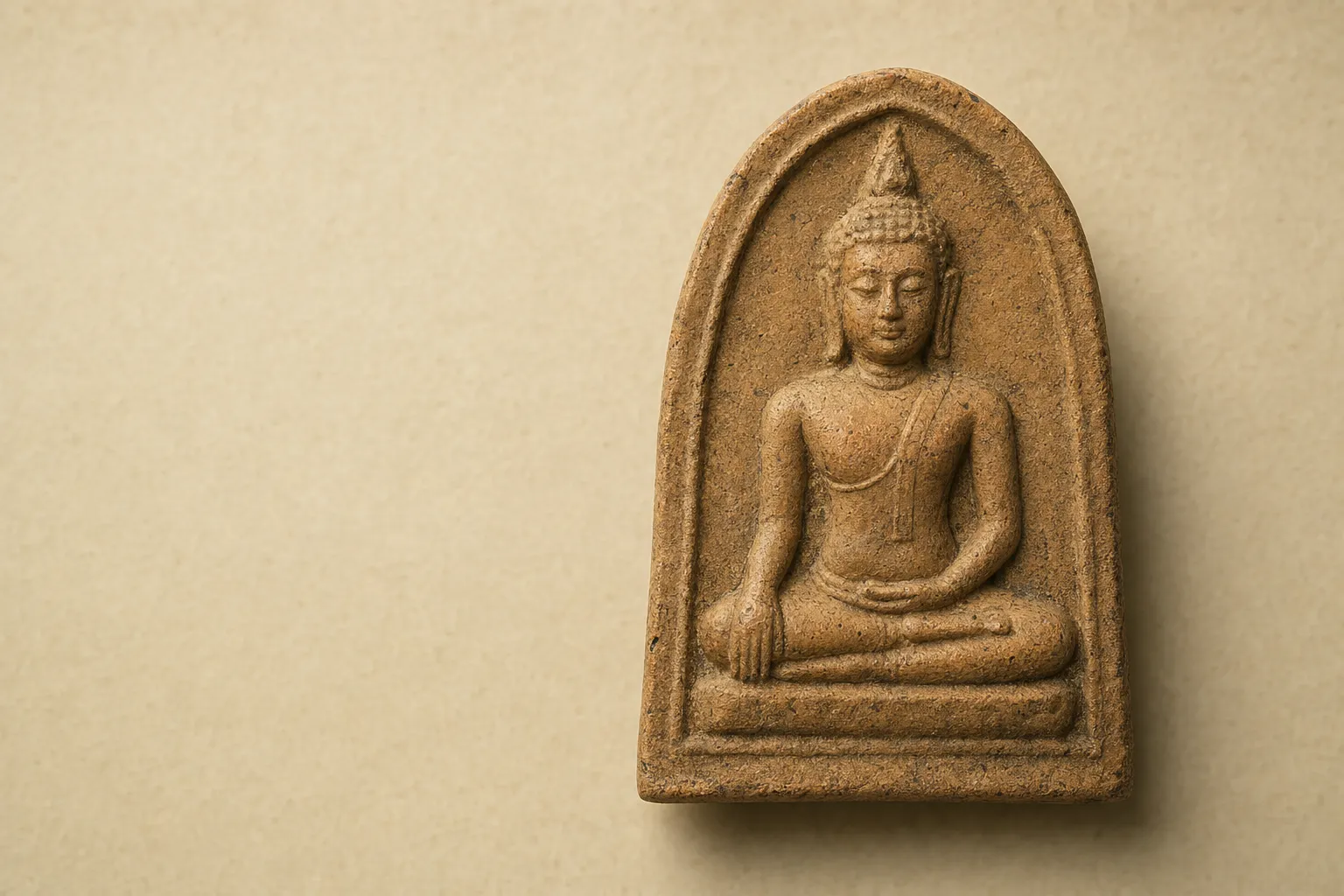
Phra Phong Suphan (พระผงสุพรรณ) comes from the kru (กรุ) finds of Suphan Buri province in central Thailand and is dated to the U-Thong period, roughly the thirteenth to fourteenth century CE. Within the Benjapakee (เบญจภาคี) it holds a singular distinction: it is the only member of the canon to survive with a contemporary written record of its own creation.
That record is a gold foil inscription, a lan thong (ลานทอง), found together with the tablets. The inscription names the sacred ingredients and describes how the objects were made, and it credits the work to eleven rishi (ฤๅษี), the hermit-sages of tradition, who are said to have compounded the materials and pressed the tablets. Whatever one makes of the rishi framing, the physical document is a primary source from the era, which is extraordinary for an object of this age. It turns Phra Phong Suphan into something like the canon's evidence exhibit: the one classical type whose origin is attested in writing rather than reconstructed from later legend.
The tablets themselves depict a seated Buddha and are pressed, powder-bodied objects rather than the fired-clay tablets of the northern types. That places Phra Phong Suphan among the powder amulets while still belonging to the deep, excavated past of the Benjapakee.
Materials and muan sarn
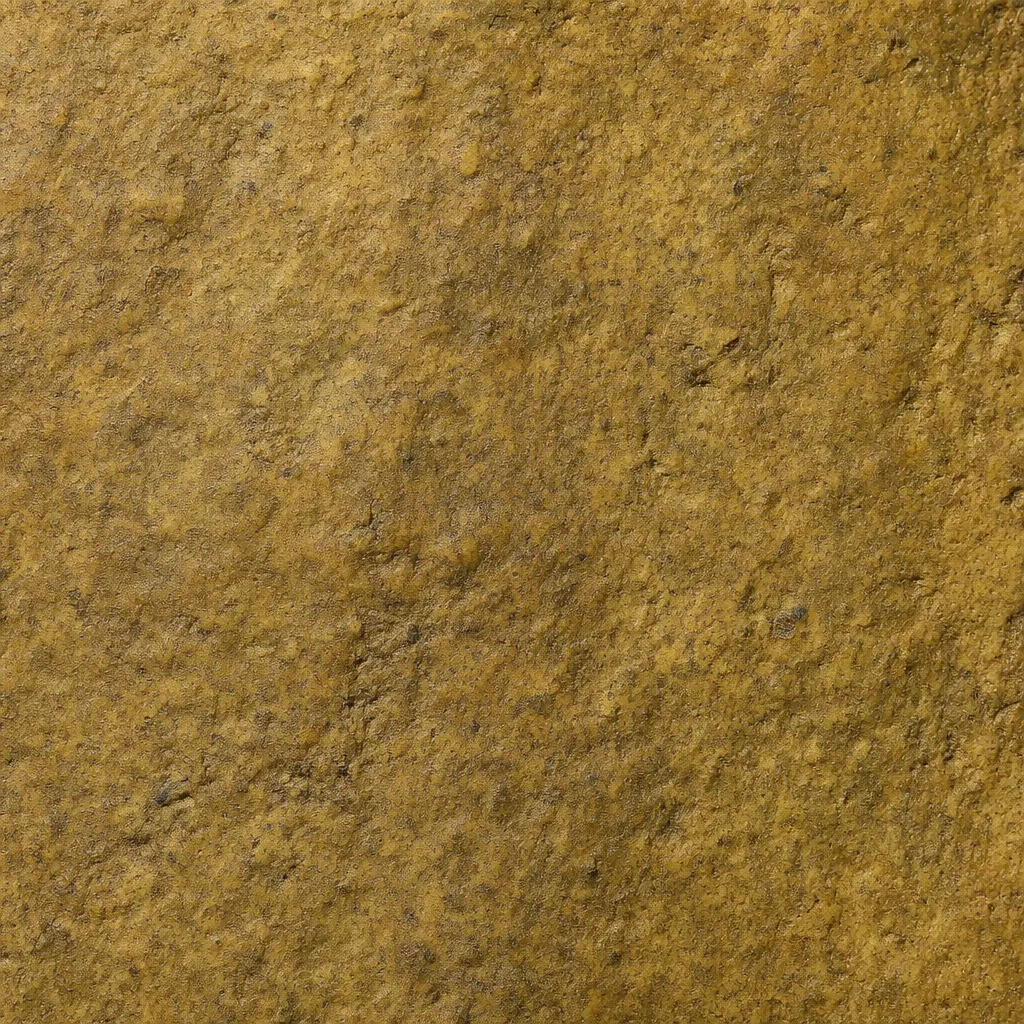
The material is a warm yellow-brown powder, sometimes carrying a reddish tint, and it often shows a distinctive lacquer-like coating acquired over centuries of contact with resinous substances inside the kru. That surface film is part of what gives well-preserved examples their particular look. Because a lan thong inscription accompanied the find, Phong Suphan is unusual among ancient amulets in that its muan sarn (มวลสาร) is not entirely a matter of inference: the gold record itself speaks to the sacred ingredients used. Even so, the fine detail of the recipe remains a subject for specialists, and the character of the powder body and its coating is what students of the type learn to read.
Phim varieties
- Phim Na Kae (หน้าแก่, 'old face')
- Phim Na Klang (หน้ากลาง, 'middle face')
- Phim Na Num (หน้าหนุ่ม, 'young face')
Consecration history
The lan thong inscription describes the making of the tablets by the eleven rishi and stands, in effect, as the type's founding document. No separate later consecration ceremony is recorded, and none is needed to explain the amulet's standing: its authority comes from its antiquity and from that rare contemporary written testimony. As always, the devotional weight attached to the objects is best reported as tradition rather than as documented fact.
Notable editions
- Kru finds from Suphan Buri province (finite, excavated, no new production)
Cultural significance
Phra Phong Suphan is prized both for its place in the Benjapakee and for the domains attributed to it: fortune and wealth alongside khlaeo khlat (แคล้วคลาด), escape from harm, and kongkraphan (คงกระพัน), invulnerability. Devotees value it as an all-round amulet, and collectors value it for the documentary romance of the gold inscription.
The three named phim, distinguished in tradition as the old, middle, and young faces, give the type an internal structure that scholars and enthusiasts have studied closely. For a reader working through the canon, Phong Suphan is the member that most directly connects a devotional object to the written history of its own era.
Market overview
As a celebrated canonical type recovered only from finite kru finds, genuine Phra Phong Suphan sit in the traditional top-tier collector market. Supply cannot grow, condition and phim strongly affect desirability, and the type's fame keeps fine examples in specialist hands rather than at temple counters. Figures quoted for individual pieces vary widely and should be read as snapshots of a narrow, slow-moving market tied to a moment rather than as fixed values.
Identification notes
Educational context only. LOKAVIDU does not authenticate amulets or issue verdicts.
The named phim and the celebrated status of Phong Suphan have generated a deep specialist literature, and this profile summarizes none of it. Serious study rests on documented references, securely provenanced comparison examples, and experienced guidance.
LOKAVIDU provides only cultural and historical context. We do not authenticate amulets or offer verdicts on individual tablets. That work belongs to specialists handling the objects in person.