
Ajahn Chah
Phra Bodhiyana Thera (Ajahn Chah Subhaddo) (พระโพธิญาณเถร / อาจารย์ชา สุภัทโท)
Wat Nong Pah Pong (วัดหนองป่าพง) · Ubon Ratchathani
Deceased, 2535 BE (1992)
Path and reputation
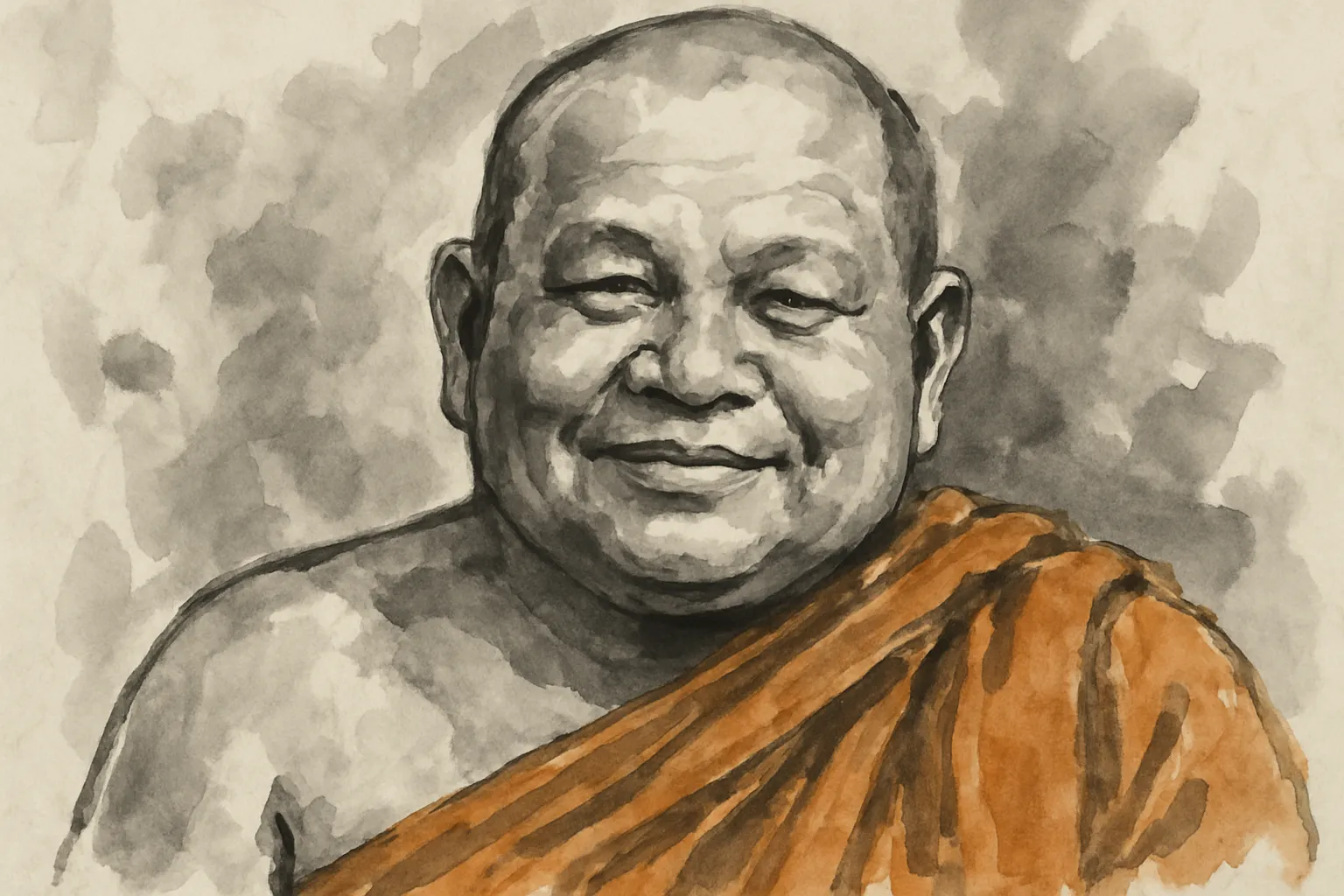
Phra Bodhiyana Thera, known everywhere simply as Ajahn Chah, is the most internationally recognized monk the Thai tradition has produced. He was born in 2461 BE (1918) in Ubon Ratchathani and died in 2535 BE (1992). A direct disciple of Ajahn Mun, he carried the forest tradition forward and then, almost by accident, carried it around the world.
Ajahn Chah founded Wat Nong Pah Pong (วัดหนองป่าพง) in 2497 BE (1954), a forest wat, or monastery, built on the discipline and simplicity he had learned in the Ajahn Mun lineage. In 2518 BE (1975) he established a second monastery nearby, Wat Pah Nanachat, the International Forest Monastery, specifically for non-Thai practitioners. Through it and through his own students, the Thai forest tradition became a global movement. His Western disciples, among them Ajahn Sumedho, Ajahn Brahm, and Ajahn Amaro, went on to found forest monasteries across Europe, North America, and Australia. His teaching style, direct, humorous, and built from everyday metaphor, translated unusually well, and it is a large part of why his name is the one English-speaking readers are most likely to already know.
His relationship to the amulet world is the same as his teacher's, and it should be read the same way. Ajahn Chah's personal practice emphasized meditation over sacred objects, and he did not personally produce amulets. His significance for a site like this one is indirect: he is a forest-tradition figure whose barami, the accumulated moral perfection Thai Buddhists attribute to an advanced practitioner, is recognized across the whole country, and whose image appears on commemorative and merit-making productions issued by his temples. Those productions honor him; they were not made by him as a maker of consecrated amulets.
For Lokavidu's audience, Ajahn Chah plays a particular role. He is very often the one Thai monk a foreign reader already recognizes, encountered first through a translated talk or a book rather than through the amulet trade. This profile exists to connect that recognition to the wider tradition the site documents, and to show where a familiar name sits within a landscape of lineage, consecration, and devotion that is otherwise unfamiliar.

Notable editions
- Commemorative coins and images (institutional productions by Wat Nong Pah Pong and branch monasteries)
Legacy
As with Ajahn Mun, the honest way to describe Ajahn Chah's place in the amulet world is to separate the man from the objects that bear his likeness. He did not consecrate amulets as a personal practice. The coins, images, and merit-making batches that carry his image are institutional productions, made by Wat Nong Pah Pong and its branch monasteries after his death to honor his legacy and to support the temples' work. Treating one of these as a lifetime consecration by Ajahn Chah would misread both the object and the monk.
What he did contribute to the tradition is authority of a certain kind. The global stature of the Thai forest lineage, which he did more than anyone to spread, reinforced the same idea his teacher had established: that the forest monk is a figure of the highest standing, and that provenance in this lineage carries weight. When temples in his network issue a commemorative piece, they draw on that standing.
Ajahn Chah is also, for this site, a bridge between two audiences. The reader who arrives already admiring his meditation teaching can follow his name into the wider world of Thai devotion, where amulets, temples, and consecration ceremonies are ordinary parts of religious life. The reader who arrives through the amulet trade can see, in Ajahn Chah, that the tradition's most globally beloved figure kept a deliberate distance from sacred objects while embodying the very barami that gives such objects their perceived authority. Both readings are true at once, and holding them together is the beginning of understanding how meditation Buddhism and the amulet world relate.
Wat Pah Nanachat deserves a fuller word, because it is the clearest expression of what set Ajahn Chah apart. Founding a monastery specifically for foreign practitioners, run in the same forest discipline as its Thai parent, was an unusual step, and it created a durable channel through which the tradition could reach the English-speaking world on its own terms rather than in translation alone. The monasteries his students went on to establish abroad extended that channel across three continents. For a reader who first meets Thai Buddhism through one of those Western monasteries, or through a book of Ajahn Chah's talks, the amulet culture documented here can seem like a separate religion entirely. Part of this profile's purpose is to show that it is not separate at all, only a different face of the same devotional world. The forest tradition Ajahn Chah globalized and the amulet tradition that borrows its prestige grew from the same soil, honor many of the same figures, and meet, as his own life shows, at the level of reputation and barami even where they diverge in practice.