
LP Ngern
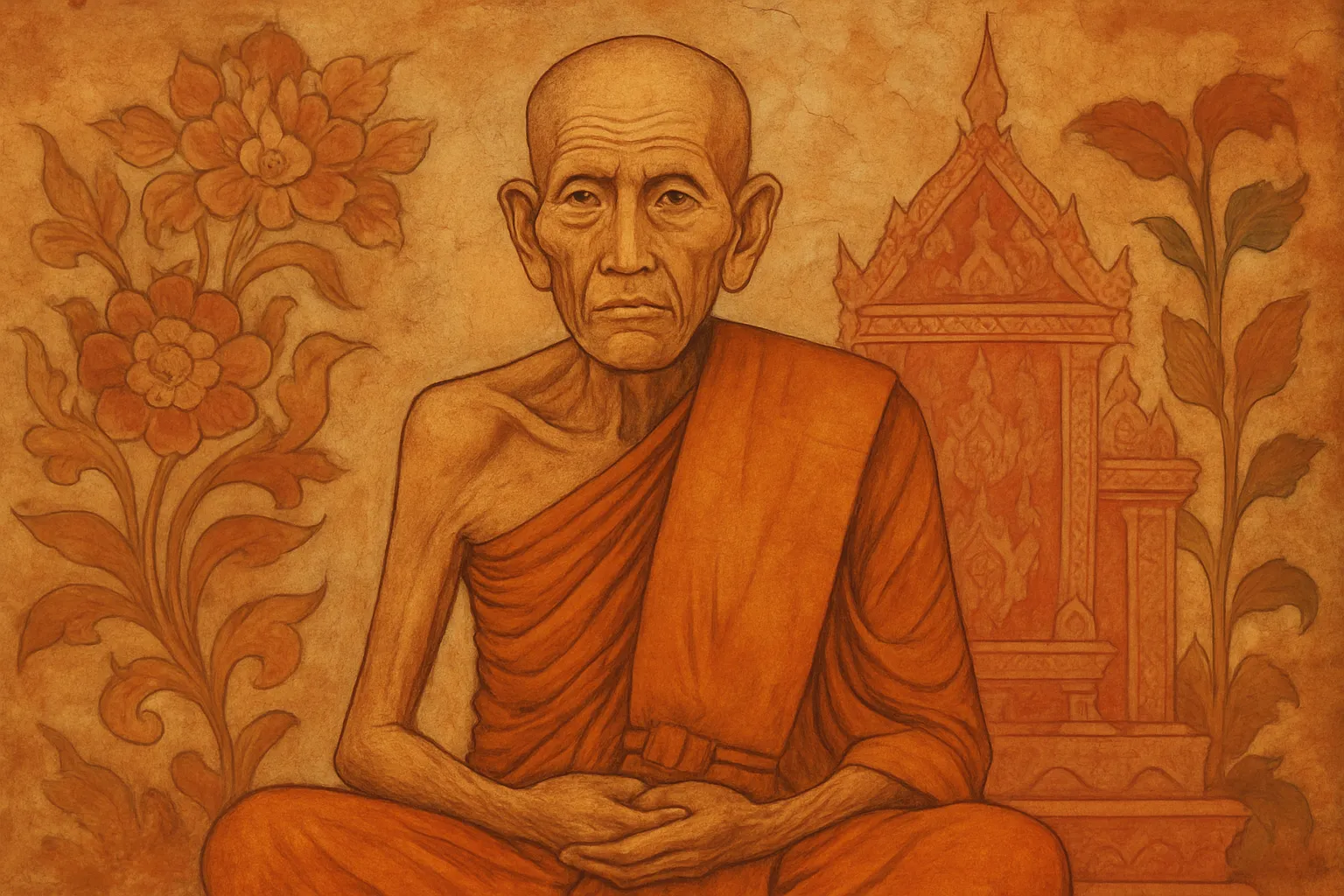
Luang Phor Ngern Janthasiri (หลวงพ่อเงิน จันทสิริ)
Wat Bang Khlan (วัดบางคลาน) · Phichit
Deceased, 2462 BE (1919)
Path and reputation
Luang Phor Ngern Janthasiri, known as LP Ngern, is one of the founding names of the Thai monk-coin tradition. He was born in 2353 BE (1810) and died in 2462 BE (1919), a life that ran across the early and middle Rattanakosin period, and he is remembered as the revered abbot of Wat Bang Khlan (วัดบางคลาน) in Phichit province, in Thailand's lower north.
His importance is bound up with a single format: the rian (เหรียญ), the struck or cast metal coin amulet. LP Ngern's rian are among the most collected and, tellingly, the most copied pieces in the entire market, a double distinction that marks a type as canonical. Alongside the coins, his famous walking figure, which depicts the monk striding forward carrying an alms bowl and an umbrella, is one of the most recognizable monk images in Thailand. That striding silhouette has been reproduced so widely that it has become a kind of shorthand for the whole idea of the wealth-bringing monk.
His amulets are associated above all with fortune and wealth, and with metta mahaniyom (เมตตามหานิยม), the quality of loving-kindness and popularity that draws goodwill toward the wearer. Lokavidu records these associations as the meanings the tradition assigns, not as claims about outcomes. LP Ngern lived during a period of active temple building and regional development along the Nan River in the lower north, and his standing grew alongside the institutions of that era.
The deeper reason his name matters to anyone studying amulets is historical. Before the convention that LP Ngern helped establish, most amulets depicted the Buddha rather than an individual monk. The rise of the rian bearing a specific monk's likeness marked a genuine shift in what an amulet could be, from an image of the Buddha to a portrait of a living teacher whose barami, the accumulated moral perfection attributed to an advanced practitioner, the object was meant to carry. LP Ngern's coins are a cornerstone of that shift, and much of the later rian tradition can be read as building on the ground his editions laid.

Notable editions
- Rian editions from Wat Bang Khlan (various)
- The walking figure series (alms bowl and umbrella)
- Commemorative restrikes
Legacy
LP Ngern's legacy is best understood as a convention rather than a single object. By the time his coins had circulated widely, the idea that an amulet might depict a named monk, and carry that monk's reputation, had moved from novelty to norm. Every later monk-coin, from the great mid-century rian to the commemorative pieces temples issue today, works within a frame that figures like LP Ngern helped set. This is why collectors speak of his editions as foundational: they sit near the origin of a format that now dominates the market.
That foundational status has a shadow side, which the tradition acknowledges openly. Because his rian are so prized, they are also among the most reproduced, and the study of LP Ngern pieces is inseparable from the study of how genuine early coins differ from later restrikes and imitations. Lokavidu does not offer authentication guidance, and treats the question of any specific piece as a matter for the association and competition circuit that serves as the tradition's authority. What can be said in general is that the very popularity that makes his coins canonical is also what fills the market with copies.
For a reader building a picture of the amulet world, LP Ngern anchors the wealth-and-fortune strand of the tradition and the history of the monk-portrait coin at once. His walking figure and his rian tie together three ideas the site returns to often: the shift from Buddha image to monk portrait, the association of certain monks with metta mahaniyom and prosperity, and the way a canonical type generates both devotion and imitation in equal measure.
The walking figure deserves particular attention, because it did as much as the coins to fix LP Ngern in the popular imagination. An image of a monk striding forward with an alms bowl and an umbrella reads instantly as a figure in motion, going out into the world rather than seated in contemplation, and that sense of forward movement pairs naturally with the wealth and good fortune his amulets are held to bring. The motif has been cast, struck, and reproduced in countless later editions, to the point where it now functions almost as a generic emblem of the prosperous monk rather than a portrait of one man. That drift from portrait to symbol is itself a lesson in how the tradition works. A powerful image, once attached to a revered name, tends to detach and circulate on its own, gathering new productions around it for generations. In LP Ngern's case the result is a body of material that ranges from carefully documented early rian to broad commemorative restrikes, all organized around a single striding silhouette that has outlived the particulars of the monk who first inspired it.