
Somdej Toh
Somdej Phra Phutthachan (To Phrommarangsi)
Wat Rakhang Kositaram (วัดระฆังโฆสิตาราม) · Bangkok
Deceased, 2415 BE (1872)
Path and reputation
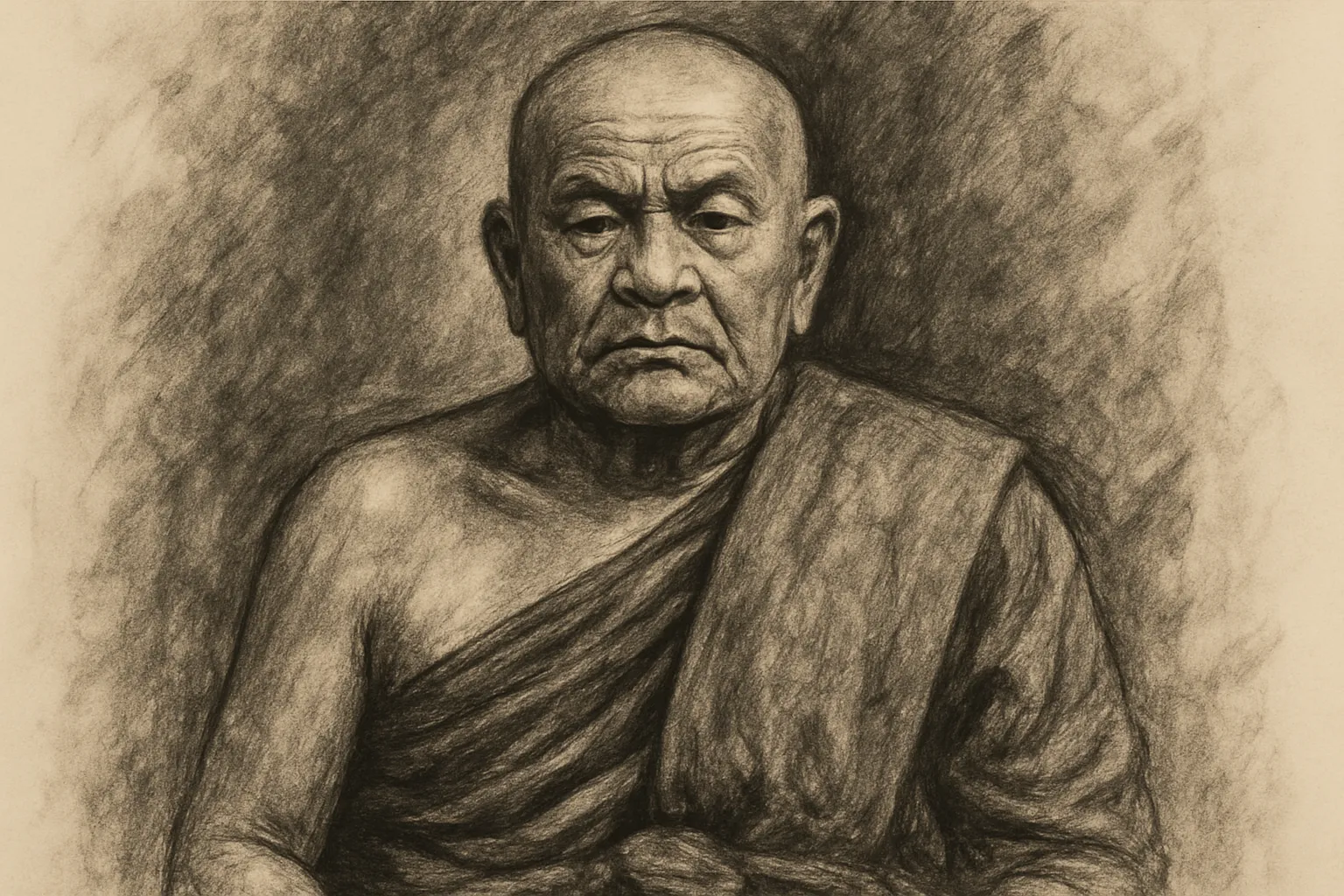
Somdej Toh, formally Somdej Phra Phutthachan (To Phrommarangsi), is the most revered figure in the history of Thai Buddhist amulets. He was born in 2331 BE (1788) and lived within the Rattanakosin royal monastery tradition of Bangkok, based for much of his life at Wat Rakhang Kositaram (วัดระฆังโฆสิตาราม) on the Thonburi side of the Chao Phraya River.
His enduring importance rests on a single object: the Phra Somdej (พระสมเด็จ), the votive tablet he produced at Wat Rakhang. That tablet set the template for the entire modern amulet tradition, and it remains the type against which later work is measured. The Phra Somdej is counted as the president of the Benjapakee (เบญจภาคี), the classical set of five canonical amulet types.
Somdej Toh was renowned for his scholarship and for his mastery of sacred powder preparation. His tablets were built from pong wiset (ผงวิเศษ), the five sacred powders, a prepared material whose making was itself treated as a disciplined practice rather than a mere recipe. Devotees also speak of his barami (บารมี), the accumulated moral perfection and spiritual charisma that Thai Buddhists attribute to an advanced practitioner; this is a matter of devotional understanding rather than documented fact, and it is best reported as what the tradition holds.
He was a contemporary and advisor to King Rama IV (Mongkut), a connection that placed him close to the center of nineteenth-century Siamese religious life and helped carry his reputation well beyond his own monastery.
Notable editions
- Phra Somdej Wat Rakhang (multiple phim and material variants, lifetime production)
Legacy
Somdej Toh died in 2415 BE (1872), but his influence only widened afterward. His image and his amulets are the most collected in Thailand, and the Phra Somdej he made at Wat Rakhang became the reference point for how later makers thought about form, material, and consecration.
Because his production ran across his lifetime, the Wat Rakhang tablets survive in multiple phim (พิมพ์), the moulds or models that define a tablet's design, and in several material variants. That variety is part of why the type occupies such a central place in study and collecting: it offers a documented body of work tied to one exceptionally influential maker. Through the Phra Somdej and its place at the head of the Benjapakee, Somdej Toh's name still organizes how the amulet world understands its own canon.