
Wat Nong Pah Pong
วัดหนองป่าพง
Thai forest tradition (Ajahn Chah) · Ubon Ratchathani

Why it matters
Wat Nong Pah Pong, in Ubon Ratchathani, is the monastery Ajahn Chah founded in 2497 BE (1954), and it became the headquarters of an international forest-monastery network. Together with its branch for foreign practitioners, Wat Pah Nanachat, founded in 2518 BE (1975), it is the primary point of contact between the Thai forest tradition and the English-speaking world. For much of Lokavidu's audience, this is likely the most familiar Thai temple name of all, encountered long before any amulet.
That familiarity is exactly why the temple belongs in this site. Wat Nong Pah Pong connects the reader's existing knowledge, of meditation, of Ajahn Chah, of the forest wat as a place of discipline, to the wider tradition that Lokavidu documents. It is a bridge from the meditation Buddhism many foreigners already know toward the amulet culture they may not. The temple itself sits on the meditation side of that bridge: its life is built around practice and the Vinaya, the monastic discipline inherited from Ajahn Mun through Ajahn Chah, not around the production of sacred objects.
Where amulets do enter is at the level of memory. The temple and its network produce commemorative coins and images honoring Ajahn Chah's legacy. These are institutional productions, made to honor a founder and support the monasteries, rather than personal consecrations by Ajahn Chah, who kept a characteristic forest-tradition distance from such objects. Reading them correctly, as memorial pieces carrying the barami of a revered teacher rather than as lifetime amulets, is a good exercise in the distinctions this site returns to often.
The temple is also a reminder that the boundary between meditation Buddhism and the amulet world is a matter of emphasis rather than a hard wall. Wat Nong Pah Pong would never describe itself as an amulet temple, and its discipline points firmly toward practice and away from objects. Yet it honors Ajahn Mun and Ajahn Chah, whose barami the amulet market prizes; it issues commemorative pieces bearing their images; and it stands within the same devotional culture in which consecrated objects are ordinary. A visitor can hold both facts at once: that this is a serious meditation monastery with little interest in amulets, and that it nonetheless sits inside the wider tradition Lokavidu documents. Learning to see that overlap without collapsing the two into each other is one of the more useful things a reader can take from the temple. It is why Wat Nong Pah Pong, for all its distance from the amulet trade, earns a place in a site about amulets: it marks the edge where the tradition's meditative and devotional faces meet.
What to see
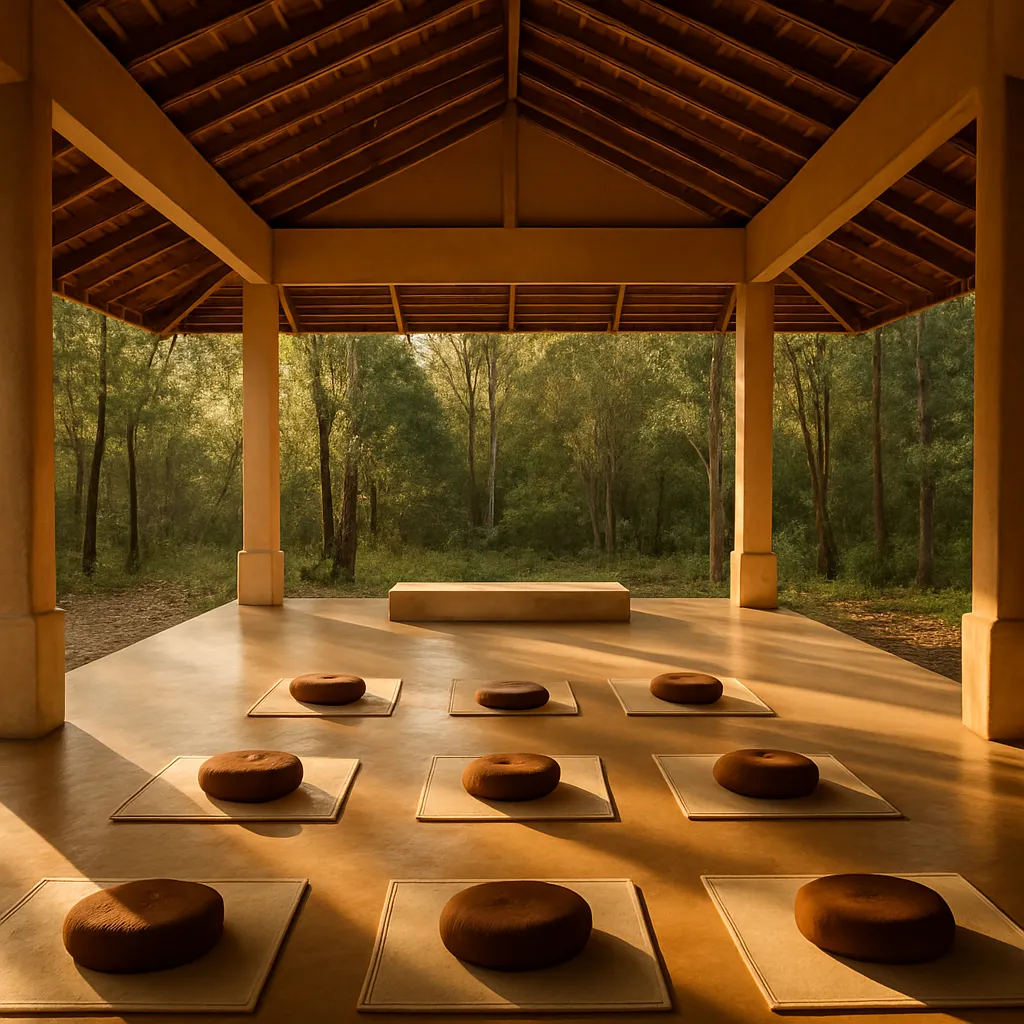
The forest grounds themselves are the point, kept deliberately simple and quiet, along with the meditation hall and Ajahn Chah's memorial stupa. A small museum documents his life and the growth of the network he founded.
Nearby Wat Pah Nanachat, the International Forest Monastery, offers meditation retreats for English speakers and is the clearest place to see how the tradition receives foreign practitioners. A visitor interested in how meditation Buddhism and the amulet world relate will find both faces of the tradition within a short distance here.
Etiquette
This is an active forest monastery with strict discipline, not a sightseeing temple. Dress conservatively, observe silence in the meditation areas, and follow the monastery schedule if you are visiting during a retreat period. Treat the grounds as a working practice site and let the community's routine set the pace of your visit.
Access
Wat Nong Pah Pong is in Ubon Ratchathani province in the Isan northeast, with Wat Pah Nanachat nearby. It is among the most accessible and well-documented temples in this site's coverage, in large part because of its long engagement with international practitioners.