
If the Thai amulet world has a capital, it is Tha Prachan. This is the most famous amulet market in the country, and for anyone curious about the tradition it is an extraordinary place to witness. It is also, for a newcomer, best understood as somewhere to observe rather than to acquire. This guide explains what it is, how it came to be, what you will see, and how to approach it sensibly. It is a companion piece to the market guide, which covers the vocabulary, temple counters, and price tiers that apply across the whole country; this guide is the specific, on-the-ground account of Bangkok’s best-known physical market.
What It Is
Tha Prachan sits on the Bangkok side of the Chao Phraya River, near Thammasat University and a short distance from the Grand Palace area. The name refers to the riverside district and its pier, which itself takes its name from Pom Prachan, one of fourteen forts once built to defend the walled city of Rattanakosin. Over decades it has become the recognized centre of amulet trading in Thailand, a dense warren of stalls and shops given over almost entirely to sacred objects and the people who study them.
How the Market Formed
The trade did not begin as a purpose-built market. Vendors selling food, herbal medicine, antiques, and amulets originally set up as informal hawkers along the grounds of Wat Mahathat itself, the great temple that faces the river here. When the temple asked the hawkers to move off its grounds, they resettled along the waterfront and the road running from Tha Prachan pier toward Tha Chang. Two nearby institutions then pulled steadily more foot traffic through the area: Siriraj Hospital, opened on the opposite bank in 2431 BE (1888), and Thammasat University, founded a few minutes’ walk from the market in 2477 BE (1934). By the 1980s the amulet trade had come to dominate the district, crowding out most of the other goods and giving Tha Prachan the identity it holds today.
The market’s shape changed again in 2558 BE (2015), when Bangkok’s city administration cleared the open street stalls between Tha Prachan and Tha Chang, citing traffic and public-space complaints; several hundred vendors were affected. Some dealers moved into consolidated indoor premises near the original site, in buildings such as the one now known locally as the Amulet Stadium on Trok Sake, while others relocated their businesses to shopping plazas and amulet markets elsewhere in the city. The market survives, but it is now weighted more toward enclosed shops and less toward the loose street-stall sprawl of earlier decades, a shift a longtime visitor notices even if a first-time one does not.
What You’ll See
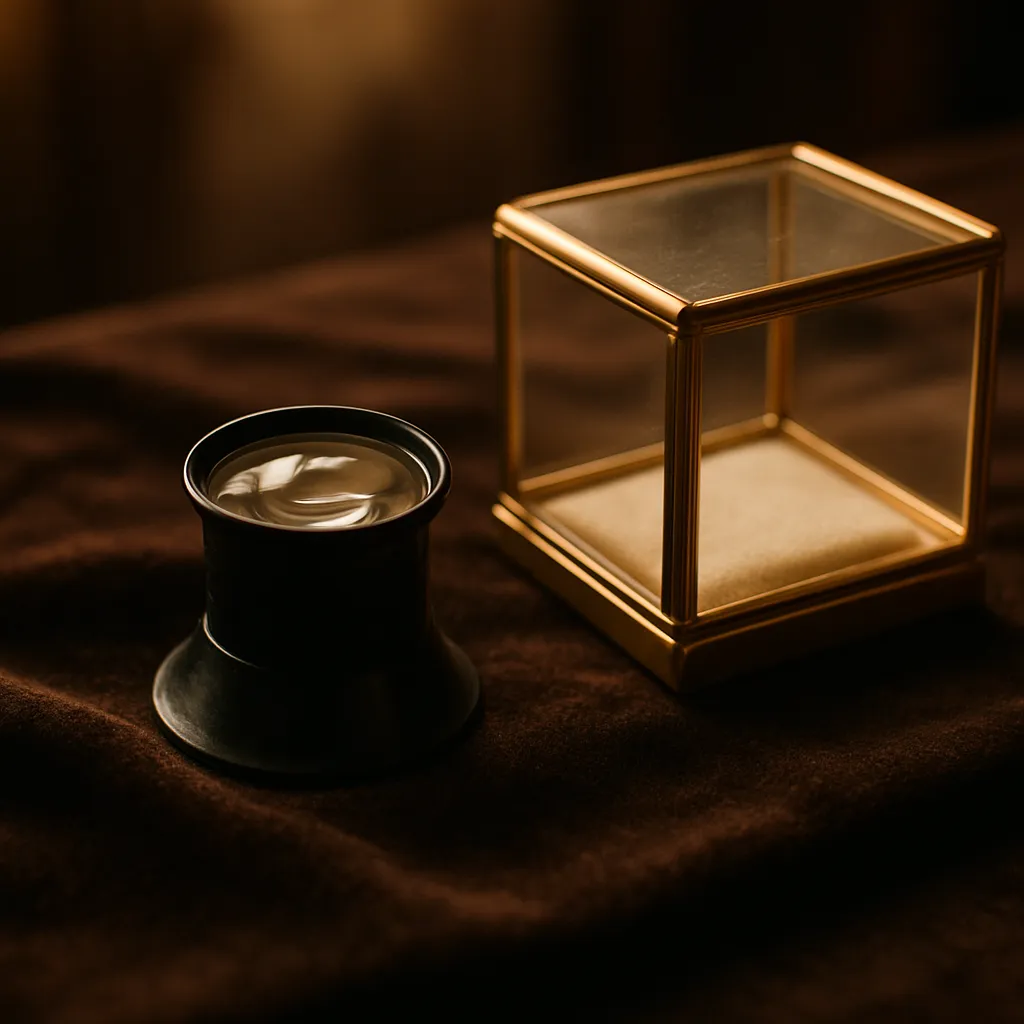
The first impression is scale. Hundreds of dealers work here, in open-air stalls and in enclosed premises, their wares laid out in glass cases. Everywhere you look, someone is bent over a case with a loupe, examining a small object in close detail: these are the sian phra (เซียนพระ), the expert collectors and specialists whose judgment defines the field. You will see the full hierarchy of the market laid out side by side, from modest temple-counter-priced objects to pieces of competition standing, sometimes within a few steps of one another.
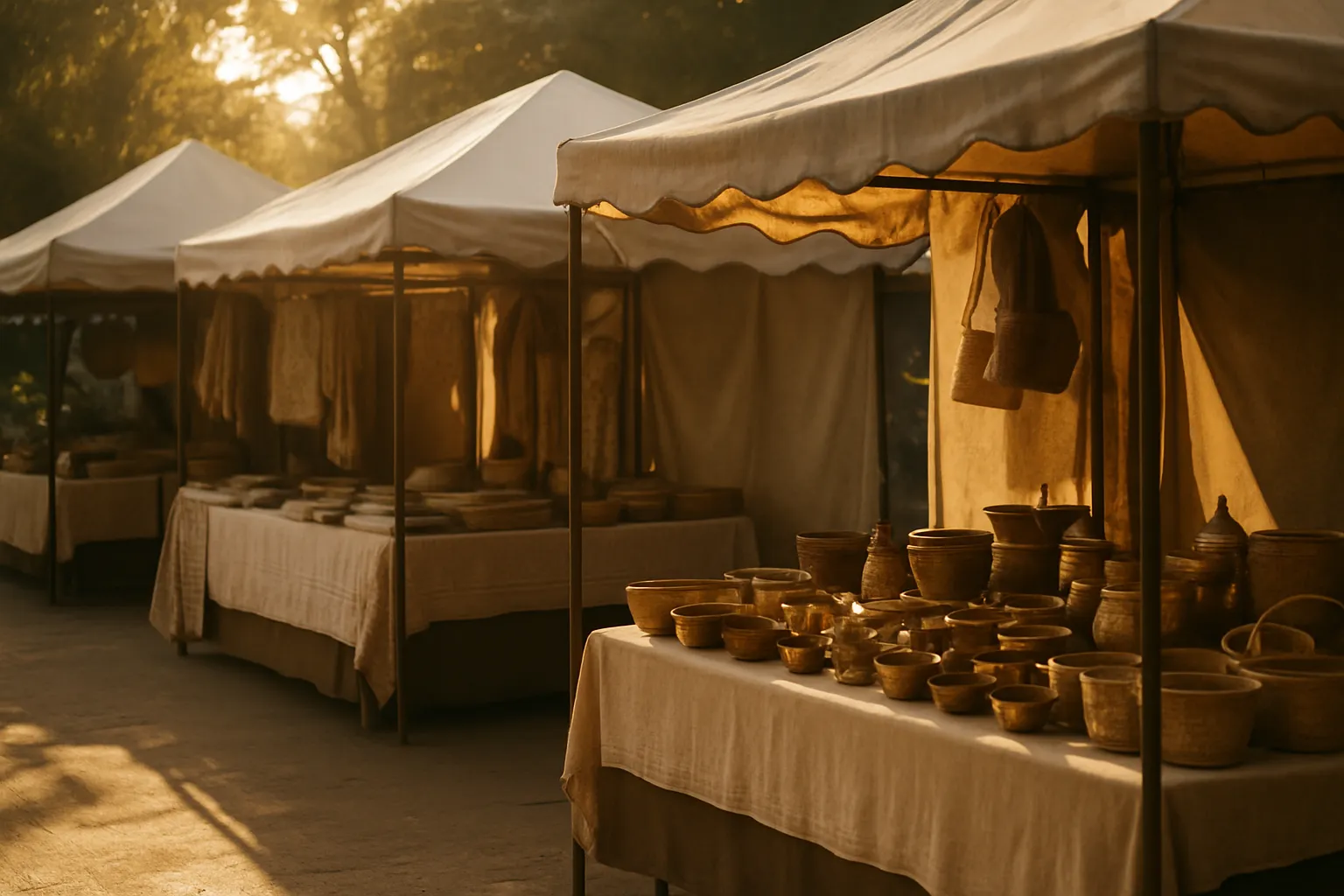
The market has two distinct textures, and telling them apart is part of learning to read the place. The open-air stalls, fewer and more compressed since the 2015 clearance, are informal: a folding table, a glass case, a dealer who may or may not have papers on a given piece. The enclosed shops and shophouse-style premises, including the multi-floor buildings that absorbed many vendors after the street clearance, are steadier businesses, often family-run across generations, with fixed cases, standing reputations, and dealers who are easier to find again on a return visit. Neither texture is more trustworthy by default; reputation is earned by the individual dealer, not by the type of premises.
Early Trade and the Rhythm of the Day
Amulet dealers keep their own clock. Regulars describe a rhythm at Tha Prachan in which the earliest hours belong to the trade itself: dealers and pickers moving stock between one another, examining newly arrived pieces, and settling deals before the general public arrives. By the time casual visitors appear in the late morning, much of that internal circulation has already happened, and what remains on display represents what the market has already sorted and priced among its own experts. This internal, dealer-to-dealer layer is largely invisible to a first-time visitor, and that is fine; it is not the layer a newcomer needs to engage with. What it explains is why the display cases can look different from one week to the next: the market metabolizes new material constantly, most of it long before a tourist would ever see it.
Compared to Other Markets
Tha Prachan is not the only place in Thailand to see amulets traded, and comparing it to its peers helps place it correctly. Chatuchak Weekend Market, Bangkok’s sprawling general bazaar of roughly fifteen thousand stalls across twenty-seven sections, carries a scattering of amulet vendors among its enormous range of other goods; it is worth a visit for its own sake, but it is a general market with an amulet corner, not an amulet market. Provincial temple fairs, held around festival days at monasteries across the country, are the opposite case: small, local, and tied to a single temple’s own editions and reputation, often the only place to chao (เช่า), rent rather than buy, that temple’s current-production pieces directly from the source; a Thai amulet is always spoken of as rented, never bought. Tha Prachan sits between these two poles: unlike Chatuchak, amulets are the entire point; unlike a temple fair, it draws material and expertise from across the whole country rather than from one monastery’s production.
The Observation Approach
Here is the honest advice for a first visit: come to learn, not to buy. For a newcomer, Tha Prachan is education. Go to observe the range, to feel the scale of the tradition, to watch how experts handle and read objects, and to begin recognizing types you have studied. Do not acquire your first amulet here unless you already know exactly what you are looking at. The market rewards knowledge and is unforgiving of its absence, and there is no hurry. Time spent watching is never wasted, and it is the best possible preparation for the day you do decide to bring something home.
Watching well is its own skill. Stand back from a case before approaching it, and let a dealer finish with a current customer before asking to look at anything. A polite opening is to ask what a piece is, phim (พิมพ์) and all, rather than what it costs; price questions read as transactional in a way that curiosity does not. If a dealer offers to explain a piece unprompted, that is normal generosity in this world and worth listening to closely, since the explanation itself is often more valuable than anything you could carry away. Photography of open display cases is usually tolerated if you ask first, but treat any request to put the camera away as final, without negotiation. None of this is different from the courtesy any specialist trade deserves; it is simply less familiar to a first-time visitor than the etiquette of an ordinary shop.
Nearby Context
One of the pleasures of the district is what sits just across the water. Wat Rakhang, the temple of Somdej Toh, is a short river crossing away. This is the home of the most revered amulet type in Thailand, and the temple profile of Wat Rakhang and the profile of Somdej Toh tell that story. At the temple counter there you can chao an amulet at temple prices with straightforward provenance, a calm counterpoint to the intensity of the market.
Practical Information
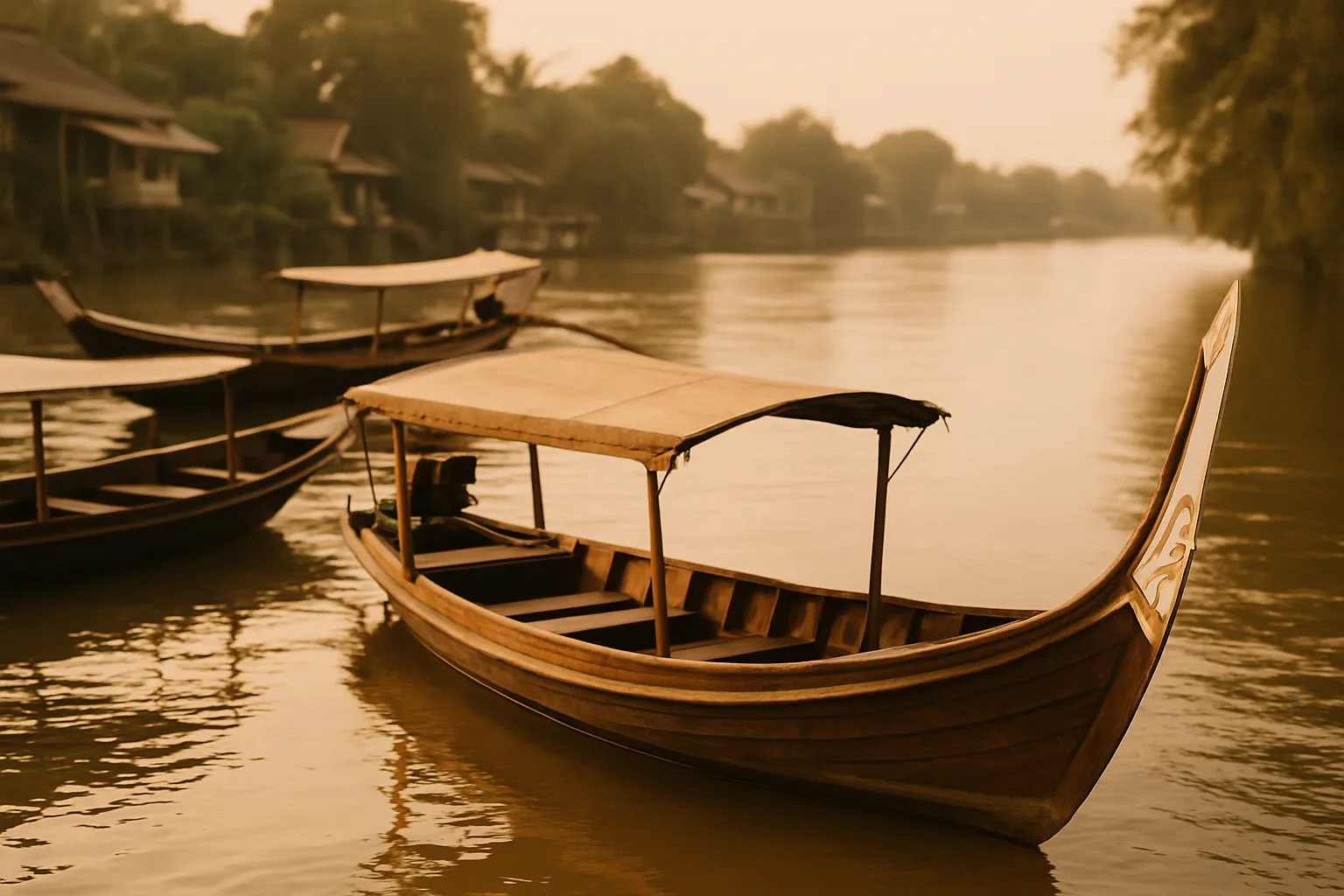
The market is on the river near Thammasat University and is easily reached by river boat to the Tha Prachan pier or on foot from the Grand Palace area. There is no entrance fee; it is a public street market and you are free to walk through and look. Mornings are the classic time, when the light is good and the district is at its most active, though it keeps going through the day. Food and drink are plentiful nearby, from riverside stalls to simple shophouse kitchens, so it is easy to spend an unhurried few hours. Approached as a place to watch and learn, Tha Prachan is one of the great sights of devotional Bangkok.