
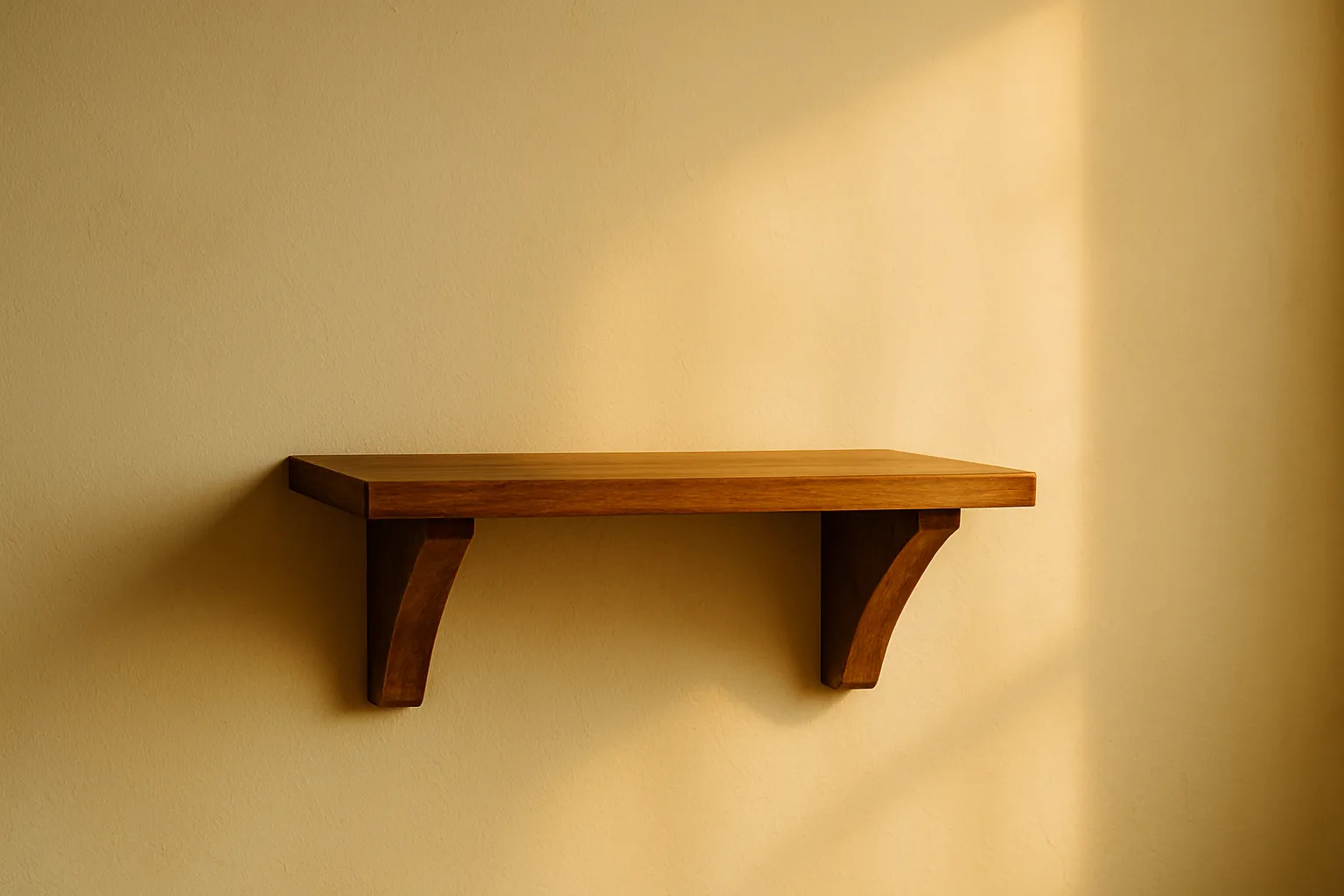
Many Thai homes keep a small altar, a raised place set aside for the sacred. It is not required, but it is traditional, and it gives the images, the revered figures, and the amulets not currently worn a proper place to rest. Setting one up is simple once you understand the single organizing idea behind it: everything sacred sits high, and the arrangement descends from there in order of reverence. This guide covers the altar itself; for the etiquette of wearing and storing an individual amulet day to day, see the fuller guide to wearing and caring for amulets.
The home altar described here is a Buddhist devotional shelf, distinct from the outdoor spirit house, san phra phum (ศาลพระภูมิ), that many Thai properties also keep. A spirit house sits outside on its own post and addresses the guardian spirit of the land, a practice older than Buddhism in Thailand that continues alongside it. The indoor altar is where the household keeps its Buddha image, its revered monks, and its amulets; the two serve different purposes and are not interchangeable.
Why an Altar
An altar answers a practical and a devotional need at once. Practically, it gives sacred objects a dignified home rather than a drawer. Devotionally, it creates a focal point for daily practice, a place to light incense, offer water, and pause. The point is elevation in both senses: the objects are raised physically, and the moment of tending them raises the ordinary day into contact with something higher.
The Shelf
The traditional form is the phing (หิ้ง), a shelf mounted on the wall above head height. A high shelf or the top of a tall cabinet works equally well. What matters is that it is elevated, above the level of people’s heads when they stand near it, and not placed where anyone would sit or walk above it. Keep it clean and uncluttered; the altar is not a storage surface.
Choosing or Building a Shelf
There is no single mandated size. Wall-mounted phing sold by Thai homeware retailers commonly run in the range of roughly 30 to 90 centimetres wide, with a main tier deep enough to hold a seated Buddha image comfortably, usually 15 to 25 centimetres, and a lower tier for offering vessels. Larger floor-standing altar cabinets, closer to two metres tall, exist for households with more images or more space, but a family with one Buddha image and a few amulets needs nothing so large.
Teak and other hardwoods are the traditional material, sometimes plain and sometimes finished with gilded Thai motifs along the edge. A modern painted or lacquered shelf is equally acceptable; the tradition places no requirement on material, only on placement and care. If you are having a shelf built rather than bought, the only structural rule worth following is that the wall bracket should be rated for more weight than the images and vessels actually require, since a shelf holding sacred objects should never be the thing that fails.
A wall-mounted phing is the most common form in an ordinary household, but it is not the only one. A floor-standing bucha table, toh mu bucha (โต๊ะหมู่บูชา), arranges the same hierarchy across a set of stepped tiers, traditionally in odd numbers such as three, five, or nine, rather than a single flat shelf; it suits a household with more images or ancestral portraits to display alongside the Buddha figure. At the more elaborate end, some homes set aside an entire small room, hong phra (ห้องพระ), a quiet room kept away from bathrooms and bedrooms and used for nothing but the altar and daily practice. All three, the wall shelf, the tiered table, and the dedicated room, follow the identical hierarchy described above; the difference is furniture and floor space, not doctrine.
What Goes on It
The arrangement follows the order of reverence, top to bottom and centre outward.
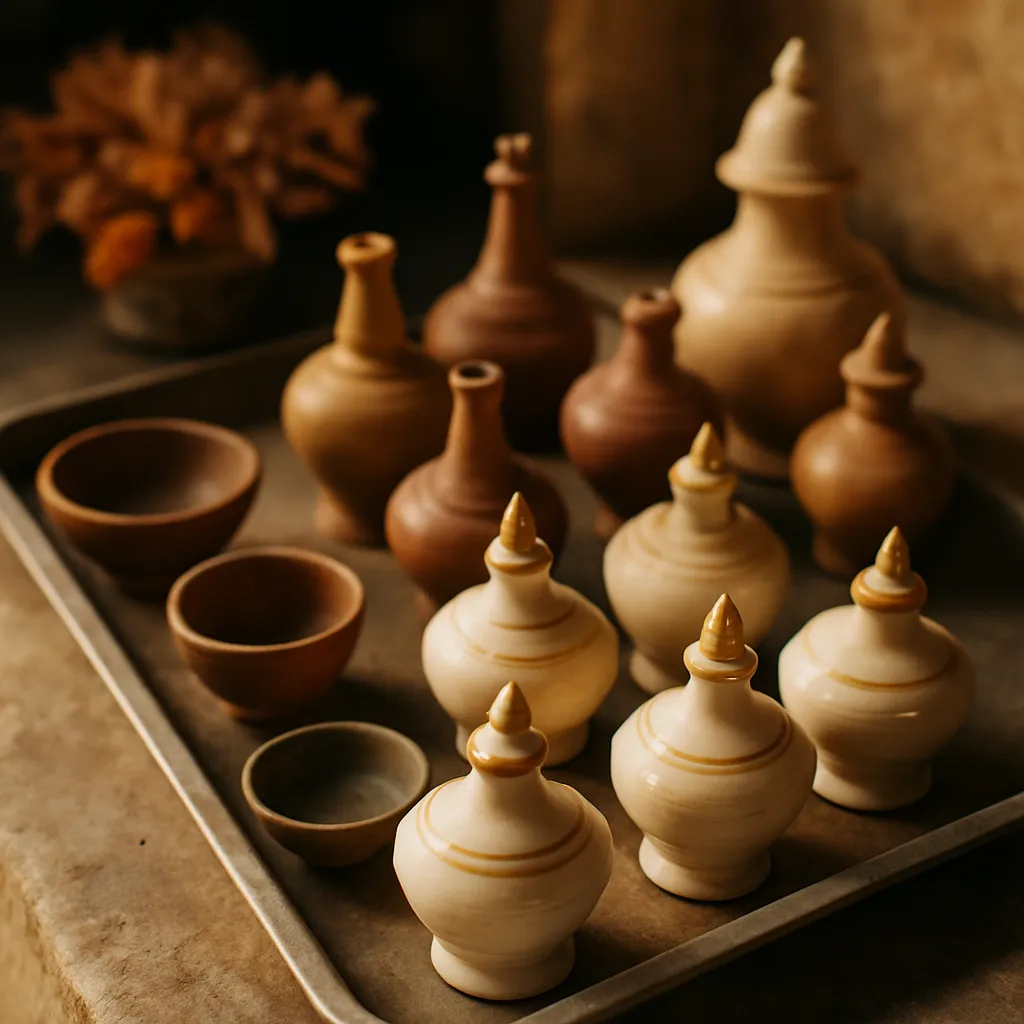
The Buddha image takes the highest and most central position. Nothing sits higher than it. Below and slightly forward come bucha statues of revered monks, the larger devotional figures of masters such as those introduced across the site. Amulets that are not being worn rest below the images; note that the small worn objects, the phra khrueang, belong on the altar when they are off the body. Offering vessels sit at the front, lowest and nearest, where they can be tended without reaching over the images.
The Offerings
The classic offerings are water, flowers, incense, and candles, each carrying a quiet meaning. Water stands for purity and clarity. Flowers, which bloom and fade, stand for impermanence. Incense carries the fragrance of virtue outward, and its smoke marks the offering being made. Candles stand for the light of understanding. To place them is bucha (บูชา), the act of reverence, described in the glossary. Refresh the water daily, replace flowers as they wilt, and light incense and candles during your practice rather than leaving them unattended.
Orientation
Position matters. The altar should face into the room, presenting the images outward to the space where people gather. Avoid placing it so the images face a bathroom door, and do not set it on a wall shared with a toilet. It should not overlook a bed, nor sit where feet will point toward it when someone lies down. These placements all come back to the same sanctity gradient: the sacred is kept high and kept clear of the parts of the home associated with the body’s lower functions.
What Not to Do
A few clear negatives keep an altar respectful. Do not store or place mundane objects on the same shelf as the images: keys, phones, receipts, and clutter do not belong there. Do not put anything in the space directly below the altar that would be walked on or treated carelessly; the floor beneath should stay uncluttered. And keep the altar out of any bathroom-adjacent position. None of this is superstition dressed up; it is simply consistency, treating a set-apart place as set apart.
Small Spaces and Rented Rooms
A wall-mounted phing is not always possible. Rental agreements often prohibit drilling into walls, and a condo or a single room may not have a spare wall at all. The principle still transfers: a small freestanding shelf placed on top of a wardrobe, a bookcase, or a dresser satisfies the same requirement of elevation without requiring any permanent fixture. Non-drilling wall mounts and adhesive picture-rail hooks, sold widely in Thailand for exactly this purpose, are an accepted substitute for renters who want something closer to a true wall shelf.
The orientation rules do not relax for a smaller home; they simply require more care to satisfy in a single room. Position the shelf on a wall that does not back onto a bathroom, keep it out of the direct sightline of the bed, and do not let it double as a nightstand crowded with a phone charger and the day’s clutter. A single room with one corner set aside and kept clean does the same work as a dedicated altar room in a larger house; the size of the space is not what makes the practice sincere.
Moving House
Relocating a Buddha image and an altar is common in Thailand, and there is a straightforward order to it: pack the Buddha image and any bucha statues first, wrapped in a clean cloth, and unpack and place them in the new home before the rest of the household’s belongings arrive. Set the shelf and the images in their new position before resuming ordinary tasks like unpacking the kitchen, so the altar is established rather than left in a box on moving day.
Devotees hold that moving a Buddha image is not itself inauspicious; what matters is that it is handled with the same care in transit as it receives at rest, never placed on the floor of a moving truck or stacked under other boxes. Once the new shelf is set up, a simple offering, water, incense, and a moment of quiet, marks the practice resuming in the new home. There is no requirement to reconsecrate an image or an amulet after a move; the original consecration is not location-bound.
Living with the Altar
The altar comes alive through use, and the daily practice is short. In the morning, light incense, offer fresh water, and recite a brief katha (คาถา) or the Namo Tassa, the standard homage to the Buddha; the glossary entry on katha covers the wider category of such recitations. This takes about two minutes and quietly anchors the day. When you take an amulet off at night, the altar is where it goes, which ties the household practice to the way the objects are worn and cared for. Kept simply and tended briefly each day, an altar becomes one of the calmest corners of a home.