
How to Wear, Handle, and Care for Amulets
Amulets live on the body and in the home. The customs around wearing, storing, and caring for them are expressions of respect, not superstition. This is the practical guide: what to do, what to avoid, and what the practices mean.
An amulet that never leaves its case on a shelf is a collector’s piece. An amulet worn daily against the skin, tucked under a shirt, carried through the heat and rain and ordinary labor of a life, is a devotional object doing its job. Most amulets in Thailand are working objects, and the customs around wearing and handling them have evolved over generations to serve two purposes at once: treating the sacred object with respect and keeping a fragile physical thing intact.
This guide covers both. It starts with the customs, the etiquette that Thai devotees observe around consecrated objects, then moves to the practical side: casing, cleaning, storage, and the material-specific care that keeps a powder tablet or a herbal compound from deteriorating. The customs come first because they are the foundation. Getting the attitude right matters more than getting every detail right, and Thais extend remarkable goodwill to any foreigner who handles sacred things with visible care.
The Gradient of Respect
Thai culture observes a gradient of sanctity from head to foot. The head is the highest and most sacred part of the body. The feet are the lowest and most profane. This gradient is not unique to amulets; it governs how Thais sit in the presence of monks, how they handle books (texts are kept high, never placed on the floor), and how they orient themselves in a temple. Understanding it unlocks almost every amulet custom you will encounter.
Amulets are worn above the waist. The neck is the standard position, with the amulet hanging at the chest, typically under the shirt rather than displayed outward. Hanging an amulet below the waist, placing it in a trouser pocket, or setting it on the floor would all register as disrespect, placing a sacred image in the zone of the body associated with the mundane and the unclean. At home, amulets are stored elevated: on a high shelf, on or near the household altar, never in a drawer with everyday objects or on a low surface.
This is not a set of arbitrary rules enforced by social pressure. It is a spatial language of reverence that runs through all of Thai Buddhist life. Once you see it, the amulet customs stop feeling like a list of prohibitions and start feeling like a consistent logic.
On the Body
This guide covers etiquette and care rather than the mechanics of wearing itself; for a full practical walkthrough of necklace configurations, cord types, and layering, see how to wear Thai amulets. What follows here is the shorter version needed to understand the customs that come after it.
The simplest configuration is a single amulet on a cord or chain at the neck. Thai convention favors odd numbers when multiple amulets are worn together: one, three, or five. The odd-number preference has cosmological resonance in Thai Buddhist tradition, where odd numbers are considered auspicious, but in practice the constraint is also physical. A three-hook necklace distributes weight evenly: one pendant at center, two flanking. Five works on a wider chain. Even numbers tend to hang unevenly.
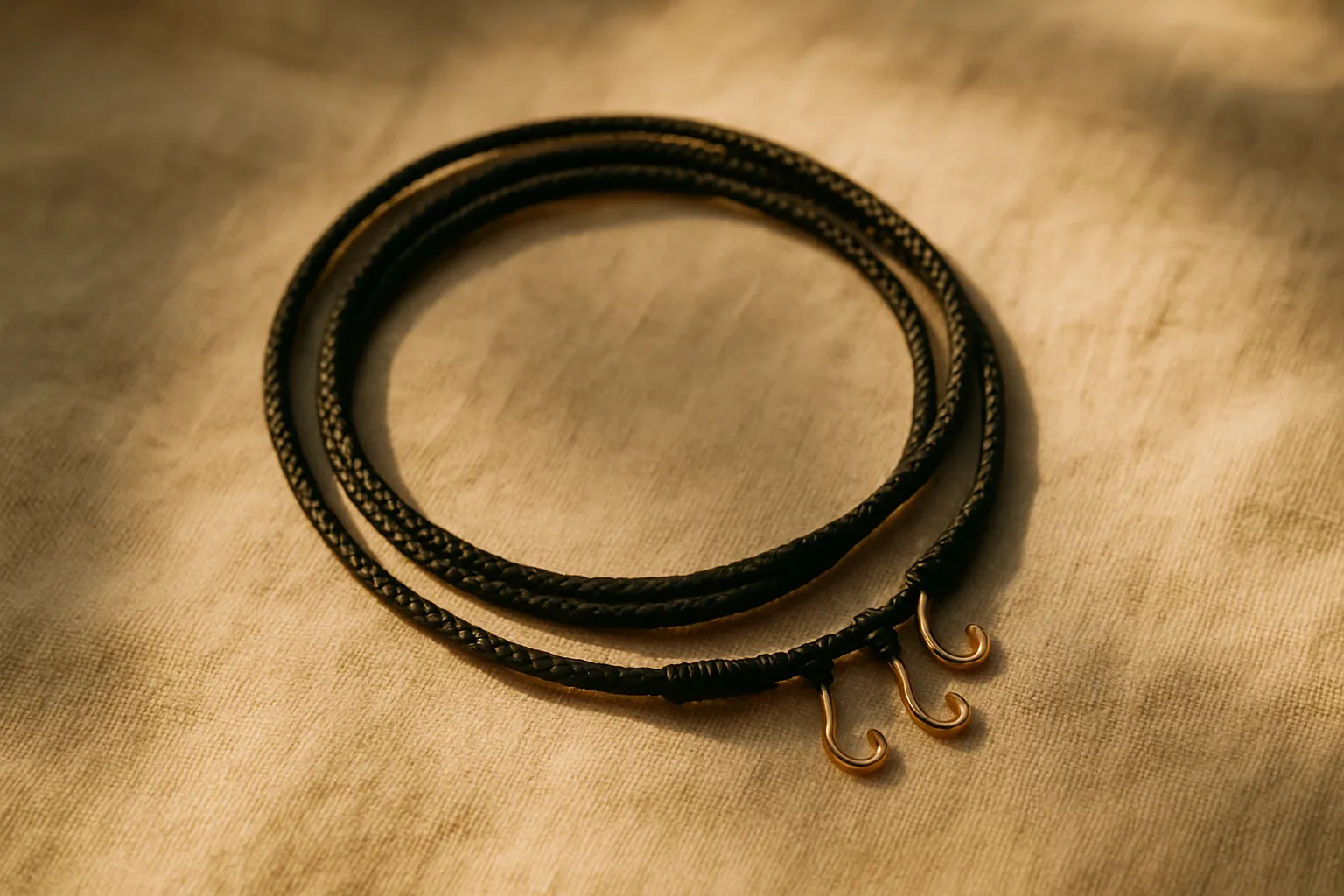
The cord or chain itself matters. Metal chains, often stainless steel or gold, are the most common. For those who prefer non-metal options, or whose personal practice restricts metal contact with skin, hand-braided wax cord is the traditional alternative: black, durable, and available from craftspeople who specialize in amulet cords. A good wax cord carries three hooks spaced for balance and sits flat against the chest.
Takrut (ตะกรุด), rolled metal scroll amulets, are sometimes worn on a separate cord at the neck, sewn into a cloth belt at the waist, or carried in a pouch. Lead takrut, which are common in the southern Thai tradition, should not rest directly against the skin because of the toxicity of the material. Cloth wrapping or a sealed case solves this.
Casing
Most amulets that see daily wear need a case, and the reason is as much physical as devotional. Powder amulets, nuea phong (เนื้อผง), are pressed from sacred powder compounds that are vulnerable to moisture. Sweat, rain, and humidity will slowly erode an uncased powder tablet. Herbal amulets, nuea wan (เนื้อว่าน), are compounded from plant material that reacts to water even more acutely. The standard protection for both is a waterproof case: a sealed frame, typically clear acrylic or glass with a metal or plastic rim, that lets the amulet be visible while shielding it from contact with moisture and skin oils.
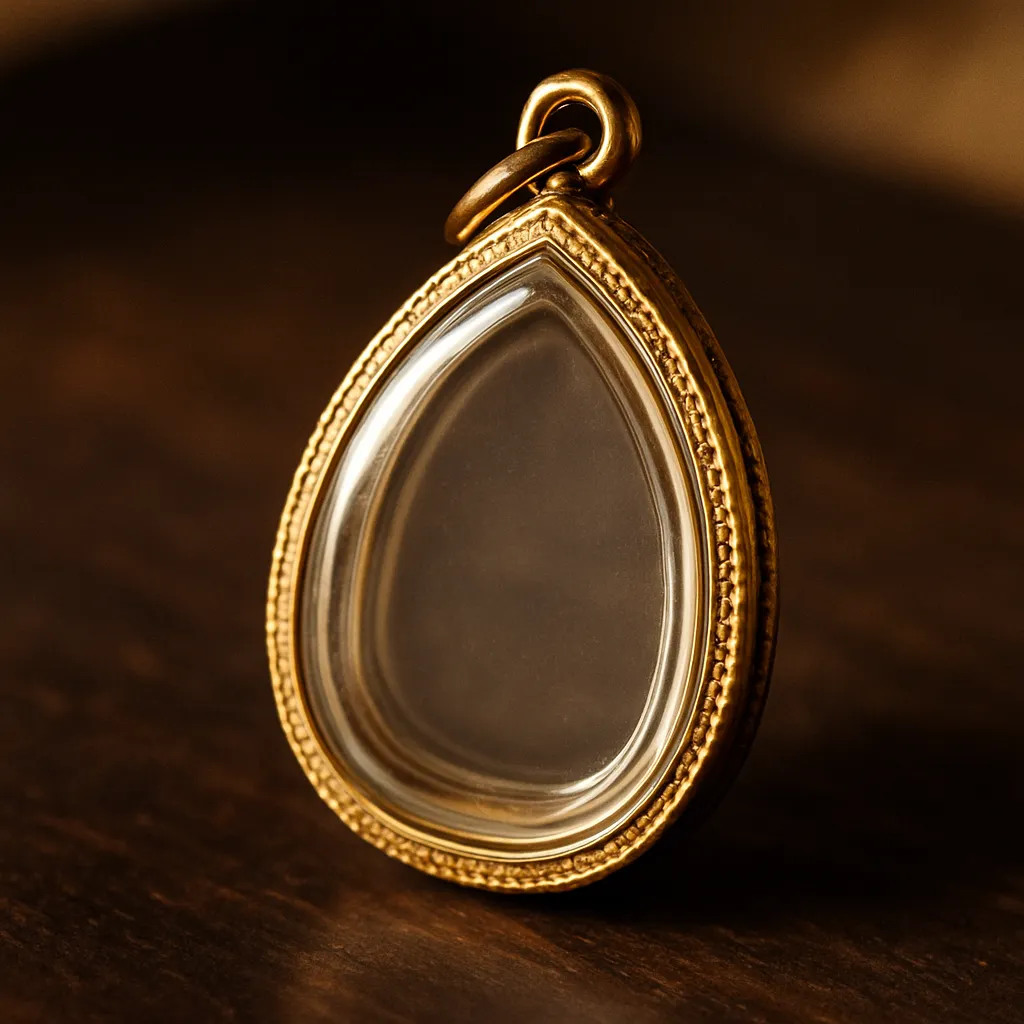
Cases come in standard sizes corresponding to the most common amulet dimensions. A temple counter selling powder or herbal amulets will often have cases available alongside the amulets themselves, or the seller can recommend the right fit. Specialty amulet case shops, common in market areas and near major temples, carry a wider range and can custom-fit unusual shapes.
Metal amulets, including rian (เหรียญ), coin amulets, and cast figurines, are less vulnerable to moisture but are still commonly cased, both for protection against scratching and to provide a clean hanging loop. Some devotees prefer to wear metal amulets uncased, directly on the chain, which is a matter of personal preference rather than strict custom.
For amulets that contain mercury (ปรอท), a sealed waterproof case is not optional but essential. Mercury is the signature material of the Khao Or academy tradition of southern Thailand, sealed inside an object rather than forming its body, and its presence is never meant to be exposed to air or skin. Mercury-filled casings should never be worn where sustained heat could compromise the seal; the interior of a parked car in tropical sun, which can reach sixty to seventy degrees Celsius, poses a real risk of seal failure. If a mercury casing ever cracks, stop wearing it and take it to a temple or an experienced caser rather than opening it yourself. The full material typology is in the materials guide.
When to Remove
Practices around removing amulets vary by region, teacher, and family, and this guide reports the range rather than prescribing a single rule.
Many devotees remove their amulets before bathing, before sexual activity, and before entering spaces considered ritually unclean, such as funeral grounds. The underlying logic is consistent with the gradient of respect: situations associated with the body’s physical functions or with death are considered inappropriate for a sacred image. Other devotees, equally sincere, simply turn their pendant to the back rather than removing it, keeping the image away from the body during these times without taking the amulet off entirely. Both practices are common and neither is considered wrong.
For practical purposes: if you shower with a powder or herbal amulet, even in a waterproof case, the combination of heat, steam, and moisture accelerates seal degradation over time. Removing the amulet before bathing is both respectful and sensible.
When you remove your amulet, place it somewhere elevated and clean. A small shelf, the top of a dresser, or the household altar shelf are all appropriate. Do not place it on the floor, on a toilet tank, or inside a shoe. This is not a test anyone administers; it is a habit of respect that, once established, becomes automatic.
At Home: Storage and the Altar
When amulets are not being worn, they belong in an elevated position. The ideal location is the household altar shelf, the phing (หิ้ง), a wall-mounted shelf set above head height where the household Buddha image sits. Amulets stored on or near the altar shelf are in the highest and most respectful position in the home.
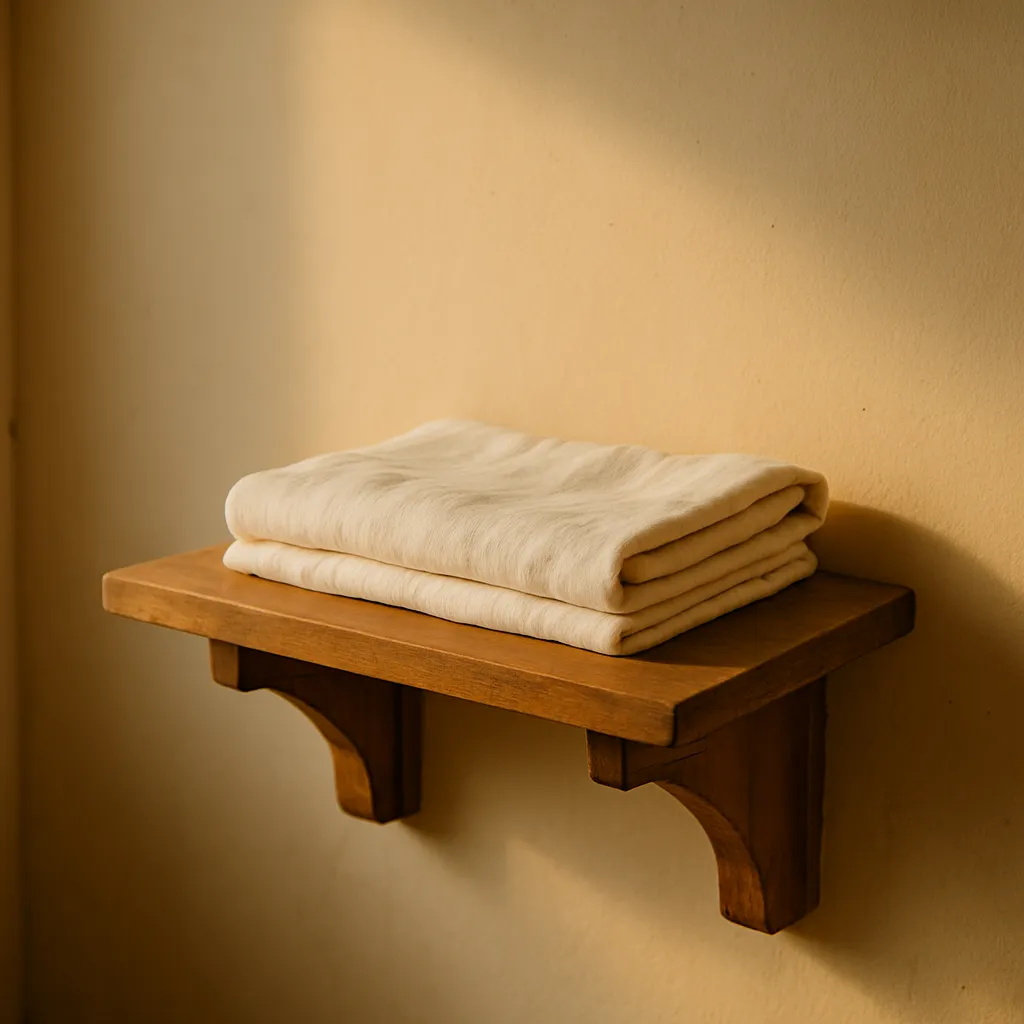
Not every household has a formal altar, and a consecrated amulet does not require one to be stored properly. Any elevated surface that is clean, dry, and reserved will do: a high shelf in a bedroom, the top shelf of a bookcase, a dedicated spot on a dresser. The principle is elevation and separation from mundane objects.
If you are building a household altar, the conventions are straightforward. The Buddha image sits at the highest point, centered. Bucha (บูชา) statues of revered monks, if you have them, sit lower than the Buddha image. Amulets not being worn can be placed on the altar shelf alongside or below the bucha images. Offering vessels for water, flowers, and incense sit at the front. The altar faces the room; it should not face a bathroom door or a bedroom where it would overlook the bed. For the full setup, including the daily offering sequence, see the home altar guide.
What to Do With an Amulet You No Longer Wear
An amulet you have stopped wearing is still a consecrated object. It does not lose its status because you have set it aside.
The simplest path is to keep it on your altar shelf. Many devotees accumulate amulets over a lifetime, wearing some and keeping others enshrined. Passing an amulet to someone who will respect it is also appropriate, and in Thai culture, giving a consecrated amulet to a friend or family member is a meaningful act of generosity.
If you no longer wish to keep an amulet and have no one to pass it to, you can return it to a temple. Most temples accept returned amulets and will store or re-distribute them. This is better than leaving a consecrated object forgotten in a drawer or, worse, discarding it in household waste.
What you should not do is throw an amulet away. The image it carries and the consecration it received make it something more than refuse, regardless of its material value. This is not a superstition about bad luck; it is a matter of respect for what the object represents.
Caring for Different Materials
Different materials require different care. The categories correspond to the nuea (เนื้อ), the material body, described in the amulets guide.
Powder amulets, nuea phong, are the most delicate. They are vulnerable to moisture, to direct contact with skin oils, and to physical impact. A waterproof case is essential for daily wear. Even cased, a powder amulet should be removed before bathing or swimming. If a powder amulet becomes damp, let it air dry completely before re-casing. Do not heat it or expose it to direct sunlight to accelerate drying; the powder can crack. Over years, a powder amulet’s surface will darken and harden slightly. This is natural aging, not damage.
Herbal amulets, nuea wan, follow the same care as powder but are even more reactive to moisture. The organic plant material in wan amulets can soften or develop mold if sealed in a case while still damp. Keep them dry. If you live in a high-humidity climate, store unworn wan amulets with a small silica gel packet nearby, not touching the amulet directly.
Earthen and clay amulets, nuea din (เนื้อดิน), are more robust but still porous. Waterproof casing is recommended for daily wear. Fired clay from ancient kru excavations is harder than modern pressed clay, but both benefit from protection against repeated wetting and drying cycles.
Metal amulets, including rian and cast images, are the most durable. Copper and bronze develop a natural patina over time that collectors value; do not polish it away. Gold and silver pieces can be gently cleaned with a soft dry cloth. Metal amulets with yant (ยันต์), sacred diagram inscriptions, on the surface should be handled carefully to avoid wearing away the fine incised lines.
Cloth items, including pha yant (ผ้ายันต์), consecrated cloths, and sai sin (สายสิญจน์), sacred thread, should be stored flat or gently folded, not wadded or crushed. Cloth degrades along a repeated fold line, so a pha yant kept folded the same way for years will eventually crack along the crease; rolling avoids this. If framing one for display, use acid-free backing, keep it out of direct sunlight, and hang it at head height or above. The related but distinct practice of sak yant, sacred tattoos inked into the skin, carries its own separate observances and is outside the scope of this guide.
Kru Finds and Fragile Pieces
Amulets recovered from a kru (กรุ), a temple chedi or crypt sealed for decades or centuries and later rediscovered, need different handling from an amulet rented fresh at a temple counter. A kru piece has spent long stretches inside a stable, sealed environment, and the sudden exposure to open air and handling that follows a find is when damage happens fastest; custodians who handle this material recommend letting a newly opened piece dry and stabilize for a period before sealing it into a case. The discovery and authentication of these caches is covered in the kru guide. Once cased, treat a kru piece as an archival object rather than a daily-wear one: century-old clay and powder is more brittle than its modern equivalent, so a rigid case, careful handling by the edges, and reserving the rarest finds for the altar rather than the body all reduce the risk of loss.
Traveling with Amulets
The friction points in travel are practical, not doctrinal. Metal amulets and cases set off airport scanners like any other jewelry; remove the amulet before the security line the way you would a watch, place it in the tray, and put it back on afterward. Keep the amulet on your body or in carry-on rather than checked luggage, where rough handling and pressure changes are more likely to crack a powder or herbal piece. A soft cloth pouch works well for the piece once removed for screening.
When an Amulet Cracks or Breaks
A cracked amulet is not automatically a ruined one. Devotees hold that an amulet worn during an accident may crack in the process, having absorbed harm that would otherwise have reached the wearer; Thai news coverage returns to this story regularly, a driver or rider walking away from a serious crash to find the amulet they wore in pieces. The tradition treats this as the amulet having done its work, not as a failure. Practically, a cracked amulet raises the same question as any amulet you no longer wear: keep the pieces on the altar, or return them to a temple. What the tradition does not support is discarding a cracked amulet as ordinary broken jewelry, whether the crack came from an accident or simply from age and moisture.
For the Newcomer
If you have just rented (chao, เช่า) your first amulet from a temple counter and are reading this guide to figure out what to do next, the answer is simpler than it may feel.
Wear it above the waist, on a cord or chain, under your shirt. If it is powder or herbal, get a waterproof case. Take it off before you shower. When you are not wearing it, put it somewhere high and clean. Treat it the way you would treat a family heirloom that happens to be small and fragile.
The customs described in this guide are not an exam. They are an expression of respect that, like any cultural practice, is learned gradually through observation and habit. The most important thing a foreigner can do is not to master every rule but to show, through small consistent acts of care, that you understand the object you are carrying is not a trinket. Thais will notice. They will appreciate it. And the customs will become second nature faster than you expect.
Where to Go Next
The amulets guide covers what the objects are and where they come from. The consecration guide explains the ritual that gives them their authority. The glossary defines every term, from nuea to muan sarn to phim, with Thai script and cross-references. And the journal covers the wider world of the tradition, from the types you will encounter to the market you may eventually enter.