
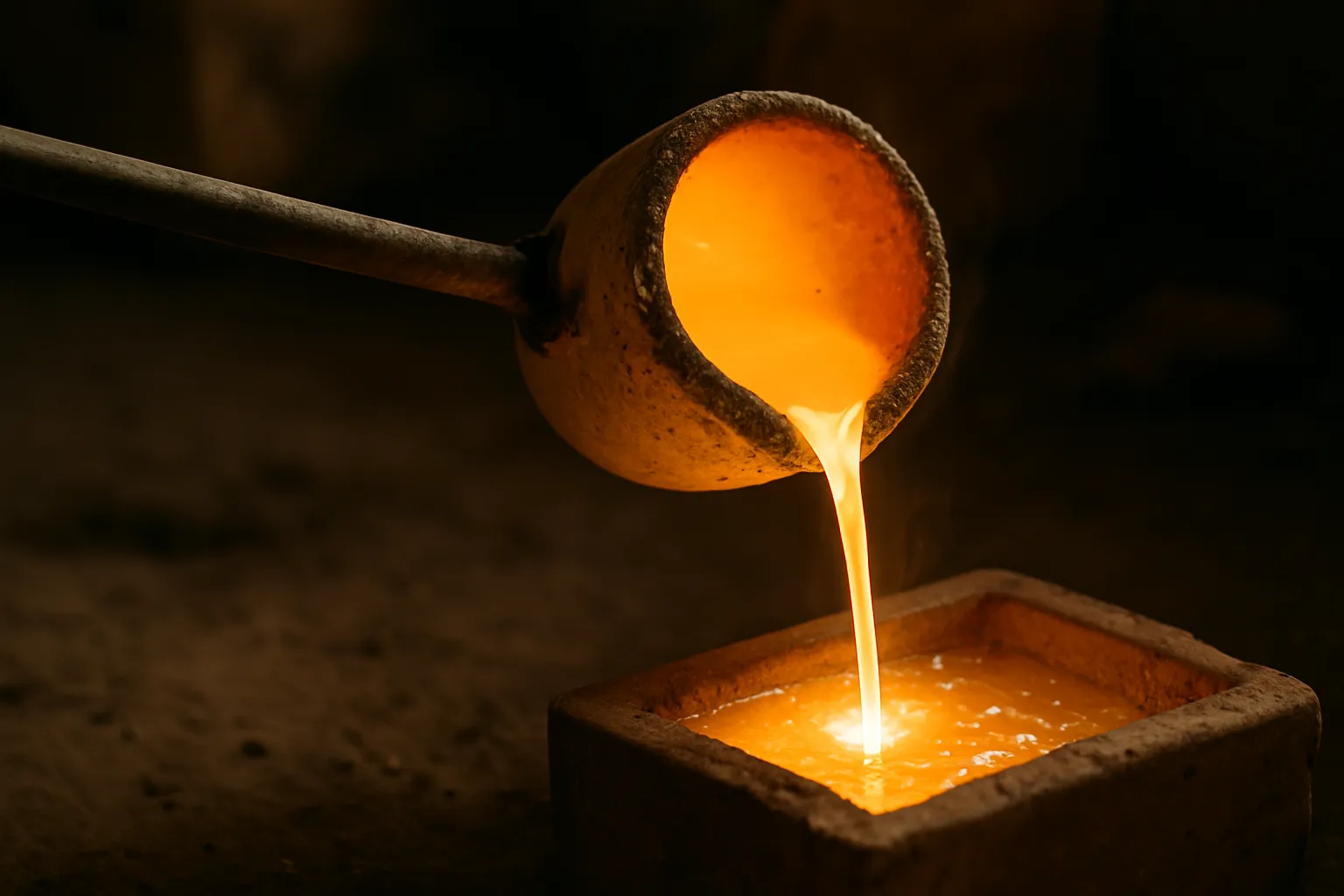
When a Thai amulet is cast in metal rather than pressed from powder, the metal itself can be sacred, not by accident of what was on hand but by design. The most celebrated of these sacred alloys is nawaloha (นวโลหะ). The name says what it is: nava, nine, and loha, metal. Nawaloha is a prescribed alloy of nine metals, melted together and used to cast Buddha images, revered-monk figures, and coins. It is one of the material families introduced in the Amulets 101 guide, and it rewards a closer look.
Nine Metals, and Why Nine
Ask what the nine metals are, and you will get a slightly different answer depending on whom you ask. The list is commonly given as gold, silver, copper, tin, lead, mercury, iron, zinc, and antimony, but the exact composition varies by tradition and by teacher, and some lists substitute brass or bronze for one of the nine.
That variation is not a flaw in the concept; it is the concept. What matters in nawaloha is not metallurgical precision but the sacredness of the number nine, an auspicious number deep in Thai Buddhist culture. The alloy is a ritual formula expressed in metal, and its meaning lies in the completeness that nine represents rather than in any single laboratory recipe. A related and simpler formula, sattaloha (สัตตะโลหะ), uses seven metals on the same principle. The point in both cases is the same: an intended, sacred combination, not an arbitrary melt.
From Five Metals to Nine
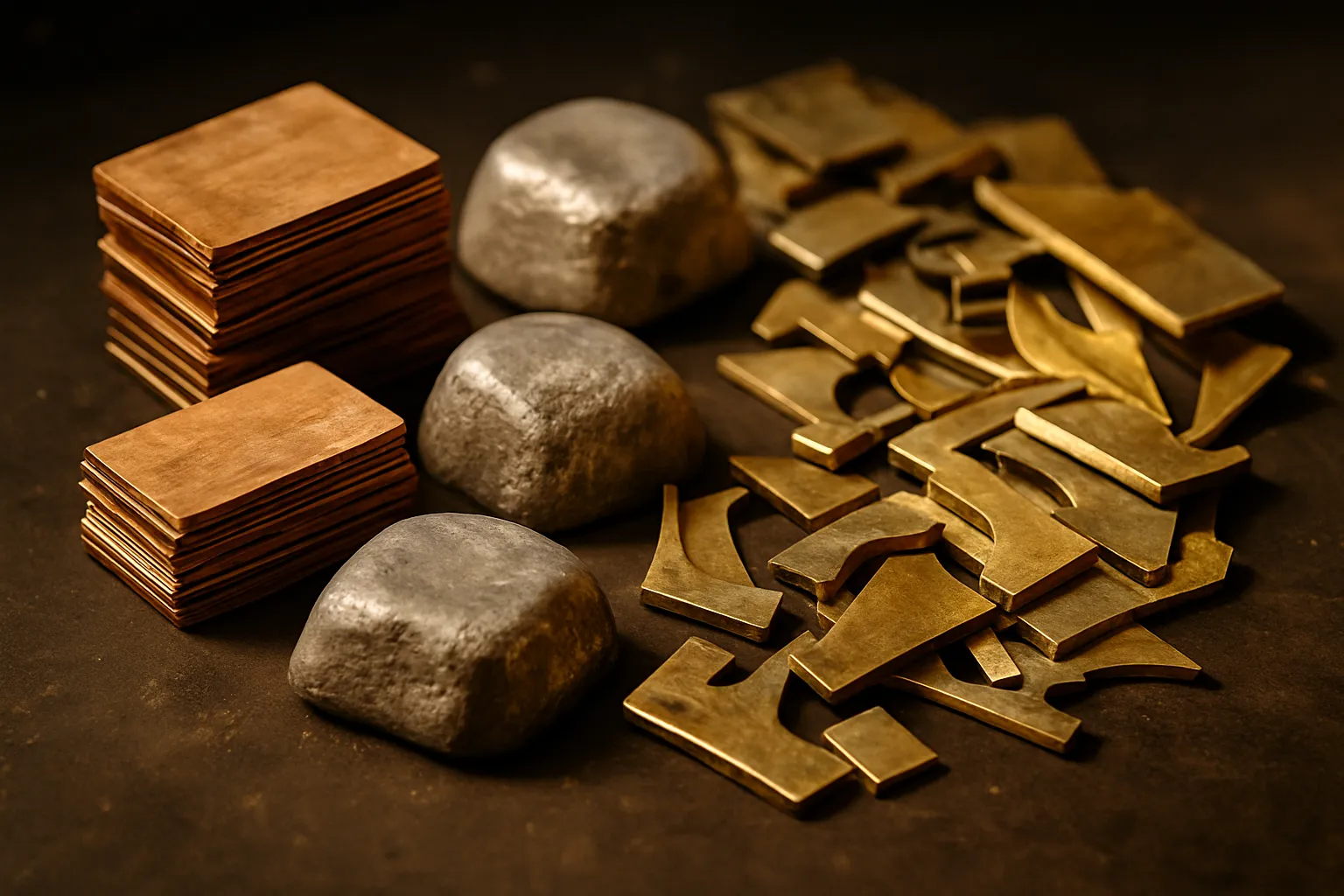
The idea of a prescribed metal alloy did not start at nine. Thai metalworking tradition builds outward from benjaloha (เบญจโลหะ), five metals, iron, mercury, copper, silver, and gold, used for some of the earliest cast Buddha images and ritual objects. Adding jao nam ngern (เจ้าน้ำเงิน), a bluish antimony-bearing ore, and zinc produces sattaloha, seven metals. Adding chin (ชิน), an alloy of lead and tin already used on its own for older cast amulets, and a measure of purified copper completes the set at nine: nawaloha.
Thai references on the craft record a full-formula recipe expressed by weight, using the baht (roughly 15 grams) as the traditional unit: one baht of chin, two of jao nam ngern, three of iron, four of purified copper, five of mercury, six of zinc, seven of copper, eight of silver, and nine of gold, a total of forty-five baht by weight, a little under 700 grams before losses in the melt. The ascending count, one through nine, is itself part of the formula’s design, another expression of the number’s significance rather than a metalworker’s shortcut.
Casting to the full nine-part formula is demanding in practice. Two of the components, chin and jao nam ngern, are difficult to source in quantity, and metalworkers have long substituted or reduced them when supply was short. This is why nawaloha compositions vary as much in practice as the metal lists themselves do: a casting described as nawaloha may follow the traditional formula closely or approximate it, and the temple’s own batch record from the time of casting is usually the clearest account of which.
The Casting
Where the metals come from is part of what makes the alloy sacred. Rather than being bought as raw stock, the components are often gathered from meaningful sources: metal from old temple bells, jewelry donated by devotees, worn ritual implements. Each donated piece brings its own small history into the crucible.
The melting is a ritual, not merely an industrial step. The tradition holds that the metals are brought together with the recitation of the proper katha, the sacred incantations, and that the pouring is timed to an auspicious moment. The alloy is thus consecrated in the making, in much the same way that a powder amulet’s ingredients are consecrated before pressing, an application of the same logic that governs consecration across the wider tradition: matter is treated as inert until intention and ritual make it otherwise.
One material deserves particular mention. Chanuan (ชนวน) is sacred scrap metal saved from earlier consecrated castings, and adding it to a new melt physically embeds the old within the new. A fresh nawaloha image made with chanuan literally contains the material of prior sacred objects, carrying their consecration forward. It is the metalworker’s version of a principle that runs through the whole tradition, and one you will meet again in the account of muan sarn, the sacred ingredients of powder amulets.
A Documented Lineage: Phra Kring and the Wat Suthat Tradition
Nawaloha’s most storied application is the phra kring (พระกริ่ง), a small hollow cast image of the Medicine Buddha with a loose metal pellet sealed inside that produces a faint ringing sound when the object is shaken. Tradition traces the form’s introduction into Thailand to the Ayutthaya period, and temple accounts connect its early transmission to that era, though the technical manuals that once recorded the casting procedure in detail were lost over the centuries and had to be reconstructed by later masters from what survived.
Wat Suthat in Bangkok became the tradition’s best-known custodian of the phra kring under Somdej Phra Sangkharaj Pae, the temple’s abbot and later Thailand’s supreme patriarch in the early twentieth century. A phra kring cast at Wat Suthat in 2479 BE (1936) to mark his elevation in monastic rank, known among collectors as Phra Kring 79 after his age that year, was produced in a run of 464 pieces in nawaloha and remains one of the most sought-after twentieth-century castings in the material. The edition’s date, quantity, and occasion are part of the standard collector record for the piece, the kind of documentation the tradition treats as inseparable from the object itself.
Nawaloha castings have also marked national religious occasions rather than a single temple’s history. For the 2500 BE (1957) commemoration of the Buddha’s parinibbana, twenty-five centuries earlier by the traditional Thai Buddhist count, a nationwide program in preparation since 2495 BE (1952) produced a commemorative Buddha image in multiple metals, including a nawaloha run alongside separate gold and silver editions. The scale of that casting shows nawaloha’s use extending beyond any single monk’s lineage into state-sponsored devotional production.
Documented Like a Recipe
Because the sources of the metal carry meaning, they are recorded. When an edition is cast in nawaloha, its batch description often lists where the metal came from, naming donated bells or the chanuan of a revered earlier casting, in the same spirit that a powder amulet’s documentation lists its ingredients. The metal, like the powder, has a provenance, and that provenance is part of the object’s identity rather than an afterthought.
Composition Claims: What to Read Carefully
Because full-formula nawaloha is demanding to cast and commands a premium over plainer bronze, composition claims are one of the more contested details in the market for these objects. Describing a piece as nawaloha describes an intended recipe and a ritual category, not a laboratory assay, and the tradition has never treated the nine metals as a fixed percentage verified by instrument.
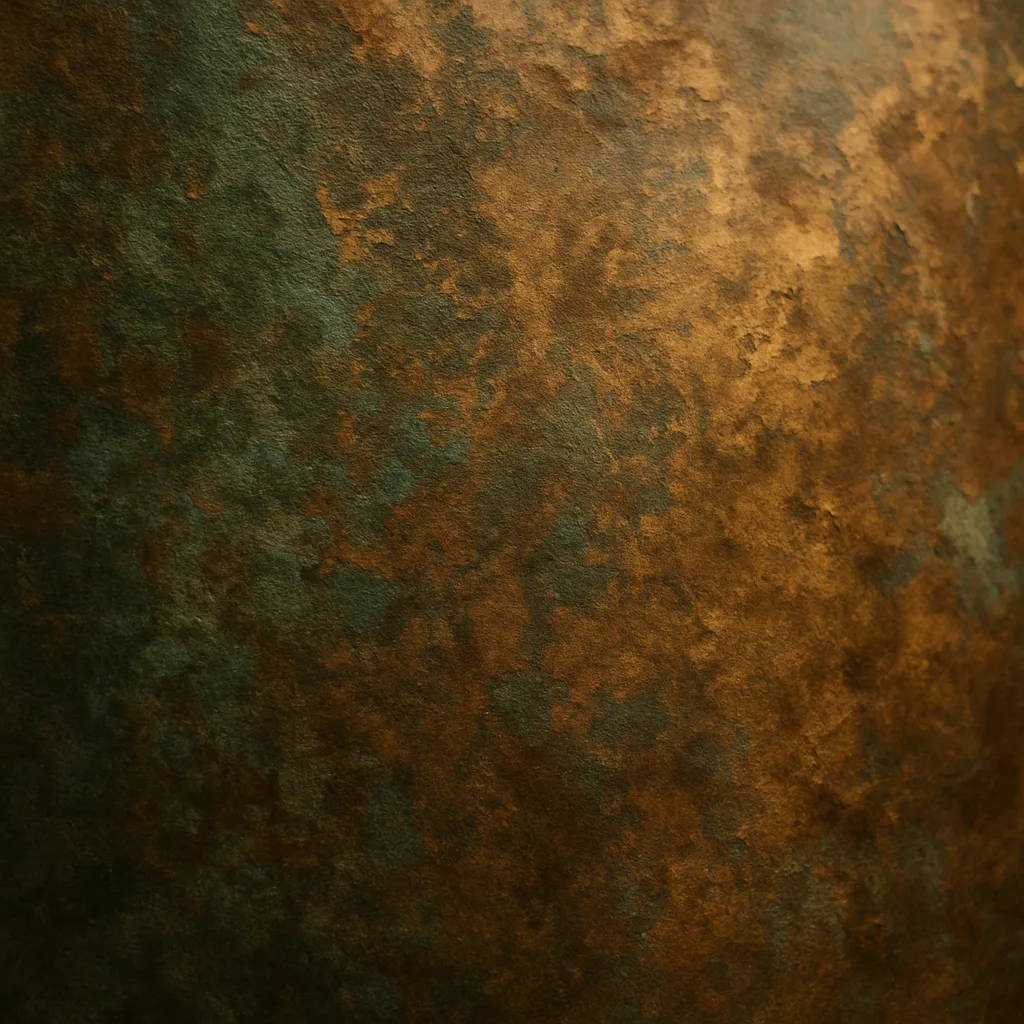
What collectors and researchers examine, without reaching a verdict from the description alone, includes the batch documentation from the original casting, the surface patina that develops as the alloy ages (nawaloha commonly darkens over time and can develop reddish or variably toned oxidation as it is handled and cleaned), and the object’s weight and density relative to known examples from the same batch. These checks belong to the specialists of the association circuit, not to a label read on a listing, and this site describes the categories those experts examine rather than adjudicating any individual piece; that judgment belongs to the certification process covered in the guide to Thai amulet authentication.
For a newer collector, the practical guidance is simple: treat “nawaloha” as a materials category with real history and real variation behind it, ask for a piece’s documentation rather than relying on the label alone, and hold specific authenticity questions for the certification circuit rather than for marketing copy.
A Note for Wearers and Collectors
Nawaloha and its sibling alloys are most often used for cast images and coins rather than for the small pressed tablets worn flat against the chest. This has a practical consequence worth knowing. Cast metal pieces frequently occupy the shelf, the altar, or the display case rather than the neck cord, which makes them a natural material category for devotees who prefer not to wear metal against the skin, or who keep their most substantial pieces for veneration at home rather than daily wear.
As with every subject on this site, Lokavidu describes the tradition rather than adjudicating individual objects. The composition of a specific piece, and the claims attached to it, are matters for the Thai collector associations and their experts. What can be said plainly is the idea at the center of nawaloha: nine metals, gathered with intention, melted with recitation, and often carrying the substance of older consecrations inside them. For the wider world these objects belong to, return to the Amulets 101 guide.