
How Consecration Works
An unconsecrated amulet is a well-made object. Consecration is the event that changes its status. This is how the ceremony works, what the tradition holds it accomplishes, and why the roster of monks matters as much as the material in the mold.
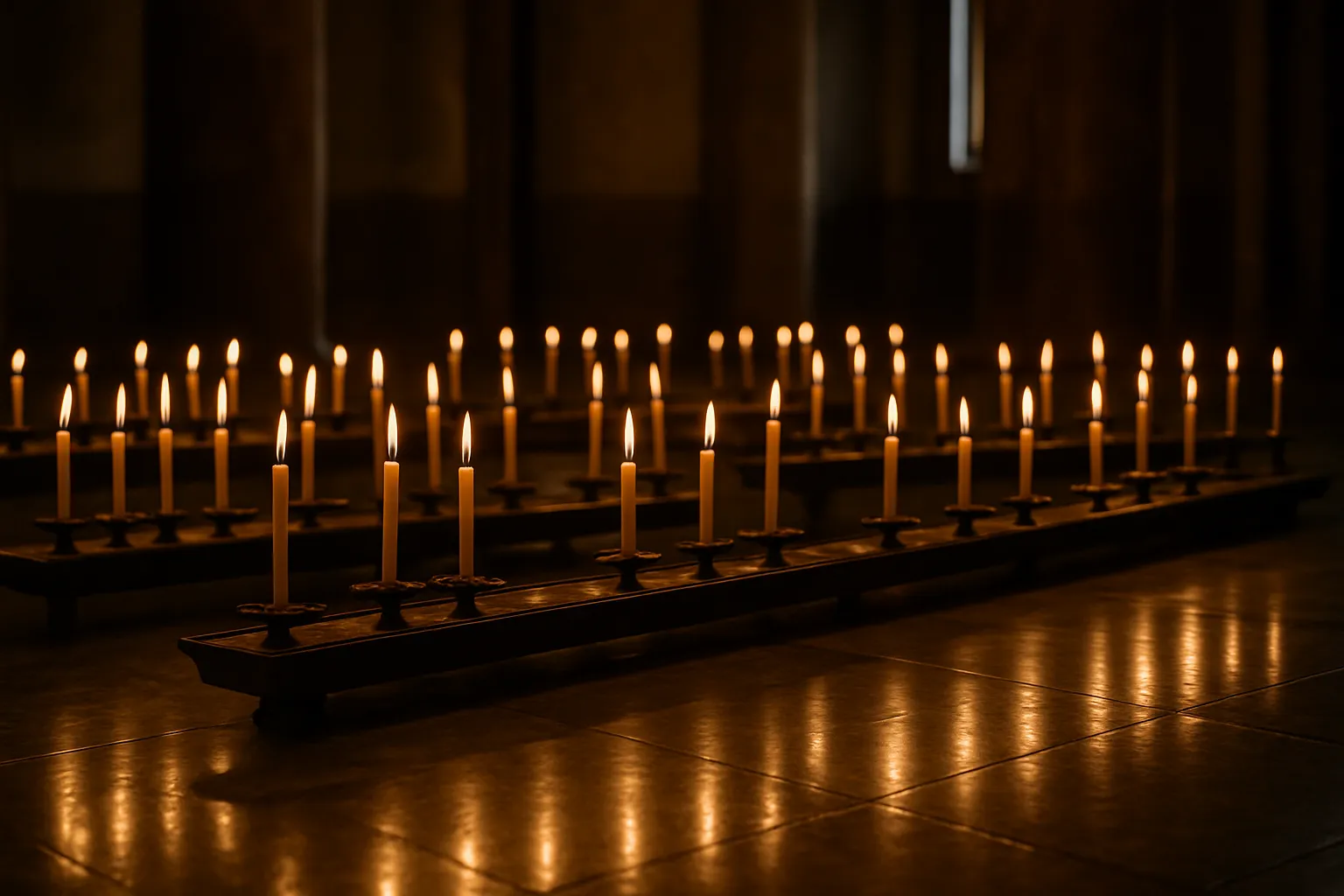
Everything in the world of Thai Buddhist amulets turns on one event. The material may be rare. The mold may be famous. The monk whose image it carries may be revered across the country. But until the ritual happens, the object is, in the tradition’s own terms, simply a well-made thing. Consecration is what changes its status.
This guide explains how that ritual works: the vocabulary around it, the physical setup, the roles the monks play, and what the tradition holds is accomplished when it is done well. It reports the ceremony as the tradition describes it: plainly where the procedure is documented, with attribution where the claims are a matter of faith.
Two Words for One Idea
The general Thai term for consecrating a sacred object is pluksek (ปลุกเสก), literally “to awaken by incantation.” It covers the entire range: a single monk blessing a batch of amulets alone in a quiet kuti over several nights, or a senior forest master inscribing a takrut with yant (ยันต์), sacred geometric diagrams, while reciting katha (คาถา), incantations, stroke by stroke. Wherever a practitioner concentrates the power of recitation and meditation into an object, that is pluksek.
The formal, large-scale version has its own name: phutthaphisek (พุทธาภิเษก), the grand consecration ceremony. The Royal Institute of Thailand defines phutthaphisek as a ceremony for consecrating Buddha images or sacred objects in which senior monks expert in meditation sit and project the force of their concentrated focus on the virtues of the Triple Gem into the objects being blessed. This is the ceremony that generates the batch posters, the rosters of presiding monks, and the documentation that follows an amulet through its life in the market.
The two terms are nested, not opposed. A phutthaphisek is a specific, documented form of pluksek. Not every pluksek is a phutthaphisek, but every phutthaphisek is pluksek on a grand scale.
The Physical Setup
A phutthaphisek takes place in the ubosot (อุโบสถ), the ordination hall of a temple, the most ritually bounded space in the monastery. The hall’s boundary is marked by sema (เสมา), boundary stones that define the consecrated ground. What happens inside the sema carries a different ritual weight than what happens outside it.
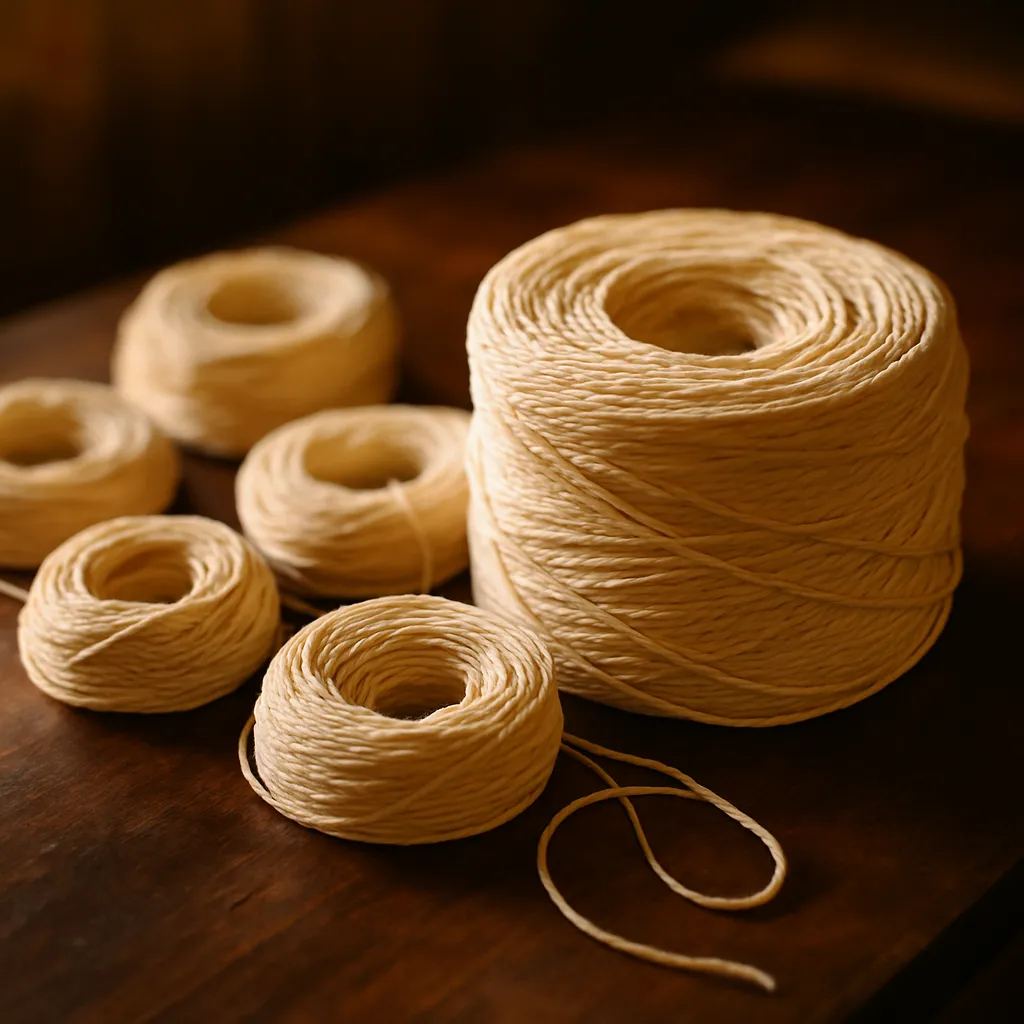
The objects to be consecrated are arranged on a raised table at the center, draped in white cloth. Around the hall, sai sin (สายสิญจน์), sacred cotton thread, is strung in a web that connects everything: the objects, the monks, and the principal Buddha image of the hall. The thread runs from the Buddha image down to the objects, then out through the hands of the chanting monks and around the perimeter of the hall. Traditional practice spaces the thread at intervals of one arm’s length, creating a net that encloses the entire ritual space. The thread is the physical circuit through which the blessing is understood to flow.
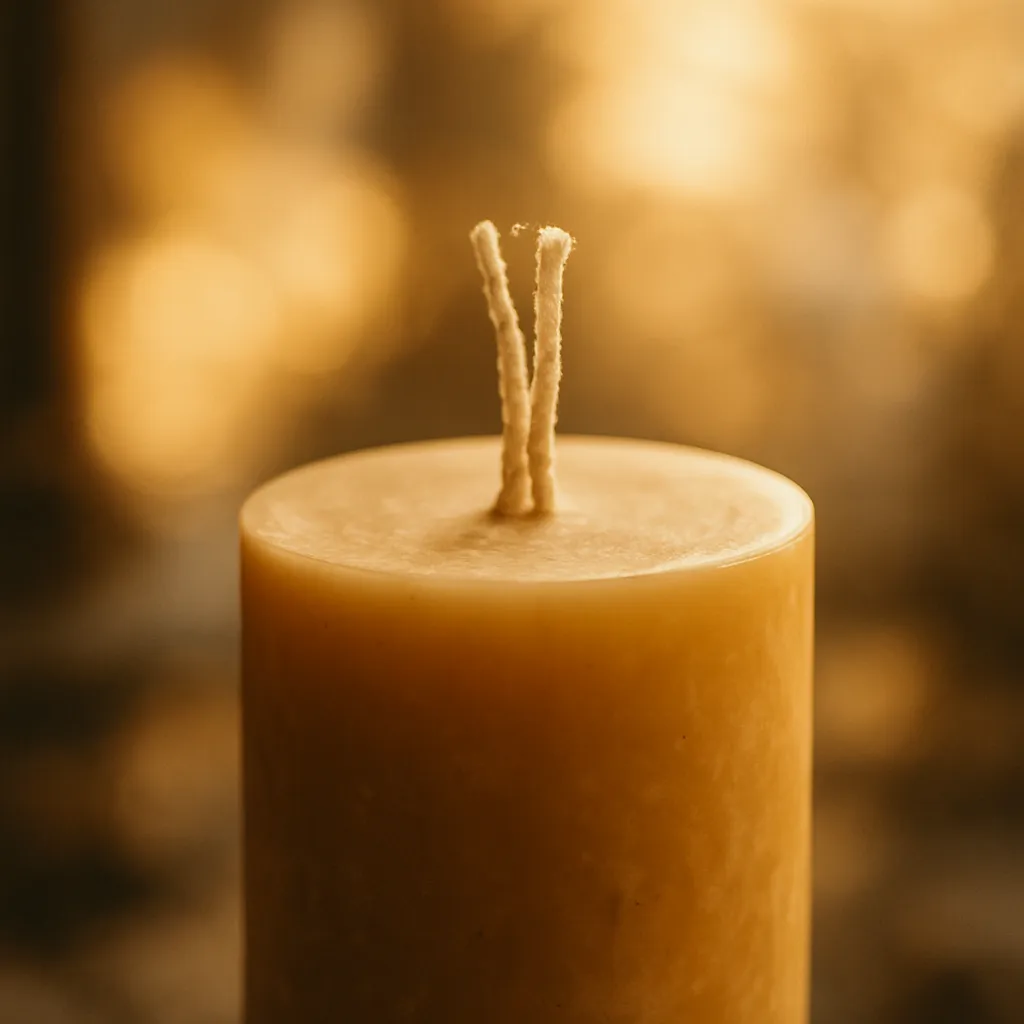
The most important single object in the hall, after the objects being consecrated, is the tian chai (เทียนชัย), the victory candle. This is a large beeswax candle with prescribed specifications: it weighs eighty baht (approximately one kilogram), contains one hundred and eight braided wicks, and stands as tall as the ceremony’s patron. It is placed in a glass case to shield it from drafts, because the candle must not go out. The tian chai is lit at the ceremony’s opening and must burn continuously until the presiding monks extinguish it at the close. If it goes out prematurely, the tradition considers the ceremony incomplete.
The People in the Room
A phutthaphisek involves two distinct groups of monks performing two different kinds of work simultaneously.
The first group is the phan wan (ภาณวาร) chanters, typically four monks who recite the great protective texts of the Pali canon in relay. These include the Itipiso, the enumeration of the nine virtues of the Buddha (and the origin of the name Lokavidu), along with other paritta, the canonical protective recitations that Thai Buddhists consider to carry the Buddha’s own blessing power. The chanters work in shifts through the hours of the ceremony, maintaining an unbroken stream of recitation.
The second group is the khana prok (คณะปรก), the meditation circle. These are the senior monks and masters, typically nine or more, who sit in meditation around the objects throughout the ceremony. The tradition holds that these monks enter deep states of concentration and project the force of their samadhi, their meditative absorption, into the objects through the sai sin thread and through the sustained power of their focused attention. The depth and reputation of the monks in the khana prok is precisely what gives a ceremony its authority.
This is why temples publicize who sat in a given ceremony. The batch poster that documents every amulet edition lists the presiding monks the way a concert program lists soloists. When a collector examines an amulet’s credentials, the ceremony roster is as important as the material and the mold. A batch consecrated by nine renowned masters carries different weight than one blessed by the monks of a single small temple, regardless of whether the objects look identical.
The ceremony also has a Brahmanical layer that reflects the historical syncretism of Thai religious practice. A Brahmin priest typically performs the opening invocation, the bucha ruek (บูชาฤกษ์), reading the devongkan (เทวโองการ), the invocation of celestial beings, and making offerings at the auspicious hour calculated by an astrologer. This is not an anomaly; it is the normal texture of Thai ritual, where Buddhist and Brahmanical elements have coexisted for centuries.
Biographies of many of the senior masters who sit in these ceremonies, and the temples where they served, are gathered in the monk index.
The Ceremony Sequence
The procedure is documented in Thai institutional sources, including the Royal Thai Army Chaplain Corps, which maintains detailed liturgical guides. The standard sequence runs as follows.
The ceremony begins with the Brahmin’s invocation at the auspicious hour, calling on celestial beings to witness and protect the proceedings. The ceremony patron lights incense and candles at the altar. The assembly receives the five precepts from the presiding monk. Monks then chant the great Buddhist recitations.
At the calculated auspicious moment, the tian chai is lit. The presiding monk receives the igniting candle, recites the katha for lighting the victory candle, and the flame is transferred. From this moment the ceremony is formally in progress. The phan wan chanters begin their relay of protective recitations. The khana prok monks take their seats around the objects and enter meditation.
The ceremony continues for the prescribed duration, which varies. Some run through a single night. Others span multiple sessions. The most elaborate, associated with royal or nationally significant batches, may last several days.
At the closing auspicious moment, the presiding monk performs the ritual extinguishing of the tian chai. He receives a betel leaf, anoints it with consecrated paste, and uses it to smother the flame while reciting the closing katha. The candle must be ceremonially extinguished, not blown out.
For Buddha images, the ceremony typically concludes with boek net (เบิกเนตร), “opening the eyes.” A senior monk symbolically opens the eyes of the image, marking the moment it is regarded as complete and ready for veneration. This act draws on the principle that a Buddha image is not merely a representation but, once consecrated and its eyes opened, is treated as a presence.
The monk performing boek net recites a line drawn from the Buddha’s own account of his enlightenment in the first sermon: cakkhum udapadi, nanam udapadi, “the eye arose, knowledge arose.” Applied to a newly cast or painted image, the line extends that language of awakening to the object itself. Temple accounts describe the image’s eyes as opening once, and only once; before the recitation the object is a casting, after it the object is regarded as complete. Portable amulets are not given a literal eye-opening in the same way, since most carry a low-relief image rather than a full three-dimensional face, but the same principle of a single, dateable moment of completion applies to the phutthaphisek as a whole. Before the ceremony the batch is inventory. After it, the tradition holds, the batch is sacred.
The Solo Consecration
Not all consecration requires a full phutthaphisek. A single monk of sufficient barami (บารมี), accumulated spiritual merit, can consecrate objects alone, and some of the most revered amulets in Thailand were blessed this way.
A forest master sitting alone in his kuti, holding an amulet in his hands through a night of unbroken meditation, is performing pluksek as legitimately as a nine-monk khana prok in a royal ubosot. The tradition’s logic is consistent: it is the depth of the practitioner’s attainment, not the size of the assembly, that determines the potency of the consecration. The ceremony provides the form, but the monk provides the substance.
This is why a single amulet blessed by a legendary master can command more devotion and a higher market value than a batch from a large ceremony with less distinguished participants. The name on the certificate matters more than the number of names.
Regional Variation
The structure described above, the two monk groups, the sai sin web, the tian chai, is the shared template, and any wat capable of hosting a phutthaphisek draws on some version of it. Regional character shows up less in the ritual mechanics, which are broadly national, and more in venue, scale, and lineage.
Bangkok and the central plains host the grandest and most publicized ceremonies. Wat Suthat Thepwararam, one of the kingdom’s most senior royal temples, has served as a venue for state-level consecration and lustral-water rites, including the ceremony that prepared the sacred water used in the 2019 coronation of King Rama X. Temples of this rank draw the largest khana prok rosters and the widest press coverage, and a batch consecrated there inherits that visibility when it reaches the secondary market.
In the north, the solo-consecration logic above runs through its own honorific: kruba (ครูบา), the title northern Thai Buddhists give to widely revered ascetic or restorer monks. The most famous example is Kruba Srivichai of Wat Ban Pang, Lamphun, who spent decades in the early twentieth century restoring temples and building roads across the Lanna region, including the road up to Doi Suthep, and remains venerated as the exemplar of the northern kruba tradition. Northern consecration culture tends to center on the standing of an individual master rather than on the scale of a centralized ceremony, closer to the forest-monk model above than to a Bangkok-style phutthaphisek.
In the southern Thai tradition, specifically within the Khao Or academy lineage of Phatthalung, a distinctive ceremony called Sao Ha (เสาร์ห้า, Saturday the Fifth) takes place when the fifth day of the lunar month falls on a Saturday, an alignment considered especially powerful. These ceremonies are held in the Chatthan cave (ถ้ำฉัททันต์) at Wat Khao Or, historically drawing nine or more monastic and lay masters who sit in concentration together in the cave rather than in an ubosot. The Sao Ha ceremony connects the broader phutthaphisek tradition to the specific wicha (วิชา), sacred knowledge, of the Khao Or school, and is one of the clearest examples of a regional consecration format that developed its own name, calendar, and venue while remaining recognizably part of the same pluksek tradition.
What the Tradition Holds
It is worth stating directly what the tradition believes happens during consecration, because this site reports the tradition rather than performing it or dismissing it.
Devotees and monks describe the consecration as a transfer of spiritual force. The monks’ sustained meditation, focused on the virtues of the Buddha, the Dhamma, and the Sangha, is understood to charge the objects with those virtues. The sai sin thread acts as a conduit. The katha recitation saturates the air and the material. The victory candle holds the window of time open. And the combined barami of every monk in the room enters the objects through hours of concentrated will.
The result, in this view, is an object that carries a portion of the Triple Gem’s protection. When a devotee wears a consecrated amulet, the tradition holds that they carry with them the accumulated merit and concentration of every monk who sat in that ceremony. This is why ceremony history is not a footnote in an amulet’s documentation. It is the event that the documentation exists to record.
Whether this transfer occurs is, of course, a matter of faith, and this site takes no position on it. But the reader should understand that the practitioners are not vague about what they believe is happening. The terminology is precise. The procedure is structured. The logic is internally consistent. And the documentation is public.
The Documentation Trail
A consecrated batch leaves a paper trail that becomes part of every amulet’s identity.
The batch poster, printed and distributed by the temple, lists: the name of the edition, the presiding monks and their titles, the date and location of the ceremony, the materials and muan sarn (มวลสาร), sacred ingredient compounds, the number of pieces produced in each material variant, and often a photograph of the ceremony itself. For significant batches, individual pieces are coded or numbered, and committee-code sub-runs are documented separately.
These committee sub-runs, known in the trade as chut kammakan (ชุดกรรมการ), “committee set,” are a small parallel edition struck or cast in a different material or finish than the main lay-devotee run; a rian issued mainly in bronze, for instance, might reserve a smaller run in silver or gilded bronze for the temple committee, ceremony donors, and organizers. A well-documented batch poster lists the committee run as its own line, with its own quantity, separate from the main edition count. Collectors treat committee sets as a distinct sub-market: because the run is small and explicitly tied to the people who organized the ceremony, its material, which for higher-status runs sometimes includes nawaloha (นวโลหะ), the nine-metal alloy covered in the nawaloha guide, carries a provenance story independent of the main edition’s numbers.
In the secondary market, collectors evaluate an amulet partly through this trail. Was it consecrated in a documented ceremony? Who sat in the khana prok? Is the ceremony date verifiable? Does a photograph exist? The answers determine not just market value but, for devotees, the spiritual authority of the object itself.
This is why Lokavidu treats consecration as a pillar topic rather than a sidebar. The material tells you what an amulet is made of. The mold tells you what it looks like. But the ceremony tells you what the tradition believes it became.
Where to Go Next
The amulets guide covers the ground floor: what the objects are, how they are made, and how they enter the world. The Benjapakee introduces the five canonical types and the collecting culture around them. And the wear and care guide addresses what happens after an amulet is consecrated and in your hands: how to wear it, store it, and treat it with the respect the tradition asks.