
A Thai amulet is a small sacred object, and the mechanics of wearing one, where it sits, what cord it hangs from, how multiple pieces are arranged, are more specific than a newcomer expects. This guide covers the physical side only: necklace configuration, the waist cord, casing, and the conventions for layering more than one amulet. For the etiquette that surrounds wearing, when to remove an amulet, how to store it, what to do when it cracks, see Wearing and Caring for Thai Amulets. Both pages are companions to the wider Amulets 101 guide.
The Guiding Principle
The mechanics below are not arbitrary. A Thai amulet, a phra khrueang (พระเครื่อง), the sacred object described in full in the glossary, is handled the way a Thai person would handle a Buddha image, a monk, or a temple text: kept high on the body, arranged with the most senior image at the center, protected from moisture and wear. Every convention that follows, cord type, position, hierarchy, traces back to that single logic of respect through placement.
Above the Waist
The most consistent rule is that an amulet is worn above the waist. This follows from a deep feature of Thai culture: the body is read as a gradient of sanctity from head to foot. The head is the highest and most respected part of a person, the feet the lowest. To point your feet at someone, or at a Buddha image, is a serious discourtesy for exactly this reason.
An amulet worn on a neck cord sits naturally high on the chest, which is why the pendant is the standard form. What the custom rules out is carrying a sacred object below the waist, in a trouser pocket or, worse, sitting on it. Keeping the amulet in the upper register of the body is simply keeping a sacred thing in the part of the body reserved for what is respected.
The Waist Cord
The neck is not the only place a Thai amulet is worn. Takrut (ตะกรุด), the rolled metal scroll amulets, are traditionally worn two ways: khong kho (คล้องคอ), hung at the neck, or khat eiw (คาดเอว), bound at the waist on a dedicated cord, the sai khat eiw (สายคาดเอว). A waist cord carries the takrut horizontally rather than as a hanging pendant, threaded through a loop at one end and tied or buckled at the back, sometimes with small metal rings that let a wearer position a piece at the front, side, or back of the belt.
The two positions are not interchangeable in the tradition’s own terms. Waist wear is associated with kongkraphan (คงกระพัน), bodily invulnerability, the domain most closely tied to protection from blades and impact. Neck wear is associated instead with authority and command presence, a different register of benefit entirely. A collector or teacher choosing where to place a given takrut is, in the tradition’s logic, choosing which of these domains to invoke. A single takrut can also be doubled: takrut thon (ตะกรุดโทน) names a single-scroll piece, takrut faed (ตะกรุดแฝด) a twinned pair worn or bound together.
Pocket Carry
Trouser pockets and wallets sit below the waist and are the one place the tradition rules out entirely, the same head-to-foot logic that keeps an amulet off the floor. A shirt breast pocket is the accepted exception: it sits above the waistline, over the chest, and Thai men who are not wearing a neck cord that day will often carry a small amulet there instead, particularly a metal or cased piece that will not be damaged by the fabric. The distinction is not casual. It is the same boundary that governs the neck cord, applied to a different garment.
What Hangs Where
When more than one amulet shares a cord, the arrangement follows a hierarchy rather than a random layout. A Buddha image, whichever posture or edition, sits at the center, since the Buddha holds the highest rank in the tradition’s own ordering. Images of revered monks are placed next to it. Royal portraits, when included, come after the monks. Takrut and other talismanic pieces, which are not images of a person at all, sit at the ends of the arrangement or toward the back of the neck.
Left and right matter too, counted from the wearer’s own chest rather than from an onlooker’s point of view. Older custom gives the wearer’s right side, the observer’s left, a slightly senior position, though this is a fine distinction that most wearers today do not track closely; getting the center right, Buddha image first, matters far more than getting the sides right.
Odd Numbers and Balance
When Thais wear more than one amulet on a single cord, the count is usually odd: one, three, or five. The preference runs through Thai and wider Buddhist ritual culture, where odd quantities are felt to be auspicious and complete in a way even numbers are not; the same instinct appears in the number of monks invited to chant at a ceremony. It is also a practical matter of physical balance. An odd count lets one piece sit as the central axis of the cord, perfectly centered on the chest, with the rest distributed evenly on either side. An even number has no true center and tends to drift or hang unevenly against the body.
This is a preference, not a prohibition, and no one will fault a wearer for the arithmetic. But a cord of three, with the senior image at the center, is the more traditional arrangement, and knowing why signals that a wearer understands the grammar of the practice rather than merely the vocabulary.
Necklace Configuration
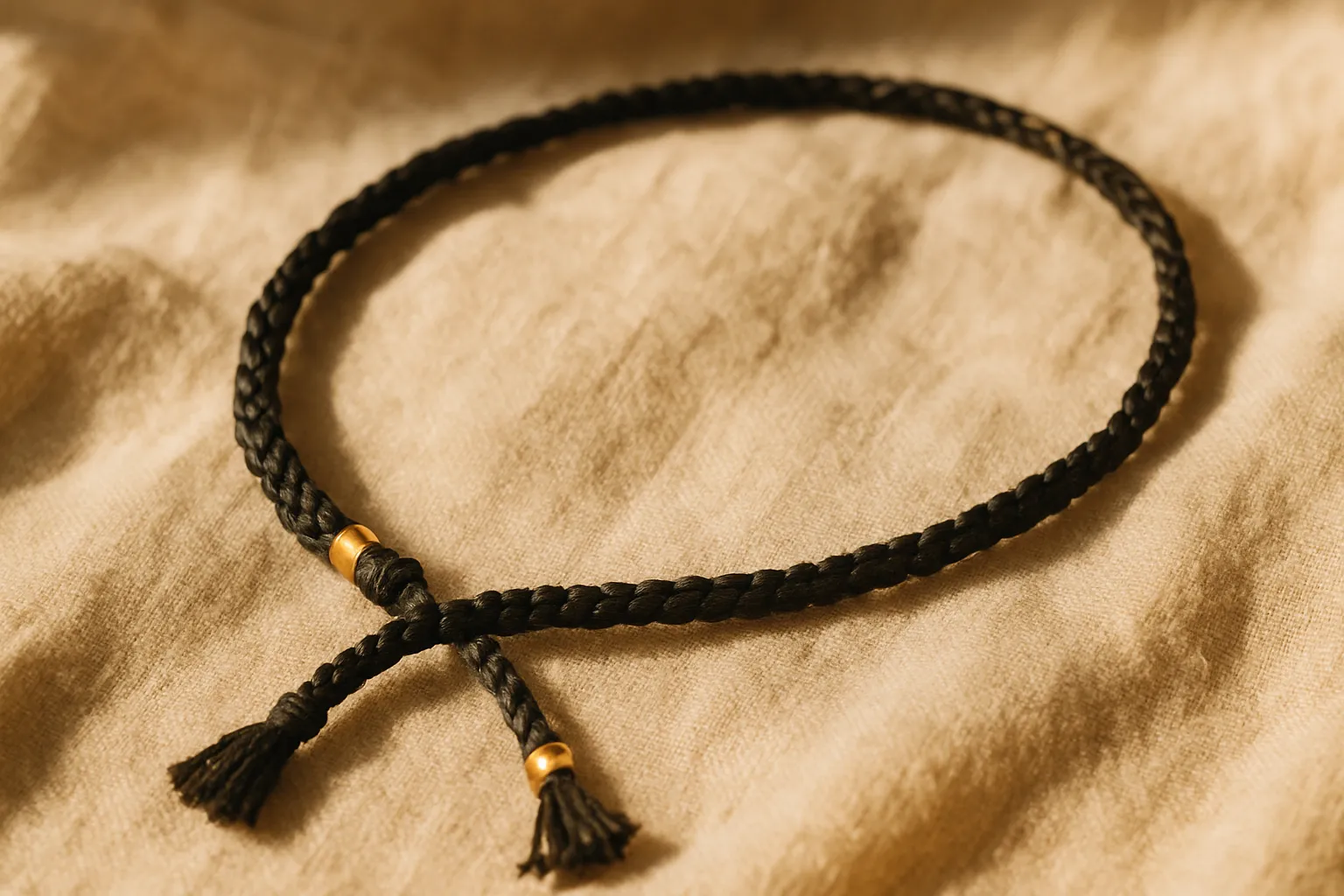
The simplest configuration is a single amulet on a cord or chain at the neck. The cord itself is a choice: metal chains, stainless steel or gold, are the most common and the most durable under daily wear. Hand-braided wax cord, black and worn flat against the chest, is the traditional non-metal alternative, favored by wearers whose personal practice avoids metal contact with the skin or who simply prefer the older look. A cord built for multiple amulets carries small connecting hooks or rings spaced along its length so each piece hangs independently rather than stacking against its neighbors.
Casing
Which pieces need a case is a practical matter as much as a devotional one. Powder amulets and herbal pieces are fragile and vulnerable to sweat and water, so they are almost always housed in a waterproof case to protect the material body. Metal pieces, being durable, can be worn either open on the cord or cased according to taste.
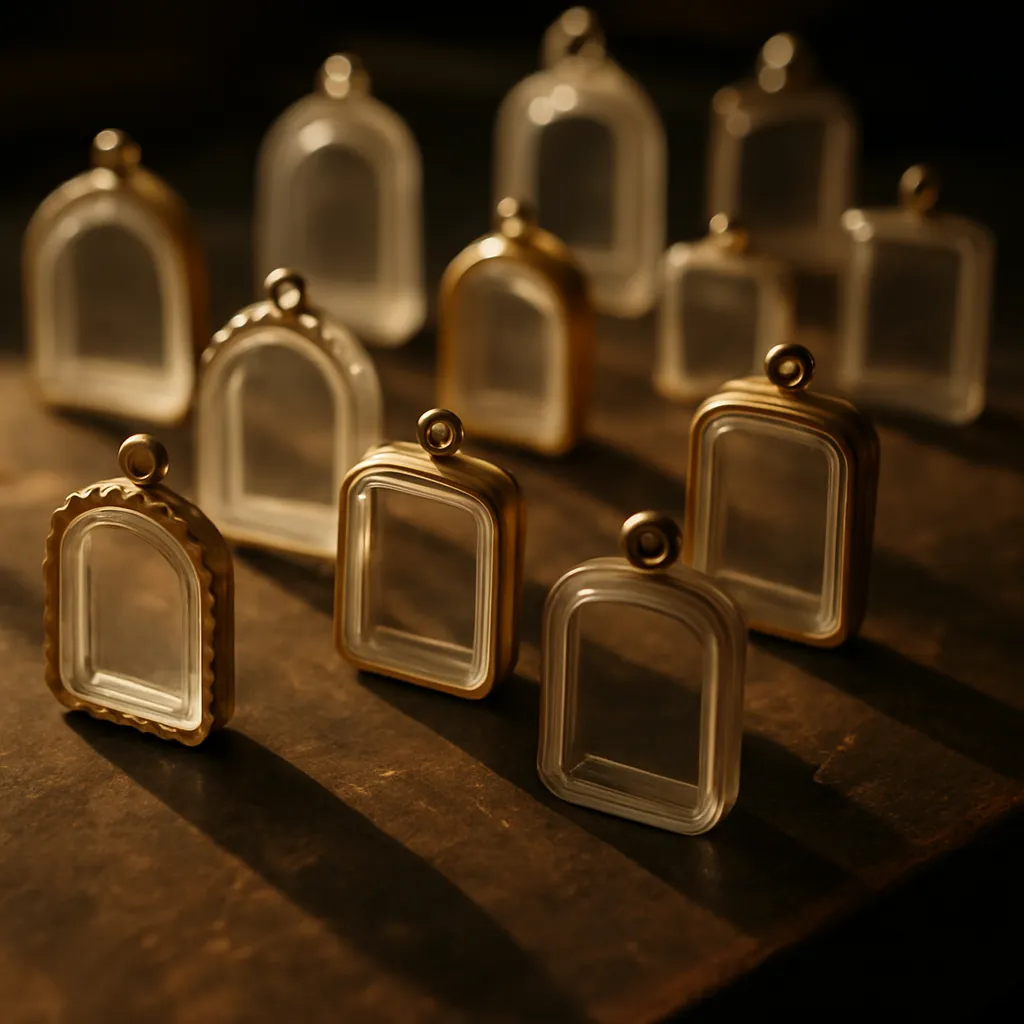
Thai case-makers distinguish two basic forms. A talap phra (ตลับพระ), a sealed waterproof capsule, usually plastic or acrylic, encloses the amulet completely while leaving it visible; this is the standard protection for powder and herbal pieces. A krob phra (กรอบพระ), a frame rather than a capsule, sets the amulet in a metal surround with a clear front and a sealed edge, both protecting the piece and displaying it. Frames are commonly finished in gold micron plating, a thin electroplated layer over brass, a durable and affordable alternative to a solid gold surround; heavier frame stock holds its shape better over years of daily wear than a thin one.
A Different Convention: Muay Thai
Muay thai fighters follow a placement logic of their own. The mongkol (มงคล), the sacred headband, is worn only during the pre-fight wai khru ram muay ceremony and comes off before the first bell, set in an elevated position in the corner rather than kept on the body during the exchange of blows. The pra jiad (ประเจียด), the cloth armbands, follow the opposite rule and stay on the upper arms through every round. A fighter’s ordinary neck amulet is typically removed before stepping into the ring for the same reason the mongkol comes off, then worn again in training and daily life. The full account of these objects and the ceremony around them is in the muay thai amulets guide.
Where to Go Next
This guide covers the mechanics of wearing an amulet: position, cord, hierarchy, and casing. For the etiquette that surrounds those mechanics, when to remove an amulet, how to store it at home, what to do when one cracks, and what to do with a piece you no longer wear, see Wearing and Caring for Thai Amulets. For the wider world these objects belong to, return to the Amulets 101 guide.