
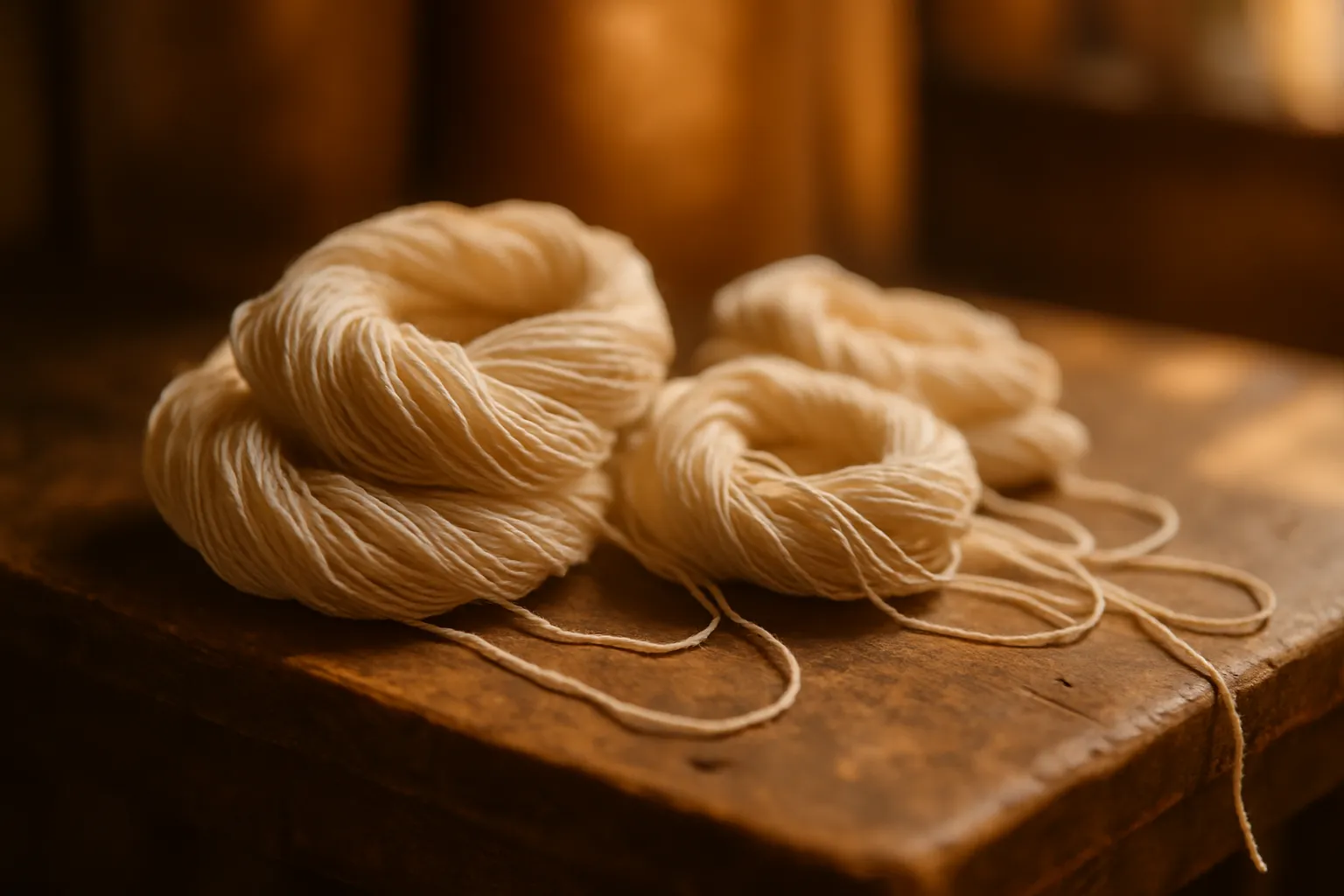
Anyone who has spent time in Thailand has seen it: a loop of plain white cotton thread tied around a person’s wrist, worn until it frays and falls away on its own. It looks like nothing, a bit of string, and it is one of the most quietly meaningful objects in Thai Buddhist life. It is called sai sin (สายสิญจน์), the sacred cotton thread, and it connects far more than a wrist. Understanding it opens a window onto how Thai ritual links people, monks, and sacred objects into a single whole, a theme that also runs through the Amulets 101 guide.
What It Is
Sai sin is an unspun or loosely spun cotton thread, almost always white, used to connect sacred objects, monks, and the congregation during Buddhist ceremonies. It is not decorative and it is not, in itself, a charm bought or sold; consecrated objects on this site are described as rented (chao, เช่า) rather than purchased, a convention that keeps sacred objects outside ordinary commerce, though in practice a length of sai sin is simply given at a temple rather than exchanged at all. It is a ritual conductor: a physical line that joins the participants and the sacred center of a rite into one continuous circuit.
The material matters. Plain cotton is humble, natural, and clean, and its whiteness carries the associations of purity that run through Thai Buddhist symbolism. The thread’s power, in the tradition’s understanding, comes not from the string but from what the string is made to join.
Where the Word Comes From
The name sai sin (สายสิญจน์) joins two parts: sai, meaning strand or line, and sin, from the Pali sincana (สิญจน์), a term built on the root sic, to pour or sprinkle water. The word originally described the thread’s role alongside a vessel of consecrated water in a chanting rite: the string ran from the water container through the hands of the monks, so that the whole assembly of chanters was joined to the water being blessed as much as to the object at the center. That is why sai sin so often still appears in the same setup as a bowl of nam mon, the blessed water sprinkled at the close of a ceremony.
The practice of tying a chanted or consecrated thread around a person or an object is older than Buddhism in Thailand. Scholars of Southeast Asian ritual, including the anthropologist Stanley Tambiah, trace the wrist-thread rite to Brahmanical practice that reached the region well before the arrival of the Buddhist tradition, where a thread tied by a teacher or priest marked a formal bond, an initiation, or a protective blessing. Thai Buddhism absorbed the gesture and re-grounded it in the Pali paritta chants, the protective suttas recited as katha at ordinations, funerals, weddings, and house blessings. The thread is one of several Brahmanical forms, alongside the wai khru teacher-honoring rite and elements of the pluksek consecration itself, that Thai practice folded into a Buddhist frame without discarding.
The Physical Setup
The clearest way to grasp sai sin is to watch it used in a consecration ceremony. The thread is run in a deliberate path. It encircles the objects being blessed, is passed through the hands of the chanting monks, and is connected to the principal Buddha image at the head of the space. Where a whole hall is being blessed, the thread may be strung around the entire perimeter.
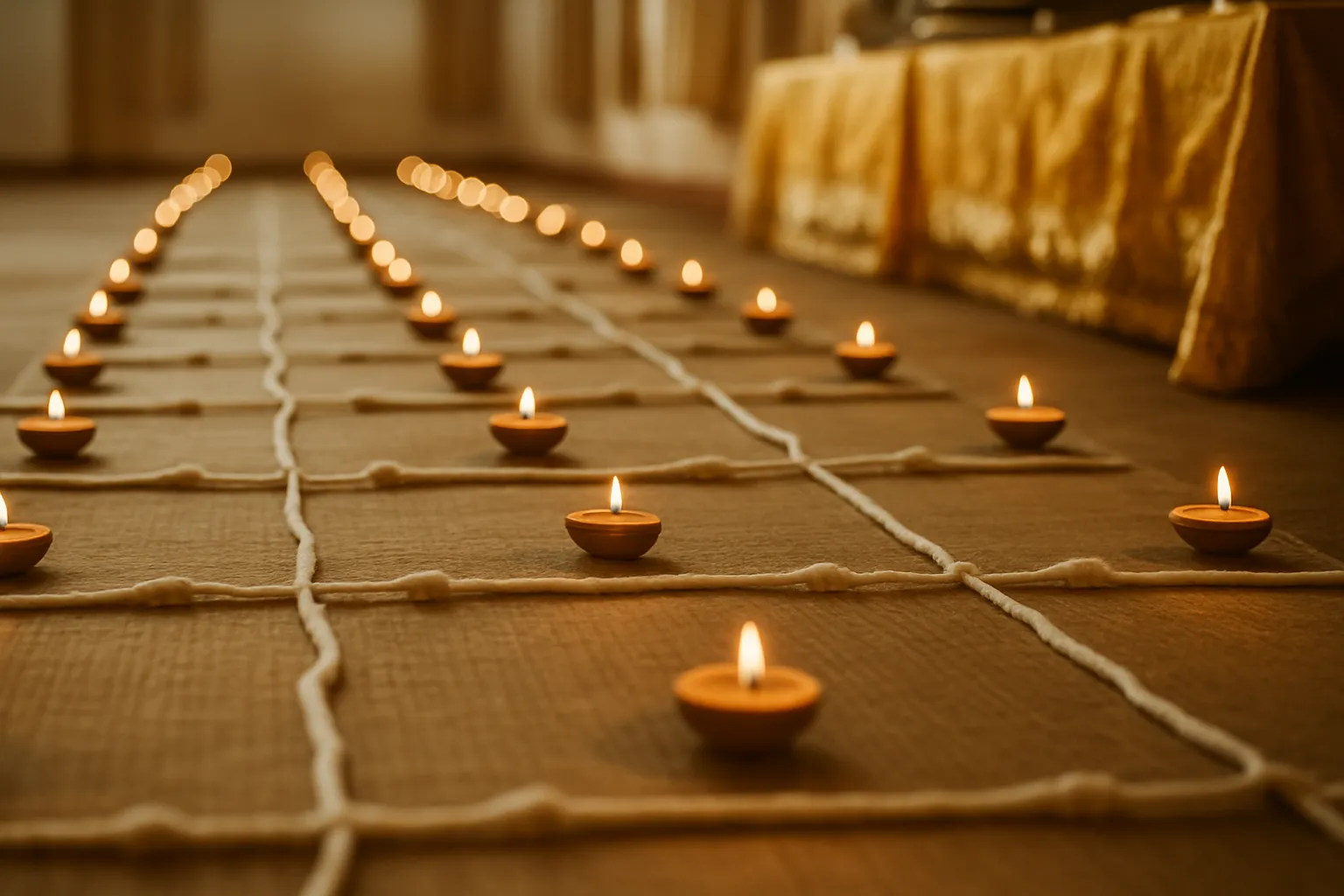
The effect, as the tradition holds it, is to create a physical circuit of blessing. The chanting of the monks is understood to charge the whole connected system, and the sacred potency of the central Buddha image is felt to flow along the thread to everything it touches. This is why sai sin so often appears at the pluksek, the consecration rite that awakens an amulet: the thread is one of the channels through which the blessing is understood to travel into the objects laid out to receive it. For the fuller ritual sequence this setup belongs to, see the Consecration guide.
Color and Variation
White is the standard and original color of sai sin, and it remains the only color used in the strictest readings of the rite. A paired red-and-white thread, wound or plied together, is a later development and has become especially characteristic of southern Thai lineages, where it appears in temple ceremonies and in devotional objects like mala tassels. The pairing is not a southern invention alone; it also appears in northern Thai practice. Both readings agree on the base case: plain white is the default, and colored variants are additions to it rather than replacements.
Daily Life
Most foreigners meet sai sin not in a hall but on a person. After a temple blessing or a ceremony, a monk or an elder ties a short length of the thread around a participant’s wrist, and that white cotton bracelet is the sai sin carried out into daily life. It marks the wearer as someone who has recently received a blessing, and it is meant to be kept on, not cut off the moment the ceremony ends.
The same thread appears at house blessings, weddings, ordinations, and the honoring of teachers in the wai khru tradition. In each case the gesture is the same: the sacred circuit of the ceremony is extended onto the body of the person, and they walk away wearing a small, visible piece of it.
For most foreign residents, the house blessing, tham bun khuen baan mai (ทำบุญขึ้นบ้านใหม่), is the setting where sai sin is most likely encountered up close rather than glimpsed at a temple. Invited monks are seated in the new home, and the thread is strung from the household Buddha image, around the room, and into the monks’ hands as they chant. The unbroken loop matters: practitioners hold that a continuous circuit carries the blessing more completely than a thread with a break in it. At the close of the chanting, the household head is often the first to receive a length tied around the wrist, followed by other members of the family, so that the blessing that has just filled the room is carried forward on the body of each person who lives there.
The Mala and the Tassel
Sai sin also finds its way into objects that are kept and worn long after a ceremony. Some prayer beads, or mala, carry sai sin worked into their tassels, so that the thread of the rite becomes a permanent part of the strand. The presence of the thread ties the mala back to the consecration it passed through.
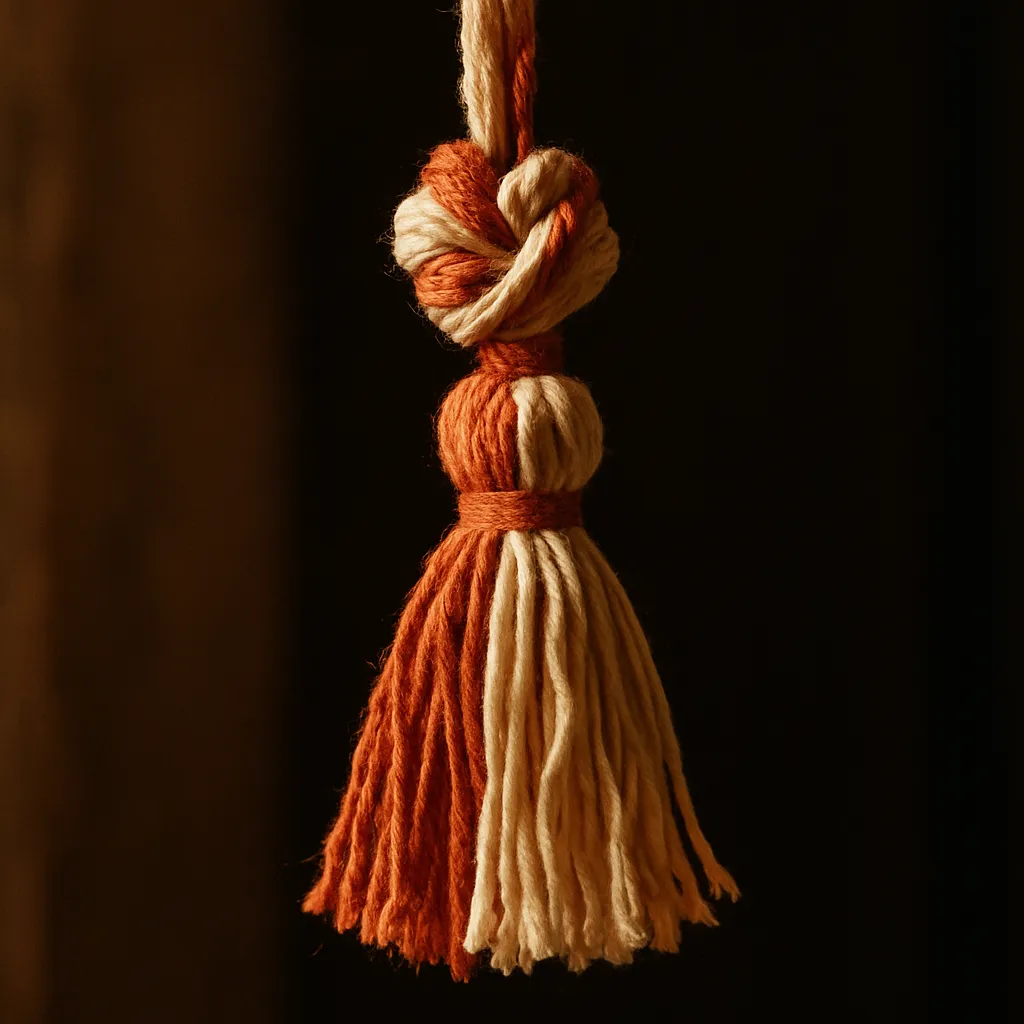
One example sits in the founder’s own collection: a Khao Or mala whose tassel is bound with red and white sai sin, the paired colors that appear across many southern-lineage pieces. It is a small detail, easy to overlook, and it records that the strand belongs to the same ritual world as every amulet described on this site.
Etiquette
Because sai sin is a sacred object, it is treated with care to the end of its life, and here the customs are simple. The thread is meant to fall off naturally as it wears through, and letting it do so is the most common practice. If it must come off sooner, it is untied respectfully rather than cut, and in particular it is not severed with scissors, a gesture felt to be abrupt and disrespectful toward a sacred thing.
When an old sai sin finally comes away, it is not treated as trash. Many people keep the worn thread on their household altar, alongside their other sacred objects, rather than throwing it out. As with every subject on this site, Lokavidu describes these as the customs and beliefs of the tradition, held by its practitioners and teachers. What is plain to see is the thread itself: a length of humble white cotton that Thai ritual turns into a line of connection between the sacred and the person. For the wider world it belongs to, return to the Amulets 101 guide.