
Southern Thailand has its own deep tradition of sacred arts, and at its centre stands one academy: Khao Or. For collectors and students of the tradition it is a subject of unusual richness, a single school with centuries of depth, distinctive materials, and a documented ceremonial life. This article introduces the academy, its practices, and its people. The temple profile of Wat Khao Or covers the site itself.
What It Is
Khao Or, in full สำนักตักศิลามหาเวทย์เขาอ้อ, is the most famous southern Thai esoteric academy. It is based at Wat Khao Or in Khuan Khanun district, Phatthalung province, in the far south of the country. The academy is a school of wicha (วิชา), the esoteric sacred knowledge transmitted through lineages of masters; the glossary entry on wicha explains that broad category, and the entry on Khao Or gives the school in brief. Its reputation reaches across Thailand, but in English-language coverage it remains almost unknown, which makes it one of the tradition’s great under-told stories.
Temple records date the founding of Wat Khao Or itself to 1651 BE (1108 CE), with royal land consecration (wisungkhamsima) following in 1661 BE (1118 CE), making the physical site nearly a millennium old. Local tradition holds that the ground had already served, before the temple stood in its present form, as a samnak thisapamok (สำนักทิศาปาโมกข์), a Brahmin school of learning where teachers said to have come from India instructed the sons of regional rulers. This account belongs to oral tradition rather than documented history, but it is the story the school tells about its own depth, and it explains why “centuries old” understates rather than overstates how the academy sees itself.
The temple sits in Makok Nuea subdistrict, roughly 8 kilometers from Khuan Khanun town center; the standard approach from Phatthalung town follows Highway 41 south to Khuan Khanun before turning onto the local road toward Makok Nuea. The temple profile of Wat Khao Or carries fuller visiting notes and etiquette guidance for anyone planning to go in person.
The Chatthan Cave
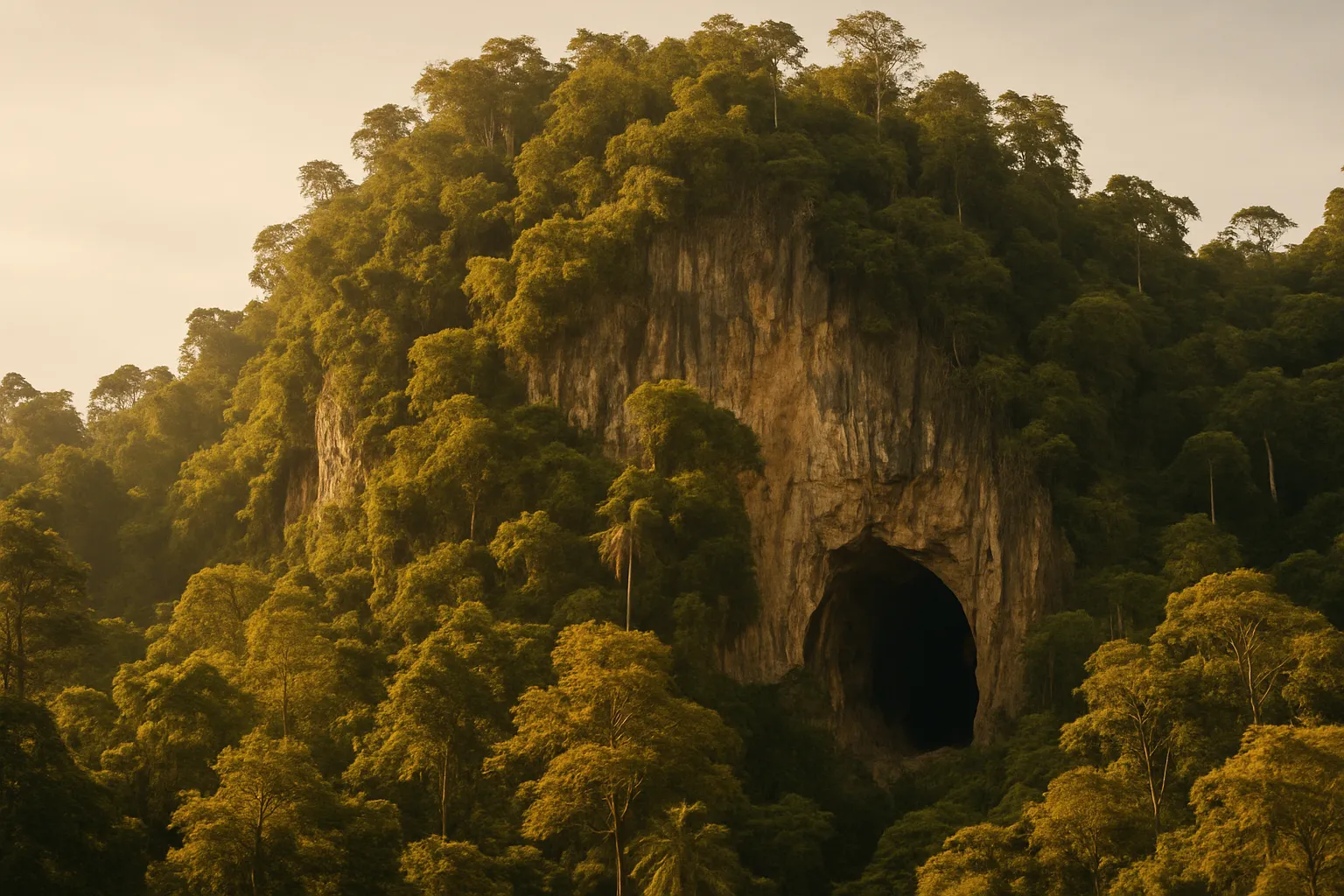
At the heart of the academy is a cave, ถ้ำฉัตรทันต์บรรพต, the Chatthan cave, also known locally as Tham Phra, where the school’s most important consecrations take place. It is an ancient limestone cave, and a devotional image of Ajahn Thong Thao, the modern school’s founding patriarch, stands inside it. Chief among the rites held there is the Sao Ha (เสาร์ห้า), the “Saturday the Fifth” ceremony, held when the fifth day of the lunar month falls on a Saturday, an alignment the tradition considers especially powerful. The glossary entry on Sao Ha describes it. Holding the rite inside the cave, rather than in an ordinary hall, is part of what gives Khao Or productions their particular aura.
What the School Produces
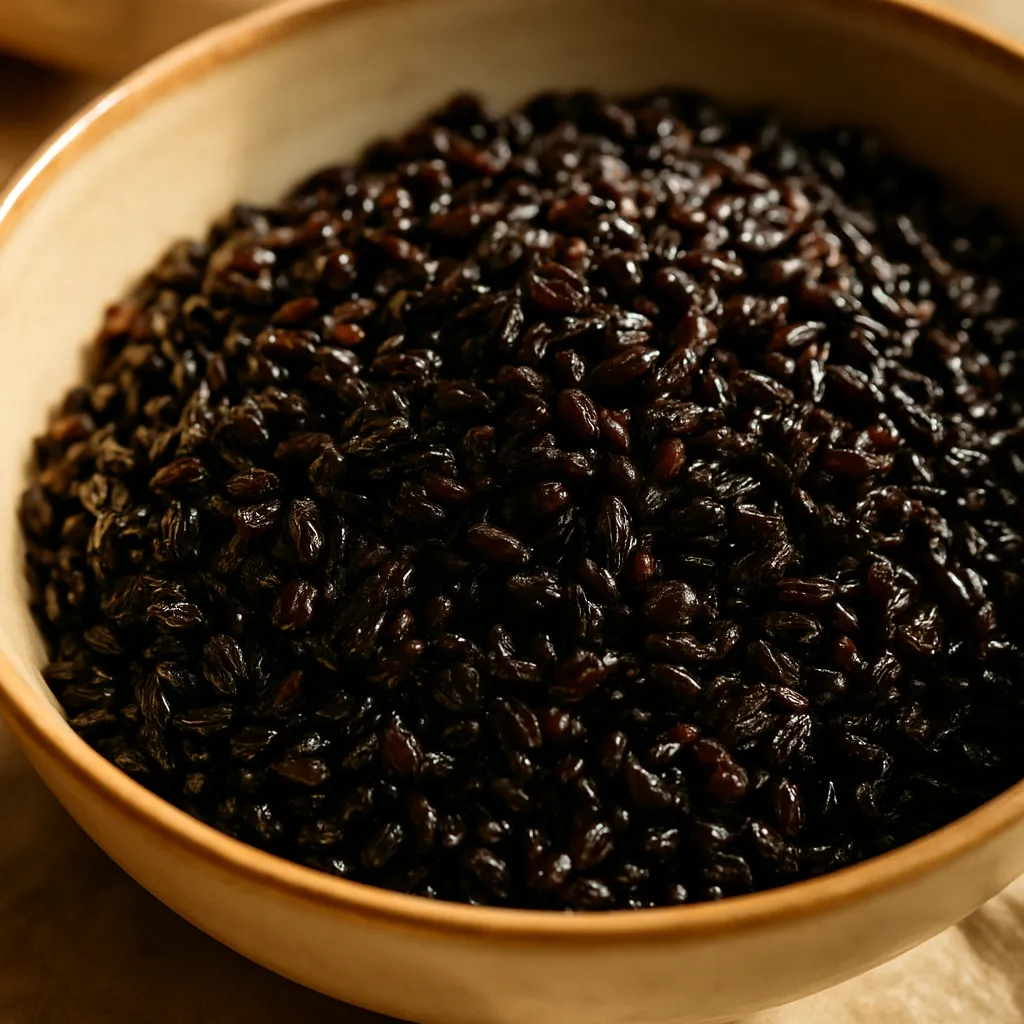
Khao Or has a recognizable material signature. Mercury (ปรอท) is its emblematic substance, sealed into a nawaloha (นวโลหะ) nine-metal alloy body as a mark of the school; a luk om made this way is often described in the trade simply as “luk om prot krot,” the sealed-mercury ball. Its annual Wai Khru gathering, sometimes called kin niao dam lae chae nam wan (กินเหนียวดำและแช่น้ำว่าน), the eating of black sticky rice and the soaking of the wan 108 herbal compound, produces the celebrated black sticky rice luk om (ลูกอม), the small consecrated ball described in the glossary. Devotees hold that both the rice and the herb-soaked water confer kongkraphan (คงกระพัน), the classical southern claim of invulnerability, and the annual gathering draws practitioners from across the south for that reason. The academy is also known for the Pidta Maha Ut tradition of the closed-eye Buddha, for diamond-armor takrut, and for bia kae, the consecrated cowrie shell. Taken together, these give the school a distinctive and immediately identifiable body of work.
Key Figures
The modern reputation of Khao Or is anchored by Phra Ajahn Thong Thao (พระอาจารย์ทองเฒ่า), formally Phra Khru Sangkhawichan Chatthanabanphot (พระครูสังฆวิจารณ์ฉัตรทันต์บรรพต), who lived from 2392 to 2470 BE (1849 to 1927). Villagers knew him as Phor Than Khao Or, and devotees hold that his mastery of the school’s wicha and of traditional herbal medicine made him one of the most respected and feared teachers of his generation in the south. His devotional image stands inside the Chatthan cave.
Ajahn Pal Palathamo (อาจารย์ปาล ปาลธมฺโม) was the historical head of the academy and the last figure selected through its traditional succession. Born 2435 BE (1892), he entered the monkhood at Wat Khao Or under Ajahn Thong Thao in 2455 BE (1912) and trained directly under him for years before becoming abbot in 2472 BE (1929), two years after Thong Thao’s death. The succession he represents is not a formal appointment from outside the school but the continuation of an unbroken teacher-to-disciple line, the same channel through which the wicha itself is said to pass; he served as abbot until his own death in 2521 BE (1978). Ajahn Pal was known within the tradition for his mastery of nit chee phet (นิ้วชี้เพชร), the “diamond finger” technique, one of the school’s most closely guarded specialties, and devotees hold that his right index finger did not burn during his cremation, a claim reported here as part of the devotional record rather than a documented fact. Among his lay students was Khun Phantharaksa Ratchadet (ขุนพันธรักษ์ราชเดช), the police officer known across the south as a lawman who investigated cases involving black magic; his connection to Khao Or, through Ajahn Pal, is one of the school’s best-known lay associations and part of why the academy’s name still circulates well beyond the collector world.
The current lay chairman is Ajahn Plian Hatthayannon (อาจารย์เปลี่ยน หัทยานนท์), who leads the academy today. He was ordained as a novice in Cha-uat district, Nakhon Si Thammarat, and later took full ordination at Wat Don Sala, the neighboring temple in the Khao Or network in Khuan Khanun. He studied herbal medicine, including formulas for bone ailments, before receiving the transmission of Khao Or wicha directly from Ajahn Pal, and he now holds the senior ceremonial role on the lay side of the school, presiding at rites alongside its monastic masters. That the leadership passes through named, documented figures, teacher to disciple, generation after generation, is part of what makes Khao Or so studiable.
The Lineage Network
Khao Or does not stand alone. At the ceremony level it connects into the wider southern network sometimes called the Klai-Im corridor, the web of masters and consecrations running through Nakhon Si Thammarat and Phatthalung and anchored by Phor Than Klai of Wat Suan Khan. Monks from Nakhon Si Thammarat take part in Sao Ha ceremonies alongside the Phatthalung masters, so a single consecration can carry the credentials of more than one lineage. For a collector, this means Khao Or productions often sit inside a documented network of named participants rather than in isolation.
A Dual Tradition of Monk and Lay
One feature sets Khao Or apart from most schools: it trains both monastics and laypeople, and the two transmit the wicha in parallel. Ajahn Plian is a lay master who sits in the same ceremonies as the ordained monks, sharing in the consecration rather than merely assisting it. This dual line, monk and lay together, is unusual and is central to the academy’s character. It reflects a southern understanding in which sacred knowledge is carried by the qualified, whether or not they wear the robe.
Wat Don Sala, the temple where Ajahn Plian trained, functions as a second home of the lay lineage alongside Wat Khao Or itself. Consecrations that begin at one are often completed at the other, and objects such as the Pidta Wan 108 and the diamond armor takrut associated with the network are linked as often to Wat Don Sala as to Khao Or directly. For a collector this matters because a documented southern amulet is rarely the work of a single temple; it is the work of the network, read through whichever site hosted its final consecration.
Why It Matters for Collectors
For anyone who wants to study one thing deeply, Khao Or offers rare rewards. It gives single-school depth: an entire world of materials, ceremonies, and figures traceable to one academy. That depth extends to identification. A collector who understands that the mercury-sealed luk om, the wan 108 herbal blends, and the diamond armor takrut all trace back to the same handful of consecration sites and named masters is working from a coherent map rather than a scattered one. Its consecrations, the pluksek that awaken its objects, come with named participants and documented occasions. And because the Phatthalung wicha tradition has almost no serious English-language coverage, a student who learns it well is working ground that is, in the collecting world’s phrase, near-zero competition. It is one of the most rewarding corners of the entire tradition to make your own.