
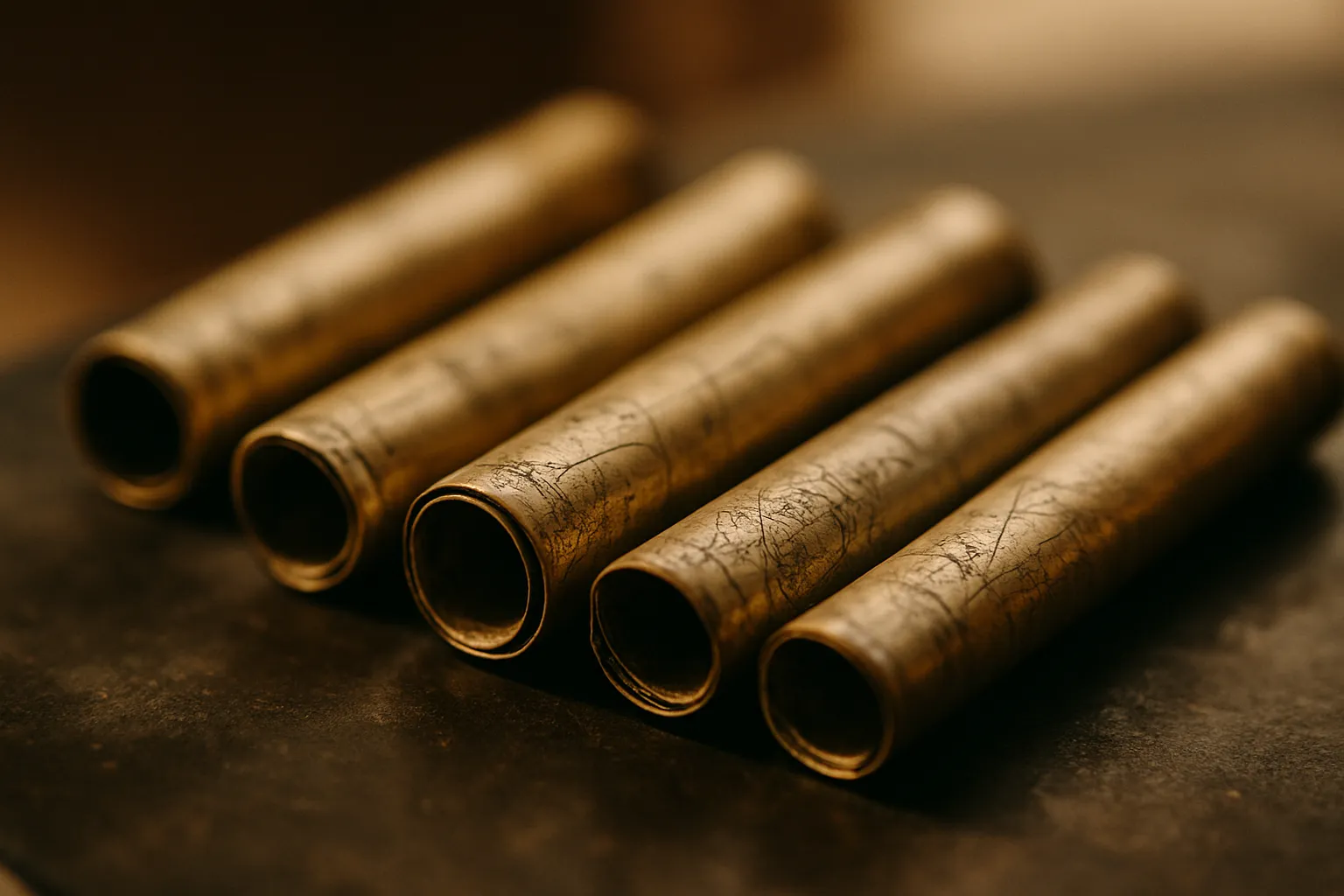
Not every Thai amulet is a molded image. One of the oldest and most widespread forms carries no picture at all, only writing. A takrut (ตะกรุด) is a thin sheet of metal, inscribed with sacred script and then rolled tightly into a small tube. Inside that tube is a text: a diagram, a syllable, a compressed prayer. The takrut is, in effect, a blessing folded small enough to carry, and it belongs to the same ritual world as every other object covered in the Amulets 101 guide.
Older Than the Pressed Tablet
The takrut is one of the oldest amulet forms in the Thai tradition, older than the pressed clay and powder tablets that dominate the Benjapakee canon. Scholars of Thai religion, among them Stanley Tambiah, describe the inscribed metal scroll as part of a protective repertoire that predates the organized cult of monk-image amulets built around figures like Somdej Toh in the nineteenth century. The takrut’s own roots reach back further still, into a Buddhist, Brahmanic, and animist blend of protective writing that Thai temples had already absorbed by the late Ayutthaya period.
Ayutthaya-era literature takes the takrut for granted as a familiar object. The takrut appears in the classical epic Khun Chang Khun Phaen, composed and compiled from oral and courtly material across the Ayutthaya and early Rattanakosin periods, where characters wear inscribed scrolls into battle as a matter of course. Temple tradition also credits King Naresuan (r. 2133 to 2148 BE, 1590 to 1605 CE) with wearing takrut into combat, an account preserved in devotional memory of the king rather than in a court chronicle, and it is best read as tradition rather than verified history. What the literature and the devotional record agree on is the basic pattern: the takrut was already a soldier’s object centuries before it became a collector’s one.
What Is Written Inside
The heart of a takrut is the yant, the sacred geometric diagram, and the katha, the incantation, that the master inscribes across the metal before rolling it. (A yant is a drawn design of lines, syllables, and sacred letters; a katha is the spoken formula recited over it.) The two work together. The yant fixes the intention in visible form, and the katha charges it in sound.
Because the object is defined by what is written on it rather than by a molded image, the takrut is unusually versatile. The glossary entry on the takrut sets out the basic vocabulary, but the essential point is simple: change the yant, and you change the object’s purpose.
Most of that writing is set down in Khom script (อักขระขอม), a sacred alphabet descended from Khmer and used across mainland Southeast Asia for Pali-language Buddhist texts, yantras, and katha rather than for everyday Thai. Thai temples have used it for this purpose since at least the Sukhothai period. A master trained in the tradition learns Khom script specifically for sacred writing; it is not a language a takrut’s owner is expected to read, and its unfamiliarity is part of the point, marking the text as belonging to a register set apart from ordinary communication.
How a Takrut Is Made
The making of a takrut is a ritual act from the first stroke. Working on a flat sheet of soft metal, the master inscribes the yant and its syllables by hand, and the tradition holds that each stroke is accompanied by recitation, so that the writing and the chanting proceed together. The inscription is not decoration added to a finished object; it is the consecration itself, performed in the act of writing.
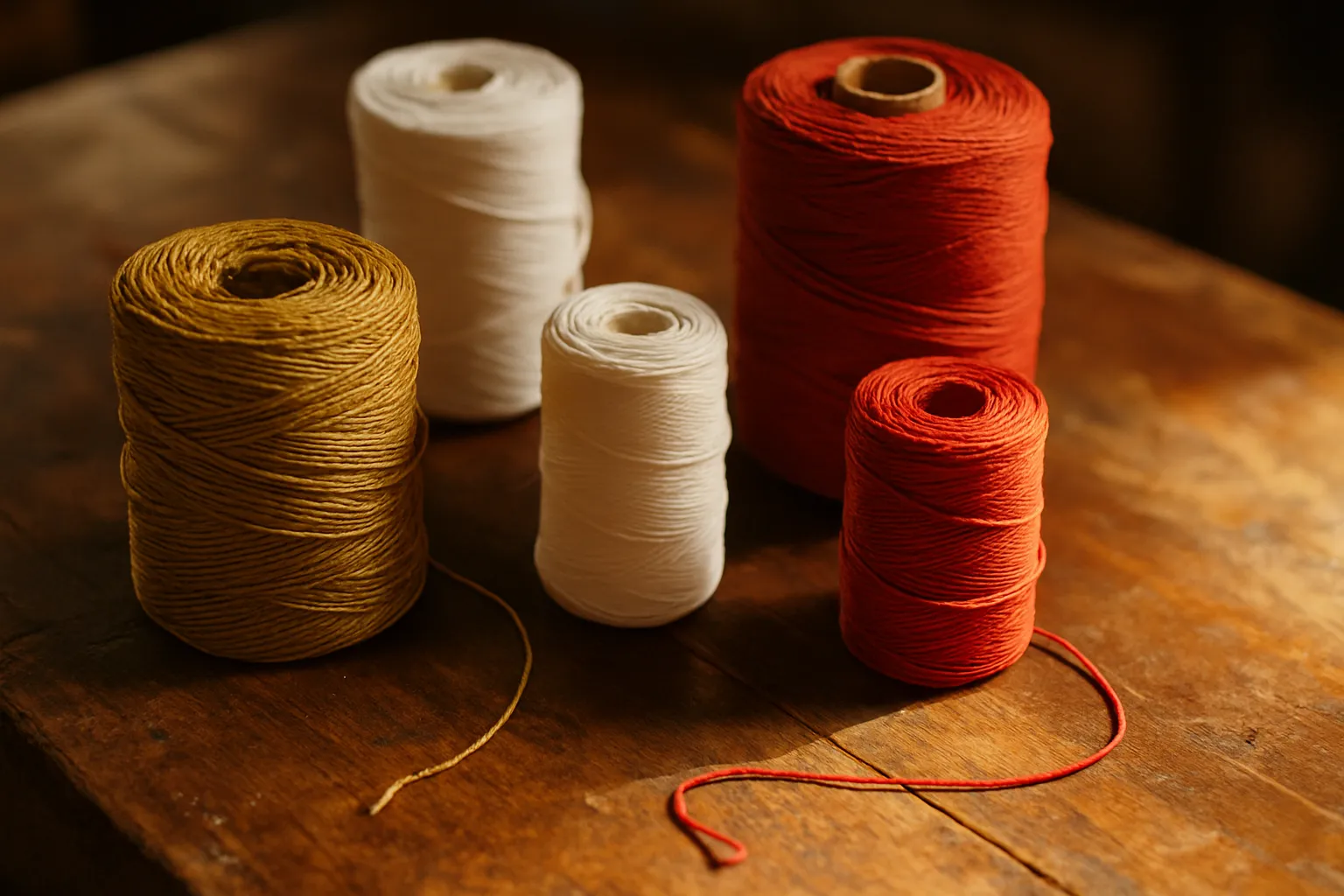
When the sheet is complete, it is rolled, tightly and evenly, into a tube. Some takrut are then sealed and bound: wrapped in cord, lashed with thread in patterns that are themselves meaningful, or coated in lacquer to protect the metal and close the object. A finished takrut may be left plain, a bare metal cylinder, or dressed in wound thread until the metal no longer shows.
Single Sheet, Twin Sheet
Collectors and temples classify a takrut first by how many inscribed sheets it holds. A takrut tone (ตะกรุดโทน), a “single” takrut, is one sheet of metal, one yant, rolled into one tube. It is the simplest and most common form, a single text doing a single job.
A takrut khu (ตะกรุดคู่), a “twin” or “paired” takrut, is two inscribed sheets rolled together into a single tube, or two separate tubes made and consecrated as a matched set. Temple practice varies on which yant pairs with which; some twin takrut carry the same text twice for emphasis, others carry two different yant meant to work together. Either way, the pairing itself is part of the design, not an accident of manufacture.
The logic extends further. A set of many takrut strung on one cord, most often sixteen, is known as a takrut solot (ตะกรุดโสฬส), from the Pali-derived word for “sixteen.” Devotional memory associates the form with King Naresuan, who is remembered as having worn a run of takrut across his chest and back into battle, and later masters have revived the sixteen-piece format as a maximalist gesture: one wearer, one cord, many texts, each yant doing its own separate work at once.
Lead, Copper, Silver, Gold
The metal of a takrut matters, both ritually and practically. Lead is the traditional base in the southern and Khao Or lineages, prized for its softness under the inscribing tool and its long association with protective magic. Copper and silver are common across the rest of the country, and gold appears in royal and premium editions, where the value of the metal matches the occasion of the making.
The choice of metal also governs how the object is treated. Lead takrut, in particular, are conventionally worn cased or over cloth rather than directly against the skin, a practice worth respecting on ordinary grounds of care as much as custom. Whatever the metal, the takrut is a durable object, and many survive in good condition long after the softer powder amulets of the same era have crumbled.
Metal is not the only material in the historical record. Older and rarer examples exist on bamboo strips, wood, and even palm-leaf paper, materials that predate wide access to worked metal sheet in rural temples and that are far more fragile in surviving condition. These non-metal takrut are now uncommon and largely a matter for specialist collectors rather than everyday wear, but they show that the form itself, a rolled written text, matters more than any single medium it happens to be inscribed on.
How Thais Wear and Place It
The takrut is among the most flexibly carried of all amulets. It is commonly worn as a tube on a cord at the neck, sometimes alone and sometimes among other pieces. Larger examples are sewn into a belt worn at the waist, a form long favored by those who wanted protection close to the body but out of sight. Others are not worn at all but placed: tucked into a vehicle, set above a doorway, or kept in a shop to guard the premises.
This range follows from the object’s nature. A takrut is a fixed text doing a fixed job, and it can do that job wherever it is put, on a body, in a car, over a threshold.
Multiple takrut are also strung together on a single cord, each tube contributing its own yant to a combined set worn at the neck or waist. This is the practical form the takrut khu and takrut solot patterns described above actually take on the body: several separate texts, made and blessed independently, carried as one string. Muay thai fighters and others who favor visible sacred objects sometimes wear a takrut alongside a sak yant, the tattooed counterpart of the same yant tradition rendered permanently on skin rather than rolled into metal; the two forms share the same underlying script and serve overlapping purposes.
What a Takrut Is For
There is no single answer to what a takrut does, because the answer is written inside it. The domain of a given takrut is set by its yant. One inscription is for protection and the narrow escape from danger; another for invulnerability of the body; another for charm and the goodwill of others, the quality the tradition calls loving-kindness that makes people well disposed; another for fortune in trade. The metal and the master lend their reputations, but the yant assigns the task.
As always, Lokavidu reports these as the claims of the tradition, attributed to the devotees and teachers who hold them. What is beyond dispute is the craft: a line of writing, recited as it is drawn, rolled into metal, and carried as a prayer made portable. For the wider picture of how such objects are consecrated and worn, the Amulets 101 guide is the place to begin.