
Sak Yant: Sacred Tattoos and Their Meaning
Sacred geometry inscribed on the body by hand, accompanied by recitation, governed by a code of conduct between master and disciple. Sak yant is not a tattoo style. It is a living tradition with rules, relationships, and obligations.
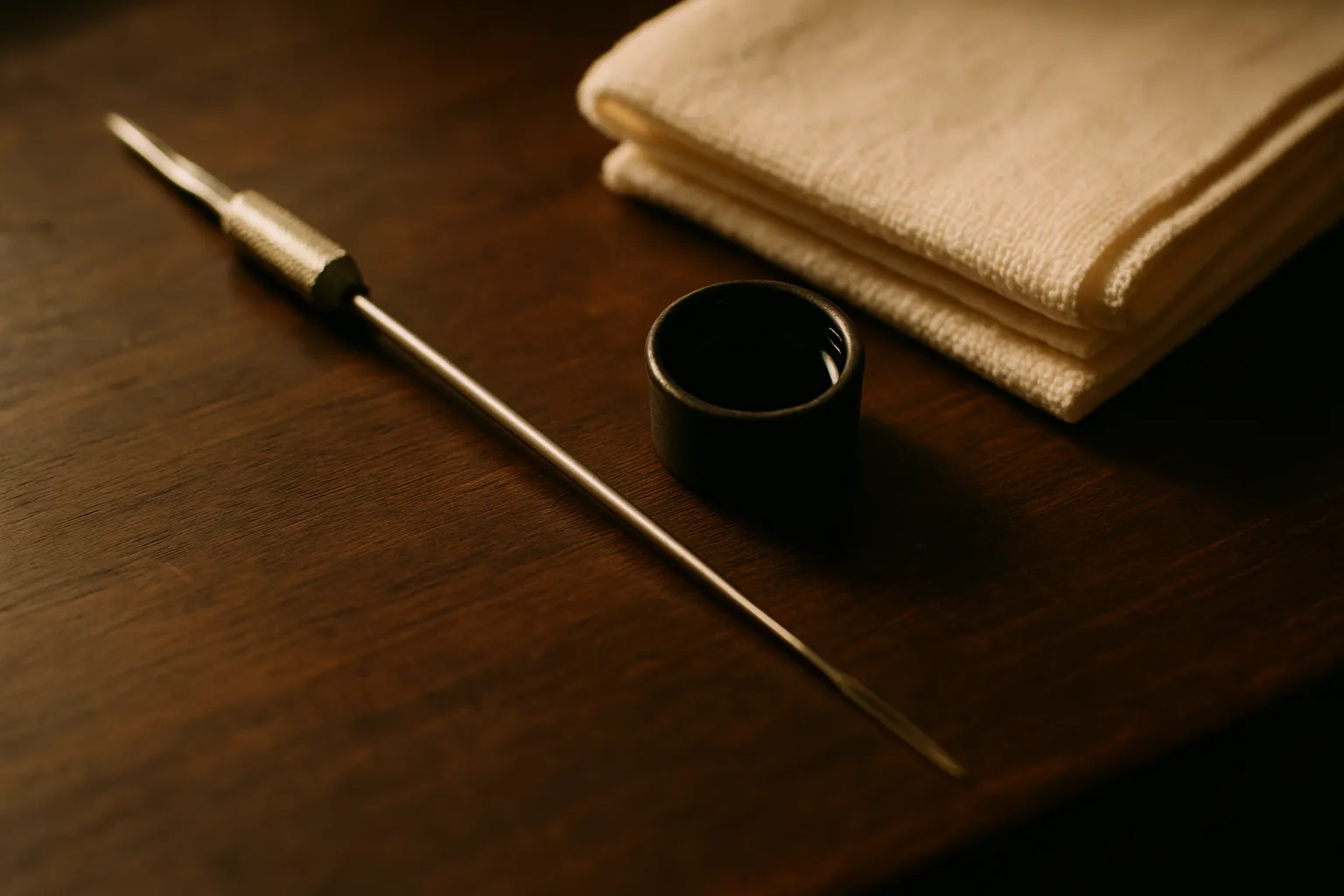
Sak yant (สักยันต์) is two words doing precise work. Sak (สัก) means to tattoo, to tap or poke ink under the skin. Yant (ยันต์) is a sacred diagram, a geometric and scriptural design that encodes a specific spiritual formula. Together they describe a practice that is not a tattoo style or a body art trend but a ritual inscription of sacred geometry on the body, performed by a master who recites incantations as each stroke enters the skin. The tradition runs through Thai, Khmer, Lao, and Burmese culture and is documented in the region for centuries, though its exact origins are, like most living ritual traditions, older than any single written record.
Foreigners encounter sak yant most often through one of two doors. The first is muay thai, where fighters wear yant-inscribed armbands, headbands, and back pieces that are as much a part of the tradition as the fighting techniques themselves. The second is tourism: studio-style sak yant experiences marketed to visitors in Bangkok and Chiang Mai. This guide addresses the tradition behind both doors, because the tradition is the thing that makes a sak yant something other than a decorative tattoo, and understanding it before sitting down is the minimum a respectful participant can do.
Origins Before Thailand
Sak yant’s script and geometric grammar predate the Thai kingdoms. Historical accounts trace the tradition to the Khmer Empire, which dominated much of mainland Southeast Asia from roughly the ninth to the fifteenth century, and to the older Hindu and early Buddhist yantra diagrams of the Indian subcontinent that the Khmer world absorbed and adapted. The script used in yant designs is Khom (อักษรขอม), an old form of Khmer writing repurposed to render Pali, the liturgical language of Theravada Buddhism, rather than everyday Khmer or Thai speech. Few people today, monastic or lay, can read Khom fluently outside the sak yant and Buddhist manuscript-preservation communities; the script functions less as text a wearer is meant to decode than as a fixed visual and phonetic key to a katha the master holds in memory.
From the Khmer world the practice spread into what is now Laos, Thailand, and parts of Myanmar, where distinct regional lineages developed. Myanmar’s tradition, still thin in English-language documentation, stays closely bound to temple practice and Pali scripture. Thailand absorbed and adapted the practice over centuries through this broader regional transmission rather than originating it independently, which is part of why the same core designs and the same Khom lettering appear, with local variation, across all four countries today.
How It Works
The traditional sak yant tool is a mai sak (ไม้สัก), a long metal or bamboo needle, sometimes over a meter in length, tipped with one or more points. The master holds the needle in one hand, dipping the tip in consecrated ink, and taps it repeatedly into the skin in rapid strokes, building the design line by line. This is hand-poking, not machine tattooing, and the difference is more than mechanical. Each stroke is accompanied by the master’s silent or spoken recitation of katha (คาถา), incantations specific to the design being inscribed. The recitation is as essential as the ink. In the tradition’s logic, the katha and the physical inscription work together; without the recitation, the yant is just a drawing.
The ink itself is traditionally a consecrated mixture. Recipes vary by master and lineage, but common ingredients include charcoal, palm oil, snake venom, sesame oil, and roots from the waan (ว่าน) family of plants long credited in Thai folk practice with protective and medicinal properties, mixed with consecrated water and prepared with its own katha. Some masters use invisible ink, sak nam man (สักน้ำมัน), oil-based and clear, which leaves no visible mark on the skin but is considered no less potent in its ritual purpose. Oil sak yant is common at temple ceremonies where large numbers of devotees receive inscriptions in a single session.
The pain is real and should not be minimized. The mai sak creates a different sensation from a machine tattoo gun: sharper, more percussive, concentrated in one point. Sessions can last minutes for a small design or hours for a large back piece. The location on the body matters; areas over bone and thin skin are more painful. The tradition does not treat pain as an obstacle but as part of the process, a form of endurance that belongs to the relationship between master and disciple.
The Designs and Their Domains
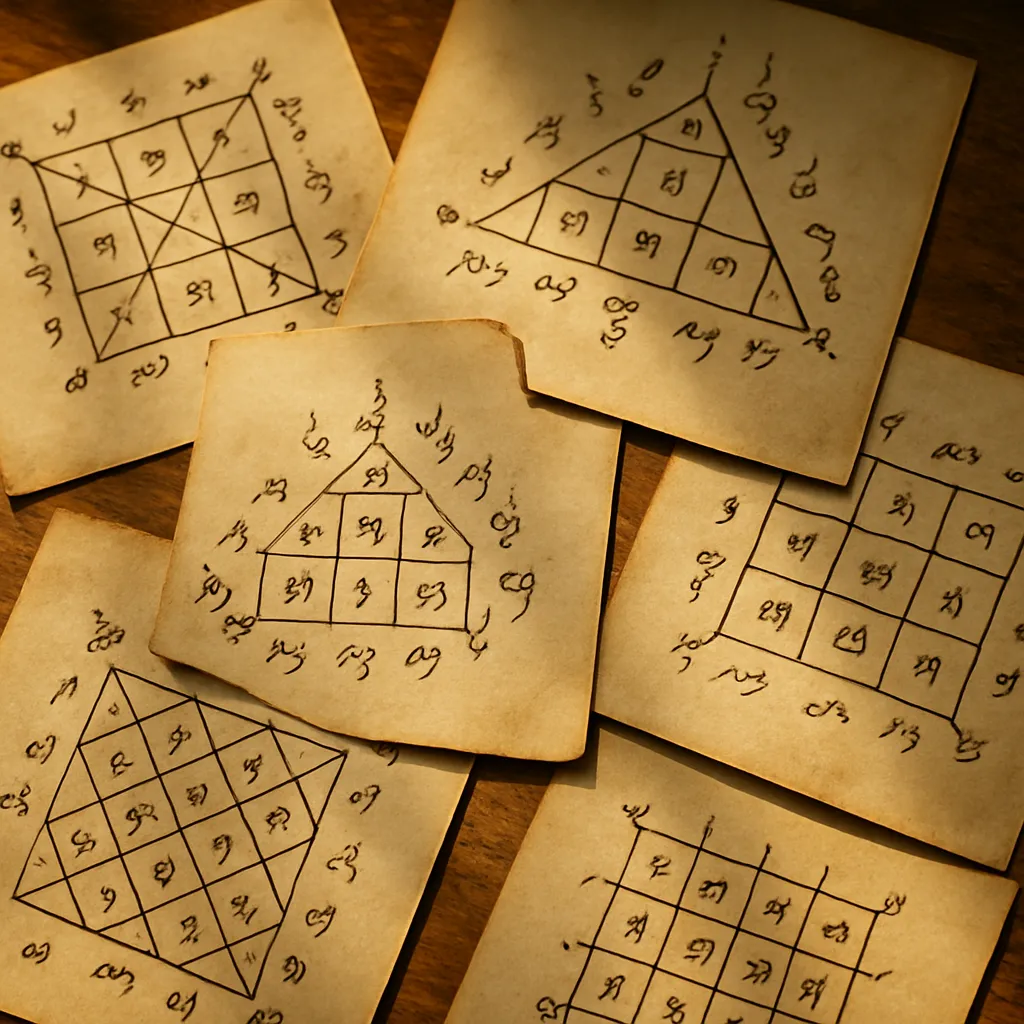
Yant designs are not decorative choices. Each is a specific formula with a documented domain, a spiritual job it is understood to perform. The master, not the recipient, traditionally determines which design is appropriate, based on the recipient’s needs, temperament, and the master’s own assessment. At Wat Bang Phra, the most famous sak yant temple in Thailand, the convention is absolute: you do not choose your design. The master chooses for you.
Several designs appear so frequently that a newcomer will encounter them immediately.
Hah Taew (ห้าแถว), the five rows, is a horizontal arrangement of five lines of Khom script, each line encoding a different katha. The five lines cover a range of protections: against injustice, against bad fortune, against curses and ill will, for personal magnetism, and for overall success. It is the most internationally recognized sak yant design and the one most commonly seen on foreigners, though the specific script in each line varies by master and lineage.
Gao Yord (เก้ายอด), the nine spires, is typically placed at the base of the skull or on the upper back. Its nine-peaked design represents the nine peaks of Mount Meru, the cosmic mountain at the center of Buddhist cosmology, and by extension the protection of the nine supreme virtues of the Buddha. It is considered a foundation design, often the first yant a devotee receives.
Paed Tidt (แปดทิศ), the eight directions, is a geometric mandala representing protection from all compass points. It is associated with safe travel and universal shielding, making it common among soldiers, police, and those whose work takes them into uncertain territory.
Suea (เสือ), the tiger, appears in multiple variations: the leaping tiger, the paired tigers, the tiger looking back. Tigers in the yant tradition represent power, authority, and the fearlessness that commands respect. They are associated with physical strength and with the kind of presence that makes others defer.
These are not the only designs. The yant tradition contains hundreds of compositions, from simple single-line protective formulas to elaborate full-back masterworks that take multiple sessions to complete. But the four above are the introductions most newcomers receive, and understanding that each is a formula, not a picture, is the essential first step.
The Master and the Disciple
Sak yant creates a relationship. The person who receives a yant becomes, in the tradition’s framework, a disciple of the master who inscribed it. This is not metaphorical. It carries obligations.
The obligations are typically expressed as a set of precepts, rules of conduct that the recipient agrees to observe. These vary by master and lineage, but common requirements include observing the five Buddhist precepts (no killing, no stealing, no lying, no sexual misconduct, no intoxicants), and specific prohibitions that may include not walking under a clothesline where women’s garments hang, not eating certain foods, and not speaking ill of other masters. The tradition holds that violating these rules weakens or nullifies the yant’s power. Whether one interprets this literally or as a moral framework that uses the yant as its anchor, the obligations are real and taken seriously by practitioners.
These prohibitions are not etiquette for its own sake. In the tradition’s own framework, the master’s barami (บารมี), the accumulated spiritual authority built through discipline, practice, and merit, is what is understood to activate and sustain a yant’s power, and the wearer’s precepts are the condition under which that authority keeps flowing to them. An infraction is held to weaken the transmission, not to trigger an automatic supernatural penalty on its own. This is also the practical reason a devotee returns to the same master year after year rather than treating the tattoo as a one-time transaction: the relationship, not the ink, is what the tradition holds responsible for the yant’s continued effect.
The annual Wai Khru (ไหว้ครู), teacher-honoring ceremony, is the visible expression of this relationship. Once a year, devotees return to their master to pay respects, make offerings, and have their yant recharged through renewed recitation and blessing. At Wat Bang Phra in Nakhon Pathom, the Wai Khru ceremony draws thousands of devotees, some years reported in the tens of thousands, and is famous for the phenomenon of khong khuen (ของขึ้น), in which some participants enter trance states, taking on the characteristics of the animals in their yant: tigers, roosters, snakes. The tradition attributes this to the power of the sacred inscriptions activating under the concentrated ritual energy of the ceremony. The trance can be forceful, with devotees surging or lunging toward the stage, and the temple stations rows of volunteers along the crowd specifically to intercept and calm anyone who enters khong khuen, a safety measure built directly into the ceremony’s staging. Whether one accepts the tradition’s own account of the phenomenon or reads it through other lenses, the Wai Khru is a documented, public, and annually recurring event that connects the sak yant world to the broader devotional calendar of Thai Buddhism.
The ceremony centers on the memory of Luang Phor Pern Thitakuno (1923 to 2002), the temple’s late abbot, who entered the monkhood at Wat Bang Phra in 1948 and became the figure most responsible for the temple’s modern reputation as Thailand’s best-known sak yant site. Devotees continue to travel to Wat Bang Phra each year to renew the yant he and his lineage inscribed.
Monks and Lay Masters
Sak yant is performed by both monks and lay masters, and the distinction matters.
Monk practitioners operate within the temple system. At Wat Bang Phra, five monks who trained under the late Luang Phor Pern continue the tradition. The teacher’s fee at a temple is typically modest, often a symbolic amount, because the transaction is framed as a devotional act, not a commercial service. Temple sak yant is integrated into the broader ritual life of the monastery.
Lay masters, called ajarn (อาจารย์) in this context (the lay-practitioner spelling, distinct from the monastic “ajahn”), operate their own studios, often after having trained under a senior monk and then disrobed or having studied directly under another lay master. Lay masters may set their own pricing, and the range is wide: from a few hundred baht at a rural practitioner’s home to hundreds of thousands of baht at the studio of a nationally famous figure. The entry of celebrity lay masters into the Bangkok market is a real and documented feature of the contemporary landscape. It does not invalidate the tradition, but it does mean that a foreigner navigating the sak yant world will encounter a spectrum from deep devotional practice to polished tourist experience, and understanding where a given practitioner sits on that spectrum is part of making an informed choice.
Muay Thai and the Fighting Tradition
Sak yant’s most visible secular presence is in muay thai. Fighters wear yant not as decoration but as protection and empowerment. The connection is old: Thai boxing and the sacred arts, wicha (วิชา), have been intertwined for centuries, with fighters seeking blessings from monks and masters before bouts the way soldiers sought them before battle.
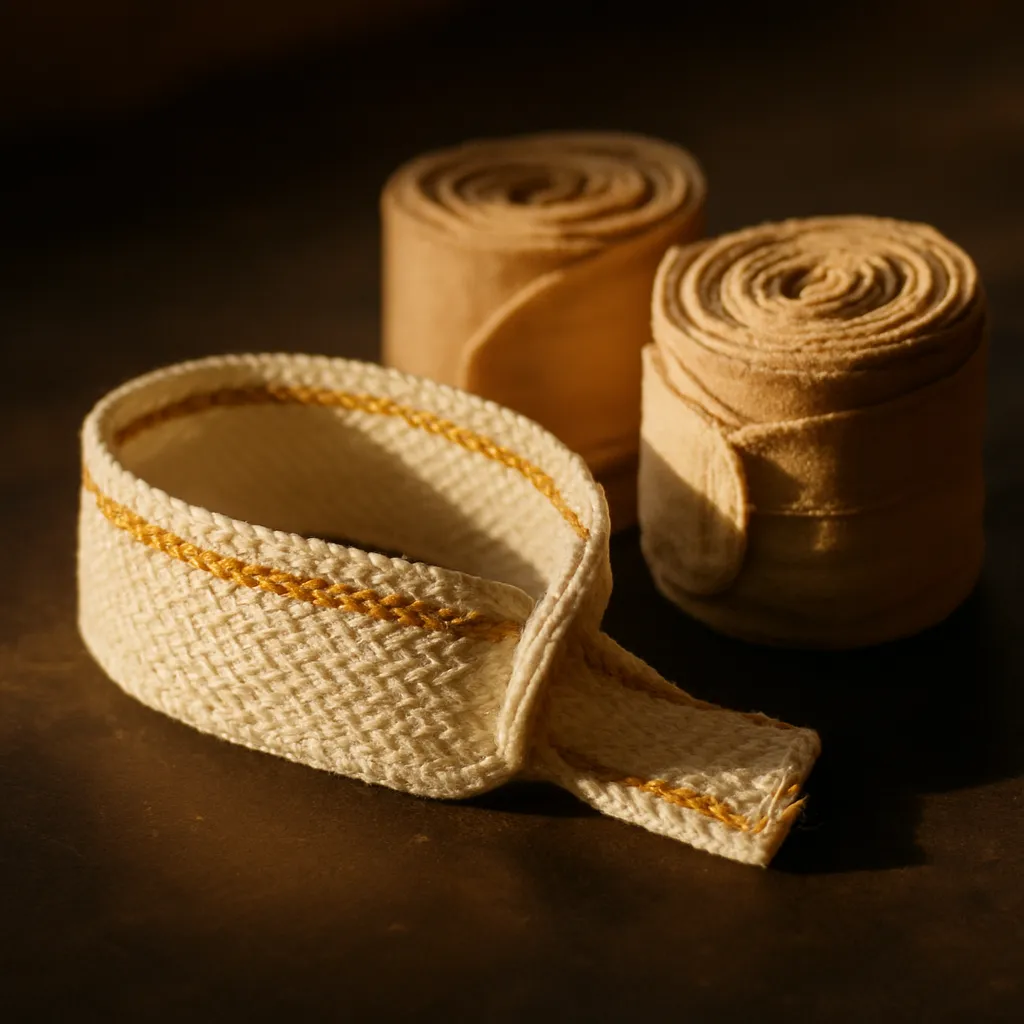
Two objects carry the tradition into the ring. The mongkol (มงคล) is the sacred headband, woven from sai sin (สายสิญจน์), sacred cotton thread, and blessed by a master. It is worn during the wai khru ram muay (ไหว้ครูรำมวย), the pre-fight dance that pays respect to the fighter’s teacher and invokes the protections inscribed in his training. The mongkol is removed before the fight begins and placed in the fighter’s corner, elevated. The pra jiad (ประเจียด) are the armbands, similarly blessed, which remain on the arms during the fight.
For the growing international muay thai community, these objects are often the first introduction to the sacred-object tradition that this entire site documents. The logic is the same: a consecrated object, made sacred through recitation and ritual, carried on the body as protection and reminder. The mongkol and pra jiad are amulets in cloth form, and the yant on a fighter’s body are amulets inscribed permanently. The tradition does not draw a sharp line between the two.
What a Foreigner Should Know
If you are considering receiving a sak yant, the single most important thing to understand is that you are entering a devotional relationship, not purchasing a service. The practical implications of this are straightforward.
Research the master. A sak yant from a respected monk or a credentialed lay master carries different weight from one given by a studio artist with no lineage. The distinction is not about skill with the needle but about the katha and the consecration that accompany the inscription. Without the ritual component, a yant is a geometric design, not a sak yant.
Understand the obligations before you sit down. Ask what rules the master expects you to follow. If you are not willing to observe the precepts, it is more respectful to say so honestly than to accept them and disregard them.
Dress respectfully. At a temple, this means covered shoulders and knees, feet bare, the same etiquette as any temple visit. At a lay master’s studio, the conventions may be less formal, but respectful clothing signals that you understand the context.
Sak yant is placed on the body according to the same gradient of sanctity described in the wear and care guide. Sacred images go above the waist. The head region, specifically the base of the skull and the upper back, is the highest and most sacred placement. The lower the placement on the body, the more care must be taken to ensure the design is appropriate for that position.
A final note, offered plainly: sak yant is a permanent tattoo. The commitment is not only spiritual but physical. The designs are bold, large-scale, and culturally specific. They will be on your body for the rest of your life, in every context, professional and personal, that your life carries you through. The tradition asks that you approach this with the same seriousness it brings.
Where to Go Next
The consecration guide explains the ritual logic that gives sak yant its authority, the same logic that gives amulets theirs. The Thai Buddhist amulet tradition guide covers the broader world of consecrated objects, and how to honor a sacred object once it is on your body or your altar. And the glossary defines every term from yant to katha to wai khru, with Thai script and cross-references across the site.