
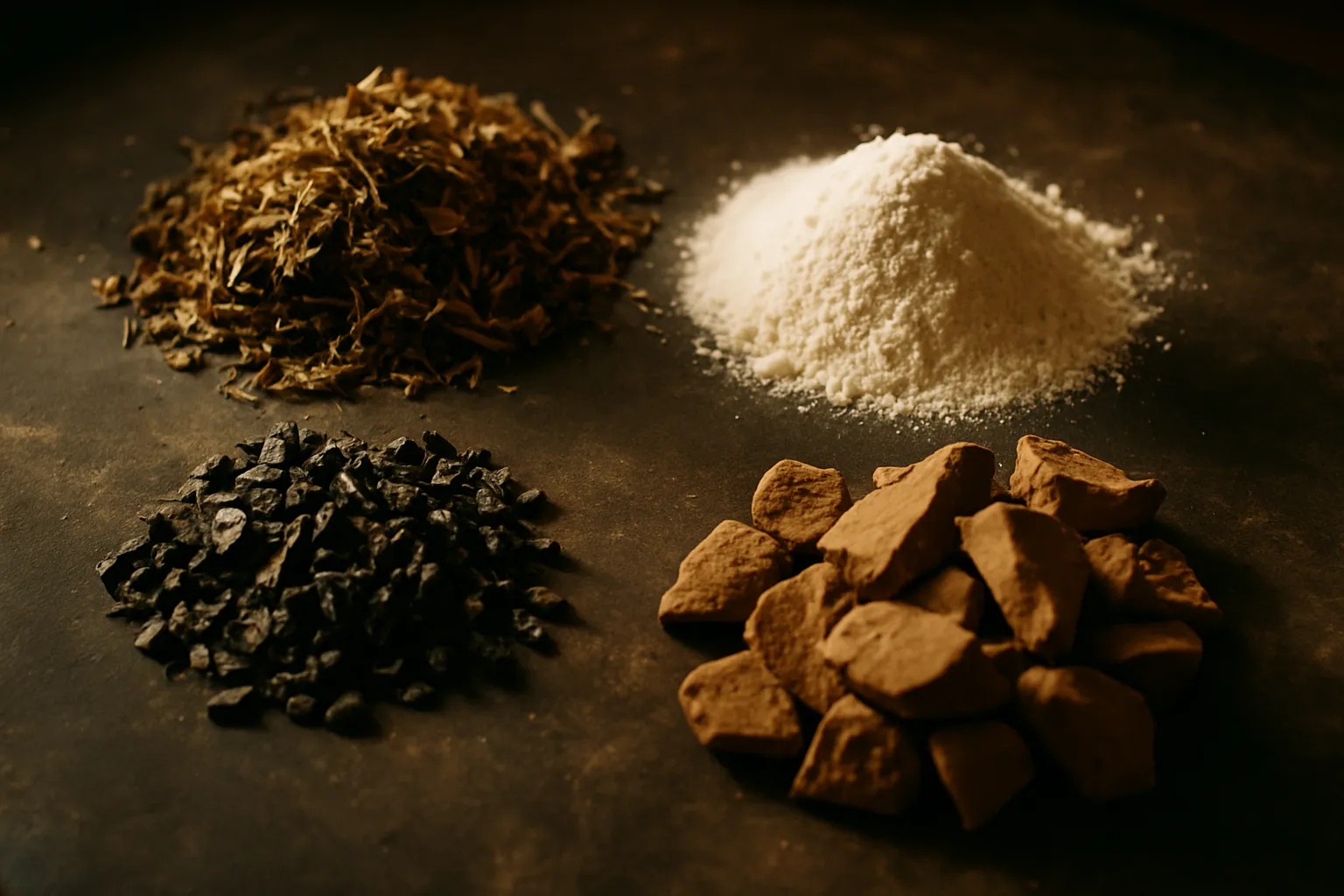
Ask a Thai collector to describe an amulet and, right after the design, they will tell you what it is made of. Material is fundamental here, not incidental. It shapes how an object is worn, how it ages, how it is studied, and how it is valued. This guide walks through the full range of amulet materials, family by family. For the wider introduction, start with Amulets 101; for the sacred ingredients specifically, see the muan sarn guide.
The Concept of Nuea
The Thai word for the material body of an amulet is nuea (เนื้อ), which literally means “flesh.” It is the first thing described after the phim, the mould, and the glossary entry on nuea gives the definition. To speak of an amulet’s nuea is to speak of its whole physical character: the substance it is pressed or cast from, its texture, its colour, and the way it has changed with time. Everything below is a category of nuea.
Powder
Powder, phong (เนื้อผง), is the classic base of the pressed amulet and the material most associated with the modern tradition. A powder body is built from lime, shell powder, temple lime, the ash of offerings, crushed flowers, and above all pong wiset, the sacred chalk produced by writing yant and erasing it thousands of times. This is the tradition of the Somdej, and the glossary entry on phong sets it out. Powder amulets are fine-grained and relatively light, and their surface, studied closely, is much of what collectors read.
Herbal
Herbal material, wan (เนื้อว่าน), is made from sacred plants, especially the wan 108, the set of herbs the tradition holds are gathered under prescribed lunar conditions and ground with katha recitation. It is a specialty of the southern schools, Khao Or above all. The glossary entry on wan covers it. Herbal bodies carry a distinctive organic character, but they share one practical weakness: they are vulnerable to moisture, and an unprotected wan amulet can degrade if it is worn carelessly.
Earth and Clay
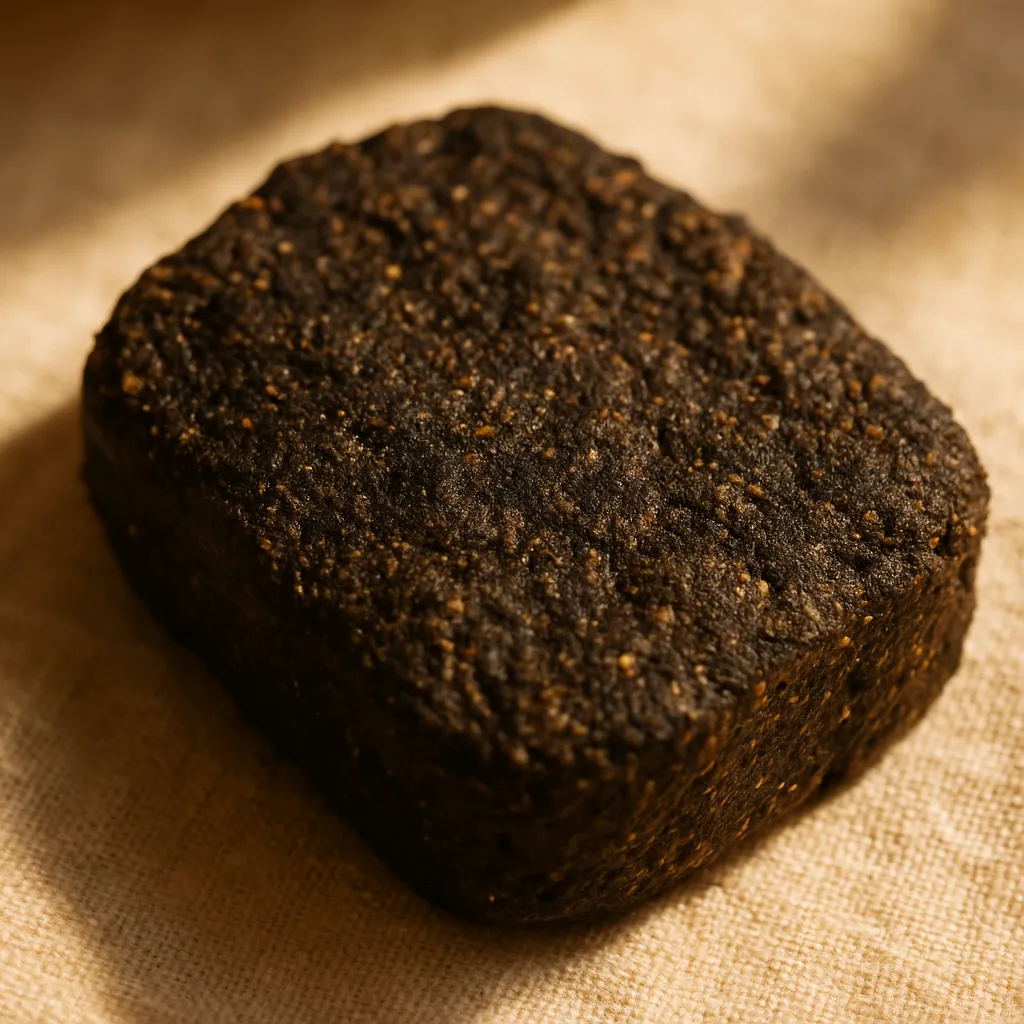
Earth and clay, din (เนื้อดิน), is the oldest material of all. Sacred earth may be gathered from significant places, and one storied variety is din jet pa cha, earth taken from seven cremation grounds. Fired into hard tablets, clay is the material of the ancient kru finds, the excavated votive tablets that sit at the origin of the whole tradition; it is also the signature of certain modern masters. The glossary entry on din explains the category. Fired clay is durable, which is why so many ancient tablets survived, but unfired or porous clay is more fragile and absorbs what it touches.
Metal
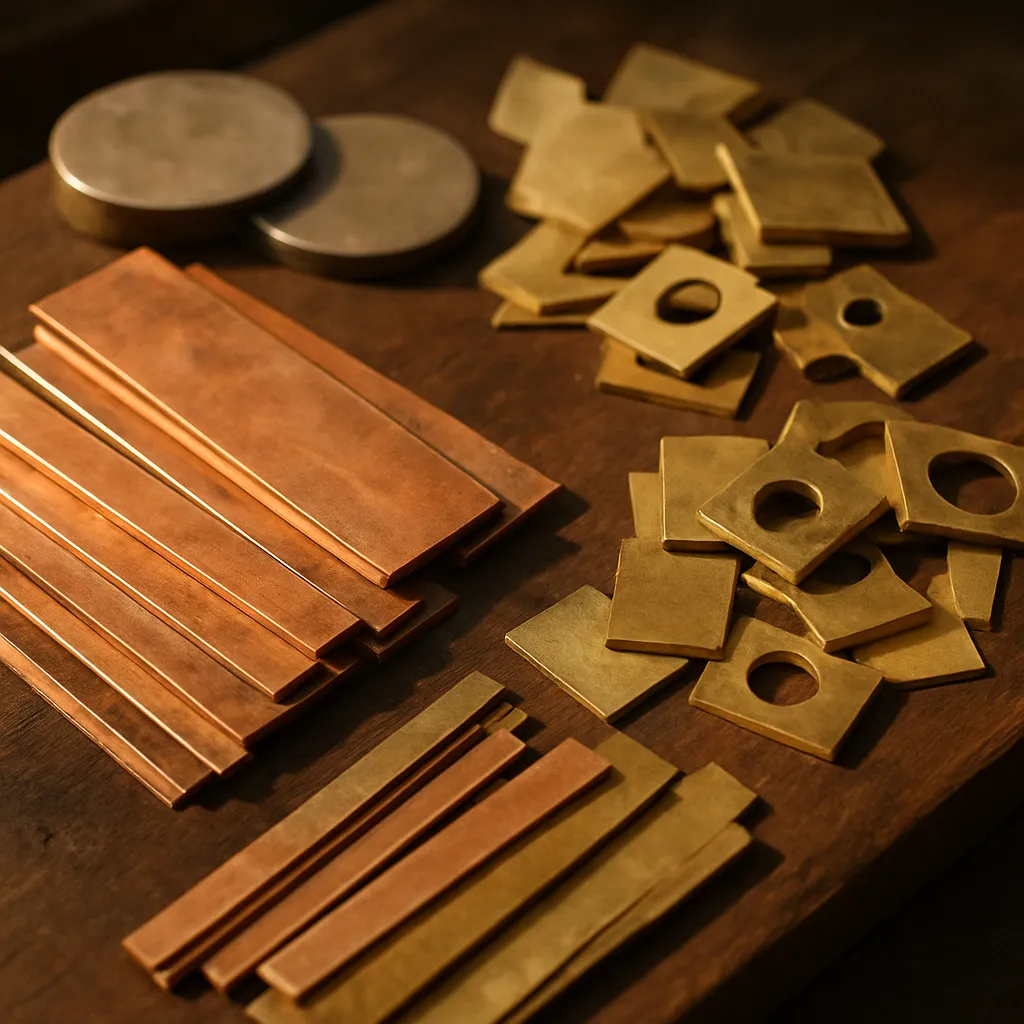
Metal amulets span a wide range of alloys and formats. The individual metals, copper, bronze, brass, lead, silver, and gold, each appear on their own and in combination. Two prescribed alloys carry special meaning. Sattaloha (สัตตะโลหะ) is the seven-metal alloy; nawaloha (นวโลหะ) is the nine-metal alloy, organized around the sacred number nine, and the glossary entry on nawaloha and the nawaloha guide describe it in full. A further prized ingredient is chanuan (ชนวน), scrap saved from earlier consecrated castings and melted into the new batch, so that a fresh image physically contains metal that was already sacred; the glossary entry on chanuan explains why this is valued. Metal objects are the most durable of all and age into deep patina.
Mercury
Mercury (ปรอท) deserves its own mention, because it is the signature substance of the Khao Or academy. Rather than forming the body of an object, it is sealed inside it, and the mercury ball is one of the school’s icons. Its use is bound up with southern wicha, and its presence marks an object as belonging to that tradition. Because mercury is liquid and hazardous, it is always contained within a sealed vessel, never exposed.
Cloth and Thread
Not every sacred object is pressed or cast. Consecrated cloth and thread form their own family. The pha yant is a cloth printed or inscribed with sacred diagrams and hung for protection; sai sin is the blessed cotton thread strung through ceremonies and tied at the wrist. The takrut, a thin metal sheet inscribed and then rolled tight, sits at the border of metal and cloth, a written charm in metal form. These extend the idea of the amulet beyond the small worn tablet into cloth, cord, and scroll.
How Materials Affect Use
Material is not only a matter of study; it decides how an object can be lived with. Powder and wan bodies are relatively delicate and need waterproof cases if they are to be worn daily, since sweat and rain will wear them down. Clay is porous and can be fragile, which is why many earthen pieces live on the altar rather than the body. Metal is the most robust for daily wear, though some people observe personal or customary restrictions on wearing certain metals. Mercury objects must stay sealed. In short, the material tells you whether an amulet is naturally a worn object or a shelf-and-altar object, a distinction the wear and care guide develops in full.
Material Tiers Within a Single Edition
Many temple editions are not cast or pressed in one material alone. A single run, sharing the same phim, the same consecration, and the same year, is often issued across several nuea at once: a copper or bronze tier for the general run, a silver or nawaloha tier above it, and a small gold tier at the top. This is standard practice for large commemorative rian, coin-form amulets, and it is documented in the batch records temples and organizers publish alongside an edition.
The tiers are not decorative choices. They track mintage quantity, and mintage quantity is the main lever on value within an edition. Copper is cheapest to cast and is minted in the largest numbers, so it forms the bulk of a run and stays the most affordable and most widely worn tier. Silver and nawaloha sit above it, cast in smaller numbers. Gold is minted last and least, sometimes only a few dozen or a few hundred pieces of an edition that otherwise runs into the tens of thousands, and scarcity within a known, single-year, single-temple release is what makes the gold tier command a premium over the copper tier of the identical design, not any difference in the consecration itself, since every tier of the same run passes through the same phutthaphisek. A collector who says a piece is “nuea thong kham,” gold material, or “nuea nawaloha” is naming a specific, numbered tier of a specific edition, not describing metal quality in the abstract.
Artificial Aging
Because age and material condition carry so much weight in how a piece is read, the surface of an old amulet is also where forgery concentrates. Genuine oxidation on metal builds unevenly: darker and thicker in recesses that trap moisture and air, thinner and brighter on raised areas worn smooth by handling and cloth. Chemically induced patina, produced by dipping or brushing a fresh casting with acid or heat treatments to fake decades of age, tends toward the opposite pattern: a uniform tone across the whole surface, or a blotchy discoloration that does not follow the object’s actual wear points. The same logic applies to powder and clay bodies, where genuine age shows as gradual, uneven surface change rather than a single applied coating.
This is a live concern precisely because material is such a large part of how collectors and dealers read an object, which makes an artificially aged surface a direct attempt to borrow the credibility that age confers. Lokavidu does not adjudicate individual pieces; recognizing artificial aging as a technique, and knowing that surface evidence is one of several things examined rather than a verdict in itself, is what the site can responsibly offer. The final judgment on any specific object belongs to the Thai association and certification circuit, the same authority the wear and care guide and the market coverage on this site defer to throughout.
Materials and Collecting
Finally, material runs straight through the collecting world. Batch documentation lists the materials that went into an edition, the way a wine label lists its origins, and that record is part of an object’s provenance. Within a single batch, different materials often create distinct tiers, so that a rarer or more storied nuea from the same edition is regarded differently from a plain one. And because material determines wearability, it also shapes an object’s role: some pieces are made to be carried through a life, others to be honoured in a fixed place. To know an amulet’s material, then, is to understand a great amount about it at once, which is exactly why the Thai collector names it in the same breath as the design.