
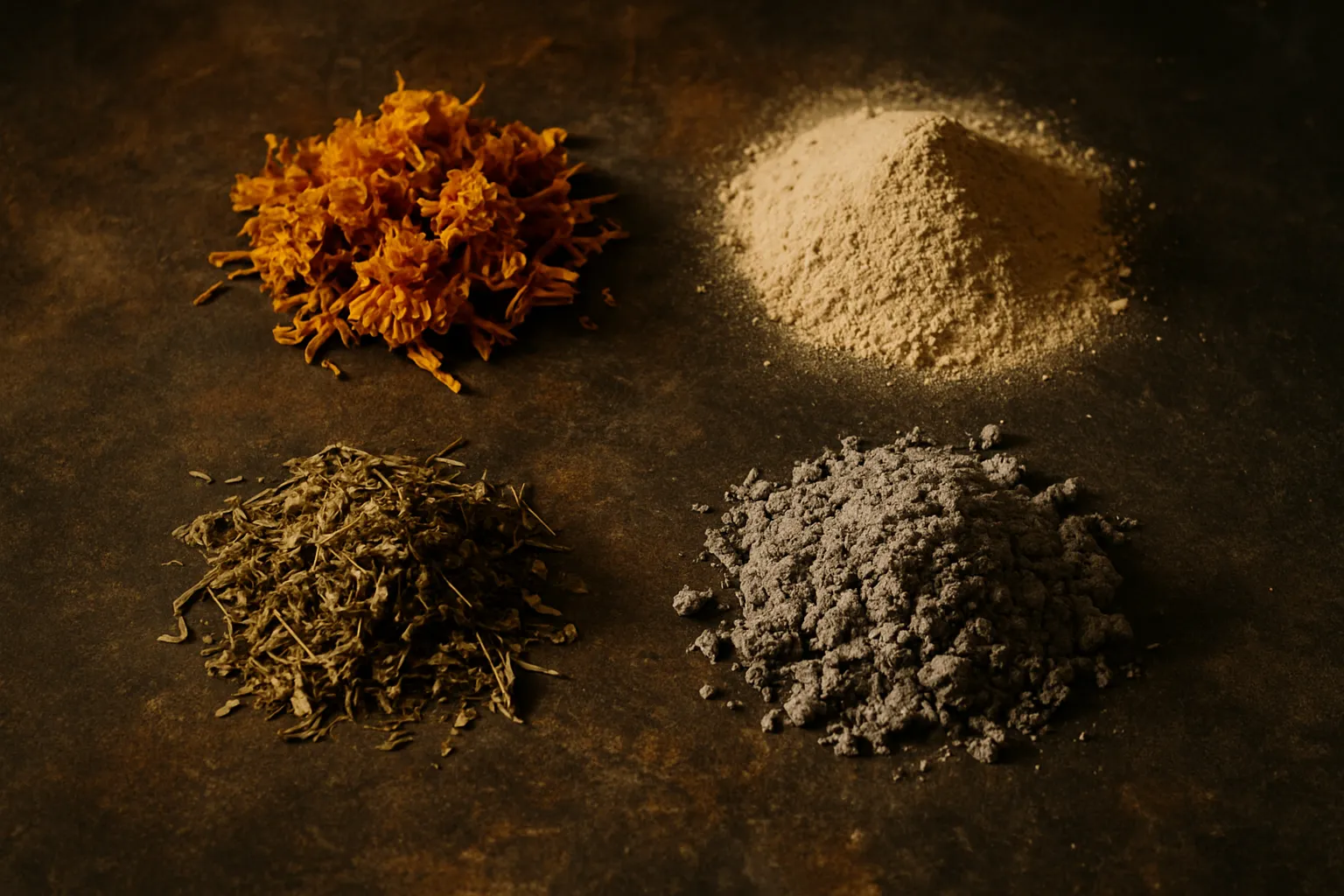
Pick up a Thai powder amulet and you are holding a mixture before you are holding an image. Ground into its pale body is a compound of sacred materials, each chosen for a reason, each carrying a history. Thai has a single word for that compound: muan sarn (มวลสาร), the mass of sacred ingredients folded into an amulet’s material body. To understand muan sarn is to understand where an amulet’s power is held to begin, long before it is pressed into shape. It is a concept the Amulets 101 guide introduces and this article follows all the way in.
The Logic of the Ingredients
The idea behind muan sarn is that materials carry biographies. In this worldview, a substance is never merely a substance. It arrives with a history and an intention already attached, and compounding it into an amulet folds that history into the object.
A flower left as a temple offering carries the devotion of the person who gave it. Soil gathered from a sacred site carries the barami (บารมี), the accumulated spiritual power, of that place. A fragment of an older, already consecrated amulet carries the blessing of the original rite forward into the new object. The mixture is therefore not chosen for chemistry but for meaning. Each ingredient is a thread connecting the finished amulet to a person, a place, or a prior consecration, and the whole compound is a web of such threads. The glossary entry on muan sarn states the definition in brief; the categories below show how wide the practice reaches.
What Goes In
The materials of muan sarn fall into a handful of broad families.
Temple-derived materials come from the life of the monastery itself: dried flowers from offering trays, the ash of burned incense, the drippings of ritual candles, and lengths of sai sin (สายสิญจน์), the sacred cotton thread that links monks and objects during a ceremony. These carry the devotion and the ritual life of the temple directly into the mix.
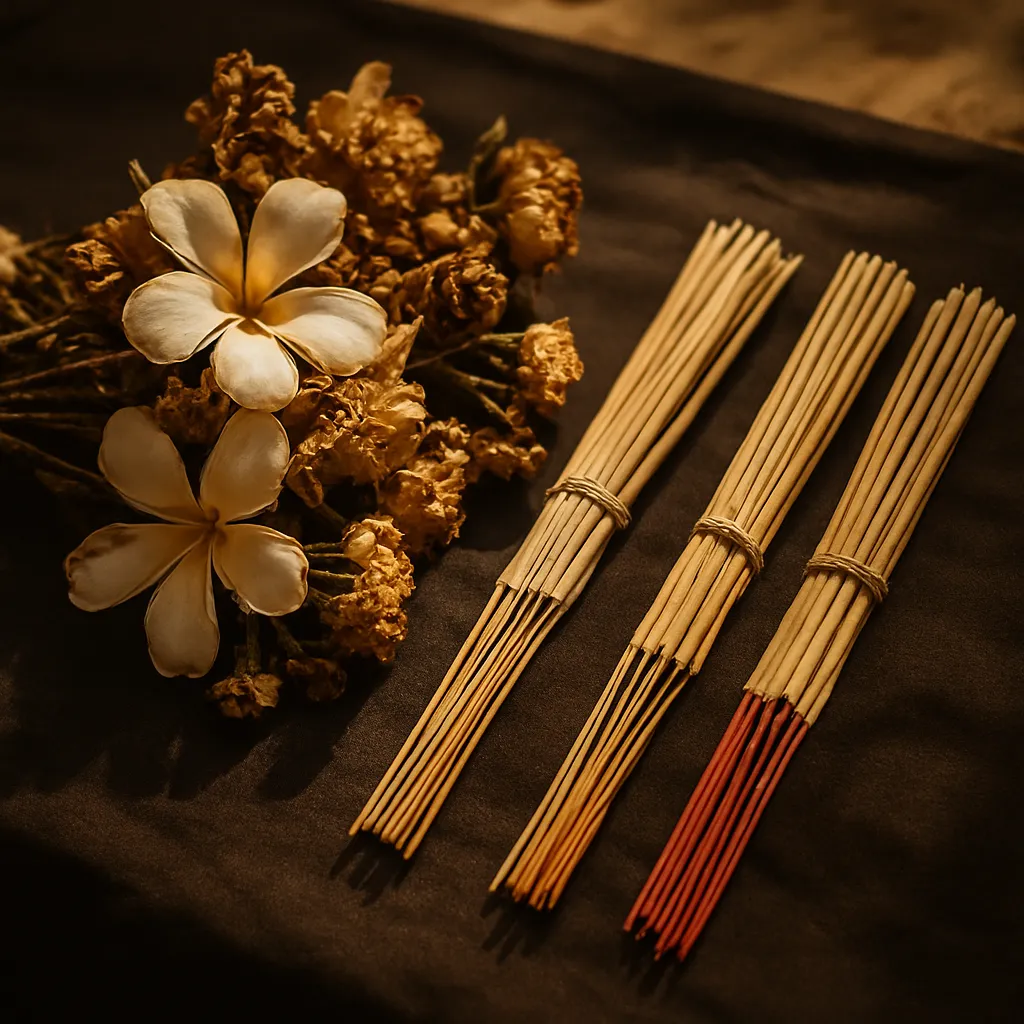
Monk-derived materials bring the presence of a revered teacher into the object: hair, fragments of a worn robe, or rice from the alms bowl. Where such materials are present, the amulet is understood to carry something of the person as well as the place.
Earth and mineral materials ground the amulet in sacred geography and in the old ritual associations of certain substances: soil gathered from seven significant places or, in the formula Thai sources call din jet pa cha (ดินเจ็ดป่าช้า), from seven cremation grounds, sacred clays, and minerals such as mercury and crystal that carry their own lore. The number seven recurs across these earth recipes; it is a ritual convention rather than a literal inventory of every site a batch actually draws from.
Botanical materials center on wan (ว่าน), the class of sacred herbs and tubers gathered, the tradition holds, under prescribed lunar and ritual conditions, along with sacred woods. The fullest expression of the practice is wan 108 (ว่าน 108), a compound of one hundred and eight distinct herbs ground together with katha recitation. These materials are especially prominent in the southern lineages, where herbal knowledge is central to the craft.
Recycled sacred materials close the loop. Chanuan (ชนวน), scrap metal saved from earlier consecrated castings, and fragments of older amulets physically embed the old within the new. Chanuan is drawn from melted-down temple bells, candle holders, monk’s bowls, and worn fragments of prior editions, cast again under the prescribed ratios that also govern nawaloha (นวโลหะ), the nine-metal sacred alloy. So does the sacred chalk powder produced by writing yant on a slate and erasing it, over and over, until the dust itself is an archive of recitations. An amulet made with such materials is, in a real sense, made partly out of other amulets and other rites.
From Muan Sarn to Nuea
Muan sarn is the recipe. Nuea (เนื้อ), literally “flesh,” is the material body that recipe produces once it is mixed, pressed, or cast, and it is the first thing any amulet description states. The muan sarn a temple compounds determines which nuea the finished piece belongs to.
A recipe built on ground powders, flower pollen, and the ash of erased yant produces nuea phong (เนื้อผง), the pressed powder body most associated with the Phra Somdej line. A mixture centered on gathered herbs and tubers instead produces nuea wan (เนื้อว่าน), the herbal body prominent in southern lineages such as the Khao Or school. A compound built on sacred soil and clay yields nuea din (เนื้อดิน), a fired clay body. And a casting built from chanuan under prescribed metal ratios yields one of the nuea loha (เนื้อโลหะ) family, the metal bodies that range from single-metal pieces to full nawaloha.
The distinction is practical as well as descriptive. Nuea phong, nuea wan, and nuea din are porous and vulnerable to moisture, which is why powder and herbal pieces are typically worn in sealed cases; nuea loha tolerates handling and water far better. The muan sarn a temple chose is therefore not only the object’s provenance, it is also, in large part, its physical character.
How Muan Sarn Is Documented
Because muan sarn is where an amulet’s story begins, it is documented with care. When a temple issues an edition, the batch poster or certificate often lists the muan sarn that went into it, naming the sacred sources the way a vintner lists the vineyards behind a wine. A line of that list might record soil from a particular stupa, powder from a named master, or fragments of a celebrated older edition.
This documentation is not marketing in the ordinary sense. It is provenance. It tells a devotee or a collector what the object is connected to, and through what chain of people, places, and prior blessings its claim to sacredness runs. The finished amulet is then brought to formal consecration, the ritual awakening the tradition calls pluksek, which is understood to activate the potential the muan sarn has gathered.
The clearest documented example of the practice is the recipe behind the original Phra Somdej tablets. The pong wiset (ผงวิเศษ) are five sacred powders built by writing yant on a slate with consecrated chalk, erasing the writing, and collecting the dust, a cycle repeated thousands of times until the powder itself became an archive of recitation. Somdej Toh of Wat Rakhang, Bangkok, compounded that recipe into the tablets that set the template nearly every powder amulet since has followed. The full recipe and its history belong to the Phra Somdej guide; what matters here is the principle it demonstrates, that a named, repeatable process behind the ingredients is what turns a compound into documented muan sarn rather than an unverifiable claim.
Why Collectors Care
For a collector, muan sarn is the audit trail of the sacred. Two amulets may share a material class and a design, yet differ entirely in what was folded into them, and that difference is much of what serious students attend to. A documented recipe rich in materials from revered sources is read as a stronger claim to significance than a plain compound, in the same way a wine’s estate and vintage inform how it is understood.
Muan sarn also carries the burden of proof when an amulet surfaces without a batch poster. This is the situation with a kru find, a cache of tablets sealed for decades or centuries inside a stupa and recovered only when the structure is opened or repaired. With no living witnesses and no printed record, the material itself becomes the primary evidence: its composition, its aging, and how closely it matches known recipes from the temple and era in question. The Kru guide covers how these caches are opened and read; muan sarn is the physical text collectors and association experts examine once one is.
None of this is an authenticity verdict, and Lokavidu offers none. Reading a specific object’s muan sarn and judging its claims is the work of the Thai collector associations and their experts, who compare a piece’s material against known recipes, documented batches, and the accumulated experience of handling thousands of genuine examples. No single test settles the question; the material is one line of evidence among several, alongside phim geometry and aging.
What this article sets out is the concept: that a Thai amulet is a compound before it is an image, that the compound is chosen for meaning rather than chemistry, and that its list of ingredients is the object’s provenance, written into its very substance. For the full arc from ingredients to consecration to wearing, return to the Amulets 101 guide.